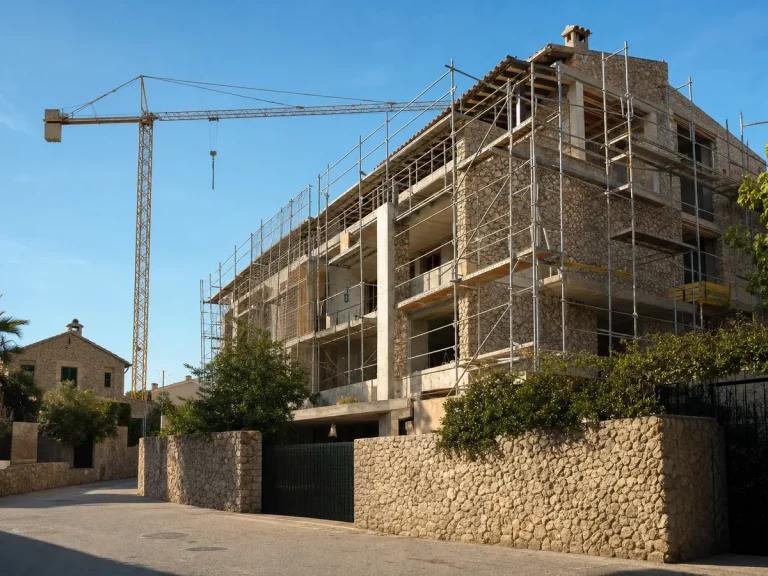
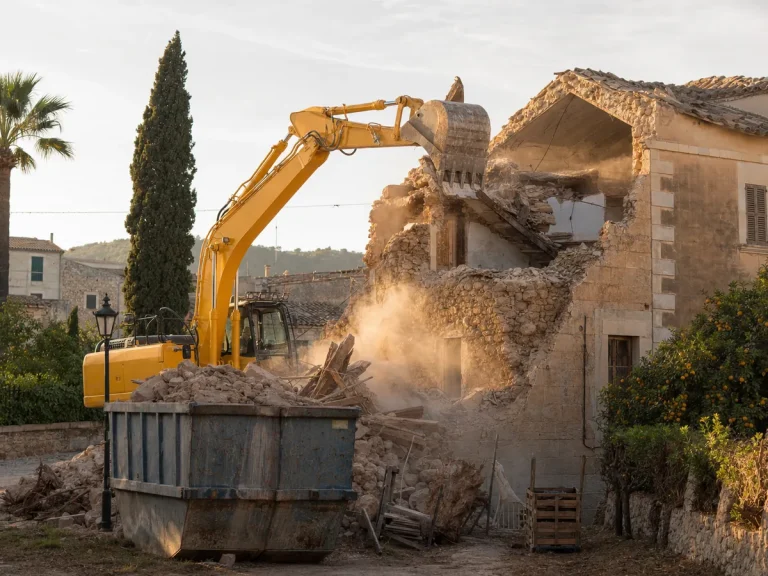
Ten-year structural insurance for self-builders: when it is compulsory when you build your own house
What ten-year structural insurance covers, why it is not compulsory if you build your house to live in and what happens if you sell within ten years.

Ten-year structural insurance covers, for ten years, the physical damage caused by defects in a building's foundations and structure. The Spanish Building Act (LOE) makes it compulsory for the developer of residential buildings, but does not require it from the individual self-builder of a single detached house for their own use. If that self-builder sells the house before ten years have passed, they must take it out for the time remaining, unless the buyer expressly waives it and the self-builder proves they have lived in the house. That is why it is worth deciding before the works start.
When someone asks us to build their house, one of the first paperwork questions is this: «do I have to pay for ten-year structural insurance if the house is for me?». The answer is usually no, but with a condition that matters a great deal if you ever want to sell. We explain what the law says, when you are exempt and why the decision is made at the start, not at the end.
What ten-year structural insurance is and what it covers
Ten-year structural insurance is the guarantee required by article 19 of the Spanish Building Act (LOE) to cover physical damage to the building caused by flaws or defects affecting the foundations, supports, beams, floor slabs, load-bearing walls or other structural elements and directly compromising its strength and stability.
The key points:
- It lasts ten years, counted from the handover of the works.
- It covers 100% of the final construction cost of the works, which is the minimum cover set by law.
- It is taken out by the developer, which, when the house is your own, means you.
- It does not cover finishes or installations. Those defects have their own, shorter liability periods, which this insurance does not cover.
Liability periods under the LOE
The law sets three periods, always counted from the handover of the works:
| Timescale | What it covers | Who is liable |
|---|---|---|
| 10 years | Damage caused by defects affecting the structure (foundations, pillars, beams, floor slabs, load-bearing walls) | Everyone involved in the works; for homes, also covered by the ten-year structural insurance |
| 3 years | Damage caused by defects in building elements or installations that affect habitability | Everyone involved in the works |
| 1 year | Workmanship defects affecting the finishes | The builder |
The law allows the one-year and three-year guarantees to be made compulsory by royal decree. The one it requires today for homes is the ten-year guarantee.
Who has to take it out
The LOE requires ten-year structural insurance for buildings whose main use is residential. It is taken out by the developer, meaning whoever decides on, drives and pays for the works, whether a company or a private individual.
If you build to sell or to let, you are a developer and you need it. The same applies to a villa intended for holiday lets, which is not for your own use. We cover this in our article on building villas for holiday lets.
The self-builder exception
The second additional provision of the LOE says that ten-year structural insurance is not required from the individual self-builder of a single detached house for their own use. To be in this situation, all three conditions must be met:
- You are an individual self-builder: you build it yourself, for yourself, not a company.
- It is a single detached house: one house, not a building with several homes.
- It is for your own use: you are going to live in it.
What happens if you sell within ten years
This is the condition you need to know about from the start. If you sell the house within ten years of the handover of the works, the law requires you, unless agreed otherwise, to take out the insurance for the time remaining until those ten years are up.
And it enforces this through the notary and the Land Registry: deeds of sale are not authorised or registered without proof of that insurance, unless the buyer expressly releases you from taking it out and you prove that you have lived in the house.
In practice, that means two things:
- If you sell without insurance, the buyer has to agree expressly to buy without it, and neither they nor the bank lending them the money may accept that.
- Taking out the insurance once the house is finished is difficult, because insurers usually require technical inspection of the works from the foundations onwards.
And when the new build is registered
When the house is finished, the new build is declared before a notary and registered in the Land Registry. Article 20 of the LOE forbids authorising and registering those deeds without proof of the guarantees in article 19. If you are an exempt self-builder, you will have to show that this applies to you.
When it is worth taking out even if it is not compulsory
Being exempt does not mean it is not in your interest. It is worth thinking about before you start if:
- You think you might sell the house in the next ten years, because of work, family or as an investment.
- You are going to fund the works with a self-build mortgage. Some lenders ask for ten-year structural insurance or for technical inspection of the works. We cover this in our article on mortgages to build a house.
- You want peace of mind that, if a structural defect appears, an insurer is liable as well as everyone involved in the works.
If you are going to take it out, do so before you start: the insurer will want a technical inspection body to follow the works from the foundations onwards. The price depends on the insurer, the cost of the works and that technical inspection, so ask for a quote in good time.
Frequently asked questions about ten-year structural insurance
Is ten-year structural insurance compulsory if I build my own house?
No, if you are the individual self-builder of a single detached house for your own use. But if you sell it within ten years, you will have to take it out for the time remaining, unless the buyer expressly releases you and you prove that you have lived in it.
Who pays for ten-year structural insurance, the developer or the builder?
The developer. In a house you are building for yourself, you are the developer. The builder is liable for its work within the periods set by law, but the obligation to take out ten-year structural insurance lies with the developer.
When do the ten years start?
From the date of handover of the works without reservations, or from the date on which any reservations noted at handover are resolved. That is why the handover certificate is an important document: it starts all the liability periods.
What does ten-year structural insurance not cover?
Defects in finishes, installations and damage that does not affect the structure. Nor does it cover damage caused by misuse or lack of maintenance. That is what the other liability periods in the law are for.
Can I sell the house within ten years without ten-year structural insurance?
Yes, if the buyer expressly releases you from taking it out and you prove that you have lived in the house. Without that release, the notary will not authorise the deed and the Land Registry will not register it without the insurance.
Your house, with the paperwork clear from the start
At Construcciones Armalutx, a family of builders since 1967 with more than 1,500 projects completed in Mallorca, we help you get the paperwork for your house in order before you start: licence, timescales, handover and guarantees. If you are thinking about building, see how we work as a construction company for new builds in Mallorca and our guide on how to build a house in Mallorca. Call us on 625 16 47 18 or write to info@armalutx.com.
Armalutx Construction Team Construction company with an office in Inca that works throughout Mallorca: new construction, renovations, rehabilitation and structural reinforcements. Who we are.