Rehabilitation · Buildings and communities
Building and community rehabilitation in Mallorca
Building renovations in Mallorca often involve several projects simultaneously: facade, roof and terraces, structure, elevator shaft, and repairs required by the IEE (Building Evaluation Report). At Construcciones Armalutx, we handle all of these for your community, and if a damaged floor slab is found, we'll take care of it.
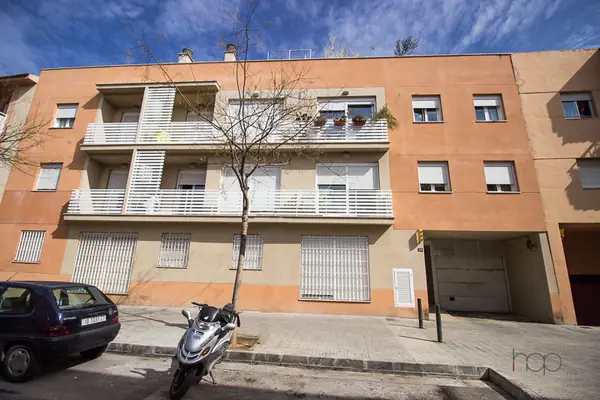
Why Armalutx for your community's work
A manager in charge of each trade
Facade, roof, terraces, and elevator: each part is handled by a specialist in their trade, all within a single project. The community doesn't have to search for multiple companies or coordinate their schedules.
Structure of the 60s and 70s
Many buildings from that era have joists with aluminosis or carbonation, cracked cantilevers, and weakened floor slabs. We choose the reinforcement for each case: Mecanoviga (a steel profile that reinforces each joist, filled with mortar), carbon fiber, or special concretes.
The elevator and its shaft, in the same building
We install elevators in buildings that don't have them: we build the shaft, the floor slabs and structure that determines if it fits, and we coordinate its assembly.
What the board needs to decide
A phased schedule that the administrator can present to the board as is, and a single person responsible for the work, also to the neighbors.
Working for a community is not working for an individual.
There are fifteen or fifty owners, a property manager, a budget that's approved at a meeting, and families who continue living in the building while the facade is being demolished. Besides a good price, a community needs the work to be finished on time and for everyone to be able to get back into their homes.
And there's no shortage of work to be done. In Palma, four out of ten homes are in buildings erected between 1961 and 1980, and those from 1976 or earlier are already 50 years old, requiring them to undergo the IEE (Building Inspection Report). Edges of slabs damaged by salinity, roofs of Arabic tiles, leaky terraces, and structures with carbonation: this is the daily work in a building of that age.
- Facades, roofs and terraces
- Structure and aluminosis
- Works of the IEE
- Elevator with its shaft
Works for buildings and communities
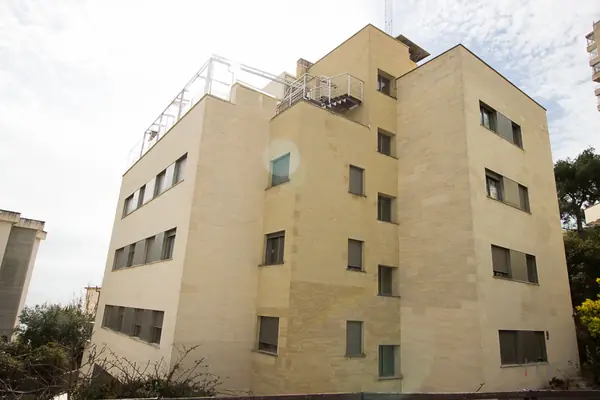
Façade rehabilitation
Repairs, slab edges, cracks, plastering and exterior insulation.
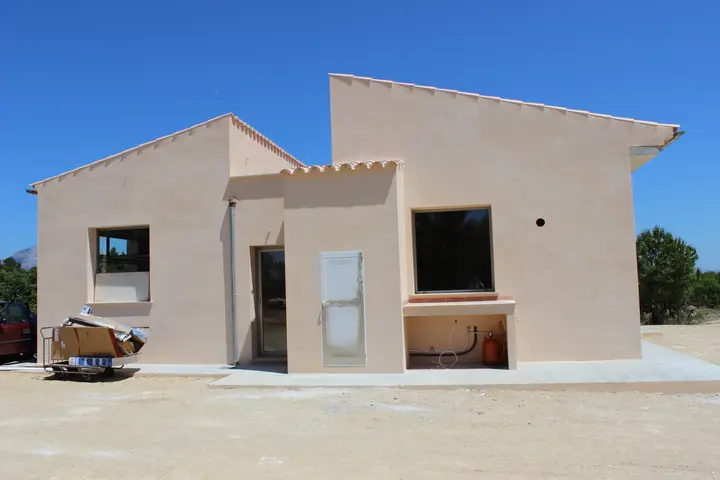
Roof renovation
Tile roofs with their wooden structure, insulation and waterproofing.
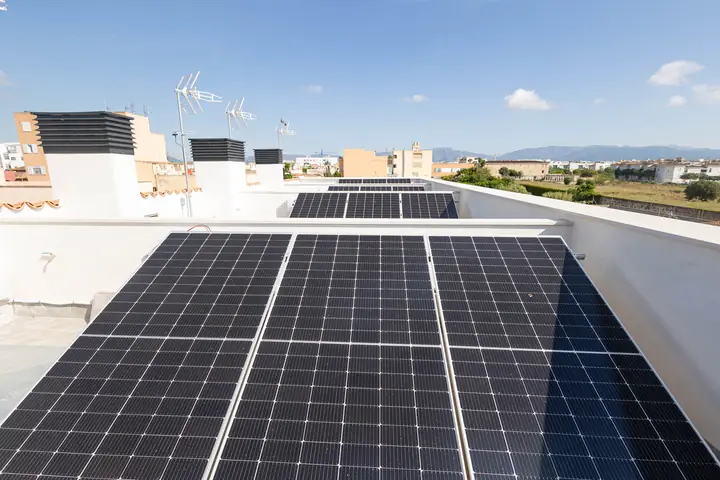
Roof waterproofing
Community roofs and terraces: slopes, support, insulation and membrane.
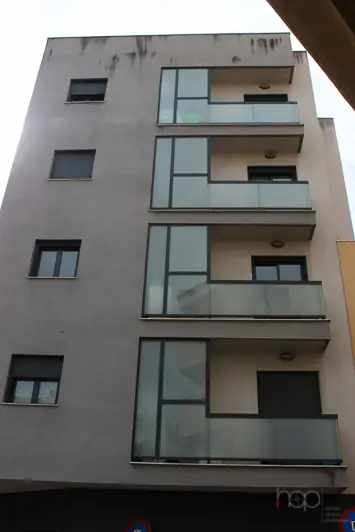
Works of the IEE
The repairs requested in an unfavorable assessment report.
Elevator installation
The elevator and the work on its shaft, in buildings that were built without it.
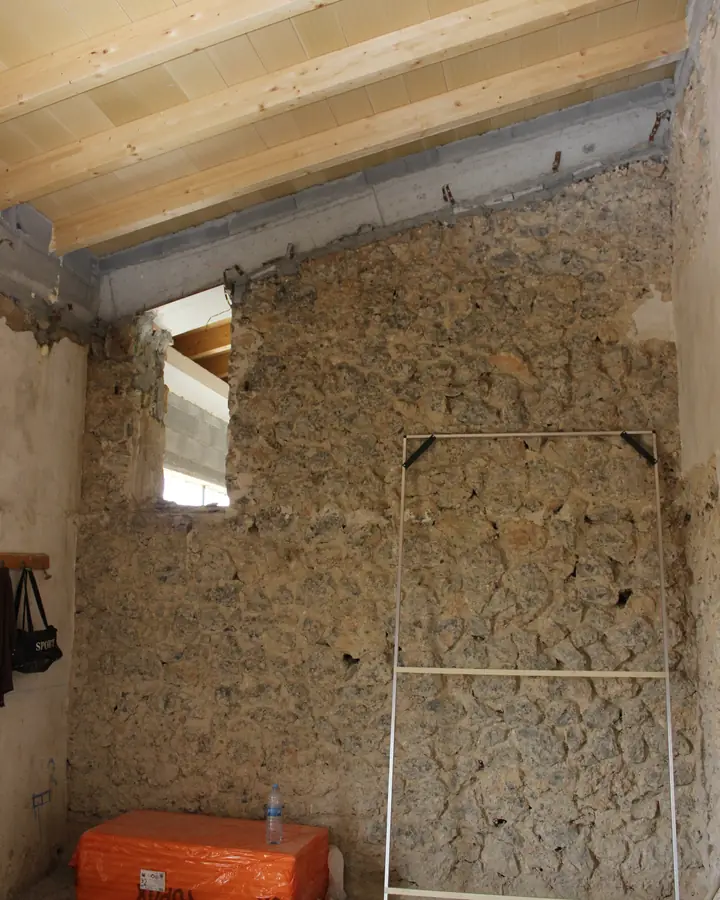
Structural reinforcement
Beams, slabs, pillars and cantilevers: diagnosis and reinforcement with various techniques.
What works do we do in a community of owners
These are the most common. In buildings from the 60s and 70s they often appear together, and it's advisable to plan them as a single project.
Facades
Cleaned down to firm support, repair of slab edges, cracks and balconies, new cladding and, if the community decides, exterior insulation.
Roofs and terraces
Roofs, rooftops and communal terraces: slopes, waterproofing, insulation, drains and parapets.
Structure
Beams that have lost strength, rusted reinforcements in cantilevers and slabs that have given way: the technician calculates them and we reinforce them before closing.
Accessibility
Elevator where there is none, with the construction of its shaft, and portals and accesses without steps.
common facilities
Downpipes, collectors and water and electricity networks of the common areas.
What majority does each project need at the meeting?
The Horizontal Property Law doesn't require the same thing for everything. Here's what's needed to approve each type of construction:
| Construction site | What's needed at the meeting |
|---|---|
| Building conservation and safety, such as the repairs indicated by the IEE | No prior agreement is needed: it's mandatory. The board simply decides how the special assessment is divided, and everyone pays. |
| Energy efficiency: insulation or improvement of the building envelope | A simple majority of owners and shares is required if the annual cost to each owner, after deducting subsidies and financing, does not exceed 12 monthly common expenses. Those who vote against pay the same amount. |
| Install an elevator or remove barriers | A majority of the owners representing a majority of the shares must approve the payment. Once approved, everyone pays, even if it takes more than 12 monthly installments. |
| Elevator or ramp requested by a resident with a disability or over 70 years old | No voting: it is mandatory if the annual cost, after deducting aid, does not exceed 12 monthly payments, or if the aid granted covers 70% of the cost |
| New plants, structural changes, or enclosing terraces | Three-fifths of the owners and the shares |
Horizontal Property Law in force in October 2026.
The IEE: the time to do the work only once
Since June 2026, Balearic law requires the IEE (formerly ITE) for all buildings that reach 50 years of age, regardless of their use, and every ten years thereafter. In Palma, failure to submit this report is punishable by a fine of €600 to €1,500 per cadastral reference, and up to €2,999 if the building is protected. The report is signed by a qualified technician; we handle the IEEE works which points out.
If the assessment is unfavorable, the repairs cease to be optional, and it's wise to seize this opportunity. If the facade needs repair, the scaffolding is erected once, and the work is carried out simultaneously. facade rehabilitation Complete, with its insulation. It's more cost-effective than having to reassemble it in a few years.
Elevators
Elevator in a building that doesn't have one: we build the shaft
Many buildings from the 1960s and 70s were built without elevators. Installing one requires finding space (in the light well, the stairwell, or on the facade) and, when it's installed inside the building, opening up floor slabs and reinforcing the structure around the shaft. That part is the construction company's job: we do it and coordinate the installation with the company.
In Palma, accessibility improvements can receive a 90% reduction in the construction tax (ICIO). We explain it, with the votes and permits, in install an elevator in the community.
- Where does the elevator fit?
- Opening and reinforcement of floor slabs
- Construction of the pit and the trench
- Elevator installation
How we organize the work with the inhabited building
During facade or roof renovations, residents can remain in their homes. Therefore, the work is planned by facade and in phases.
Visit and building status
We inspect the facade, roof, terraces, and common areas. If the building already has an IEE (Energy Efficiency Certificate), you can send it to us.
Budget and schedule for the meeting
Detailed budget, item by item and in writing before starting, with the schedule for each phase.
Procedures and public roads
Prior notification or a license, depending on the scope, and permission to occupy the sidewalk with scaffolding are required. In Palma, this permit costs €0.41 per m² per day and must be requested at least 72 business hours in advance.
Construction in phases
The entrance is always accessible, with hours agreed upon with the community, and clotheslines, windows, and air conditioning units are protected. If it is necessary to enter a home, the family is notified beforehand.
Delivery and documentation
Final review with the administrator and the documentation of what has been done, which is also needed to justify aid or deductions.
Aid and tax benefits in 2026
The Next Generation grants for building rehabilitation closed their application period on June 30, 2025, and their funds are exhausted. As of October 2026, the Catalan Government has not yet opened a call for applications under the new 2026-2030 State Housing Plan. Here's what is still available; details can be found in our guide. grants for housing rehabilitation in the Balearic Islands.
Personal Income Tax Deduction
Up to 60% of the amounts paid before the end of 2027 for energy efficiency works of the entire building.
VAT of 10 %
If the community commissions it, the building was finished more than two years ago and the material provided does not exceed 40 % of the base.
ICIO tax discount in Palma
25% less in works whose sole purpose is to improve energy efficiency.
Reduced urban planning tax in Palma
Half of it is for building rehabilitation works.
When full rehabilitation is not advisable
Sometimes the best thing for the community is to wait or do less.
Without the spill resolved
Starting without a fund or agreed financing ends up with construction stopped and scaffolding billing for months.
With the IEEE about to arrive
If the building is due for its report soon, it's best to run it first and plan with it in hand, because it may change the scope.
With a localized problem
If a specific cantilever is faulty, that cantilever is repaired; there is no need to intervene in the entire building.
Frequently asked questions about building rehabilitation
Can a neighbor refuse to pay the special assessment for a renovation project?
No, if the work is necessary to preserve the building or if it has been approved by the majority required by law. In energy efficiency projects, those who vote against are not exempt if their annual cost, after deducting subsidies, does not exceed twelve monthly common expenses. If they fail to pay, the community can demand payment.
Do the neighbors have to leave their homes during the construction work?
On facade, roof, or terrace projects, no: work is done in phases, and the building entrance remains accessible at all times. If it's necessary to enter a home, for example, to reinforce a floor slab from below, residents are notified in advance and arrangements are made with the family.
What VAT rate applies to work commissioned by a homeowners' association?
The 10 % rate applies, with two conditions. The residential building must have been completed or last renovated more than two years ago, and the materials supplied by the construction company cannot exceed 40 % of the taxable base. If either of these conditions is not met, the invoice is issued at 21 %.
Is it possible to do construction work on the building in the summer?
Yes, with time restrictions. In Palma, noisy construction work can only be carried out on weekdays, between 9 a.m. and 8 p.m. From May 1st to October 30th, this timeframe is reduced to 11 a.m. to 7 p.m. in the areas with the highest tourist traffic. These areas include the historic center, Cala Major, the Passeig Marítim, and the coastline from Molinar to s'Arenal. We take this into account when creating the schedule.
What guarantees are provided for building renovation work?
The deadlines are set by the Building Regulations Act when the work requires a project. There are three deadlines from the date of acceptance: one year for finishing defects, three for those affecting habitability, such as leaks, and ten for structural damage.
When is my building due for its IEE inspection?
When it turns 50, regardless of its use, and then every ten years. In Palma, buildings built in 1976 must submit it by 2026, and those built in 1966 must repeat it. The community commissions it from a technician, who signs it, and if it is unfavorable, the repairs it indicates become mandatory.
You might also be interested in
- Rehabilitation of traditional farmhousesHouses of stone, marès and wood, from the countryside and the village.
- Construction company in Palma de MallorcaNew construction and old buildings in Palma, with their license.
- How to renovate an old building in PalmaLicenses, catalog and structure in buildings with years.
- What is aluminosis and how to detect itThe markings on concrete beams and slabs from the 1950s to the 1970s.
- Cracks in walls: when are they dangerousHow to distinguish a minor crack from a structural problem.
Budget
Request a quote for the work in your community.
Is your building inspection (IEE) pending, is the facade deteriorating, or are leaks recurring every winter? We'll inspect your building and prepare a quote for the owners' meeting. We're a family of builders, established in 1967, with over 1,500 projects completed from Inca throughout Mallorca. The building manager or any resident can call us at +34 625 16 47 18 or email us at info@armalutx.com.
- 625 16 47 18
- info@armalutx.com
- Monday to Friday, from 8:30 a.m. to 4:00 p.m.
- Carrer del General Weyler, 29 · 07300 Inca, Mallorca