Rehabilitation · Facades
Façade rehabilitation in Mallorca
We renovate building facades, apartment complexes, and houses in Palma and throughout Mallorca. At Construcciones Armalutx, our master craftsmen restore stone, marès (a type of volcanic rock), and lime plaster, including on listed buildings, and repair cracks, rusted rebar, and exposed edges of the concrete slabs.
Why Armalutx for your facade renovation
Artisans of stone, marès and lime
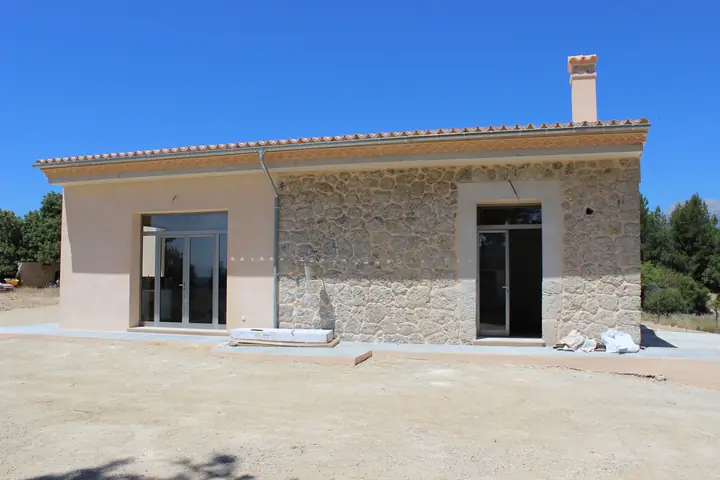
A stone or marès facade cannot be fixed with paint. Our master craftsmen consolidate the stone, replace blocks, and redo joints and plaster with lime.
Facade and structure, in the same building
Rusty reinforcement bars, broken edges of the slabs, or aluminosis: whatever appears during chipping, we fix it before closing up. It's not just covered up: it's repaired.
Protected buildings in Palma
We are familiar with the Palma catalogue and its procedures: the report of the Municipal Commission of Historic Centre and Catalogue and, in catalogued and cultural interest assets (BIC), the prior authorization of the Consell de Mallorca.
What the IEE is asking for, with a single scaffold
If the IEE (the building assessment report, formerly ITE) indicates facade, balconies and roof, we do it all at once.
What does rehabilitating a facade include?
Rehabilitating a facade means restoring safety, insulation, and value to a building damaged by salt air, sun, and time. It encompasses the repair of damaged areas, treatment of dampness and carbonation, waterproofing, repair or cladding of the substrate, exterior insulation where necessary, and finishing.
Each facade requires a different solution. We work with stone and marès facades, traditional plasters and mortars, and concrete and brick facades from the 60s and 70s, which make up a large part of Palma's. If the project is initiated by the community, the required majorities and procedures are explained on our website. building rehabilitation.
- Stone, marès and lime
- Cracks, reinforcements and forging edges
- External insulation
- Listed buildings
Types of facades and what each one needs
Before touching it, you need to know what it's made of. This is how we each work:
Exposed stone
Cleaning without aggression, repointing with lime mortar and replacement of lost pieces with matching stone.
Marès
Desalination, consolidation, and new ashlars where the original can no longer withstand the force. In the walls of marès, never cement.
Lime plasters
The cement plaster that traps moisture is chipped away and the wall is replastered with lime, which allows the wall to breathe.
Concrete and brick from the 60s and 70s
Carbonation, rusted reinforcements and edges of slabs or balconies that come loose: the surface is cleaned down to the firm support, the reinforcements are treated and it is rebuilt with repair mortars.
External insulation
SATE (external thermal insulation composite system) or ventilated facade is used in buildings that require insulation. In buildings with exposed stone or marès (a type of volcanic rock), insulation is applied from the inside.
What permit is required to renovate a facade in Palma?
In Palma, construction projects are processed through prior notification or a building permit; there are no separate procedures for "minor works" or "major works." Here's what each case requires:
| Case | What is needed | When can we start? |
|---|---|---|
| Unprotected building: facade with scaffolding that does not touch the load-bearing structure | Prior communication signed by a technician | Within 15 calendar days of submitting it |
| Work that affects the load-bearing structure | Building permit with project | With the license: the law allows 3 months to resolve and, at the beginning of 2026, the average in Palma was 9 to 12 months |
| Listed building (A1, A2, B or C), or with R protection or if the work touches the facade | In addition, a favorable report from the Municipal Commission for the Historic Center and Catalog (which meets every first and third Tuesday) | With the favorable report |
| Property of cultural interest (BIC) or listed building | Furthermore, prior authorization from the Consell de Mallorca is required. | With the authorization |
| Scaffolding or container on the sidewalk | Public road occupancy license, which must be requested at least 72 working hours in advance and is paid at €0.41 per m² per day | On the authorized dates |
Palma, October 2026. In the rest of the municipalities, the procedures are set by each town hall.
Saltpeter, humidity and carbonation: the deterioration of the island's facades
On the coast, the sea breeze coats facades with salt, and this salt accelerates the deterioration of the mortar and the corrosion of the reinforcing steel. Added to this is the carbonation of the concrete, which causes the coating to flake off and exposes the iron. The cause must be addressed, not just the symptoms: a poorly repaired facade will fail again within a few winters.
Cleaned to the firm support
Everything that sounds hollow or is loose is chipped away until sound material is reached.
Treated armor
They are cleaned, protected against corrosion, or reinforced before the coating is rebuilt with repair mortars.
Water inlets closed
Cracks, edges and drip edges are sealed before finishing, because that's where water gets in.
Breathable water repellents
They protect the facade from rain without trapping moisture inside the wall.
Heritage
Marès facades and protected buildings
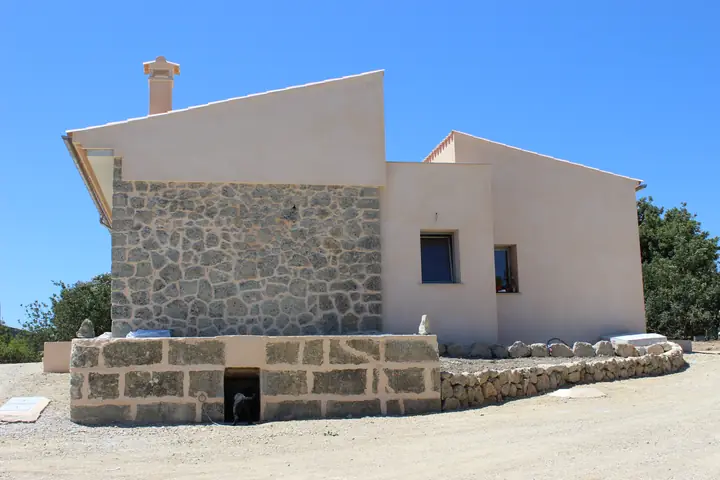
The marès stone is found in many old buildings in Palma, and it's also their weakness: a porous stone that absorbs water and disintegrates with salt air. Restoring a marès facade or a protected building requires expertise, products compatible with the stone, and often, heritage authorization.
We respect the original material: we consolidate and replace stones when necessary, and we use reversible treatments that can be removed without damaging the stone. In Palma, each listed building has one of four levels of protection (A1, A2, B, or C), and the level determines what can be altered.
- Consolidation of the original stone
- Replacement ashlars with compatible marès
- Reversible treatments
- Heritage and Historic Center Procedures
Phases of facade rehabilitation
We follow a system designed to ensure the repair lasts for decades, with a designated person in charge.
Inspection and diagnosis
Dampness, cracks, detachments and carbonation: what is there, where is it and why does it appear.
Project and procedures
With the technician, the prior notification or the corresponding license, and the Heritage permits if the building is protected.
Scaffold
Erection of the scaffolding and, if it occupies the sidewalk, the public road permit requested on time.
Cleaned and chopped
Remove everything loose until you reach the firm support.
Repair of the structure
Cracks, reinforcements, forging edges and carbonation: they are repaired before closing, because afterwards they are no longer visible.
Waterproofing and water repellency
To stop saltpeter and leaks without trapping moisture.
Insulation or cladding
SATE, lime plaster or exposed stone, depending on the facade and what you want to achieve.
Finishing and delivery
Final finishing, removal of the scaffolding and inspection of the facade with you or with the administrator.
Community facades: IEE, board and aid
In a residential building, facade renovation usually comes with the IEEBalearic law requires it after 50 years and every ten years thereafter. Many reports indicate that structural edges, balconies, or cladding need repair. These repairs are mandatory for the community without requiring a vote. Exterior insulation, however, is approved by a simple majority if each resident's annual payment does not exceed twelve monthly installments.
There are no open grants for facades: the Next Generation program stopped accepting applications in June 2025. However, income tax deductions for energy efficiency remain in place: up to 60% for the entire building, for payments made until the end of 2027. And in Palma, a project that only improves efficiency qualifies for a 25% reduction in the ICIO (Construction, Installations and Works Tax).
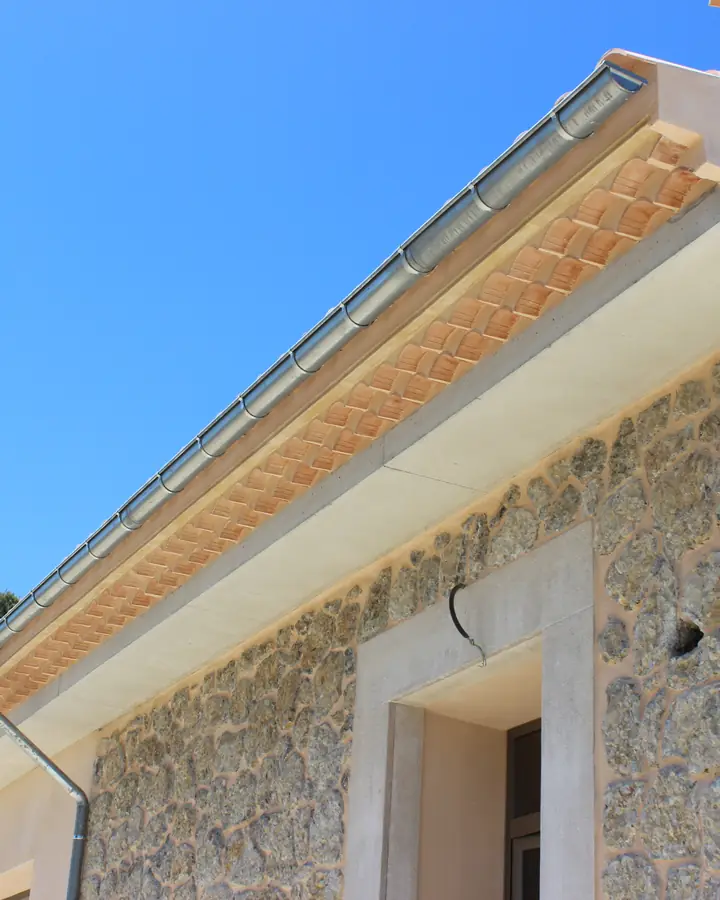
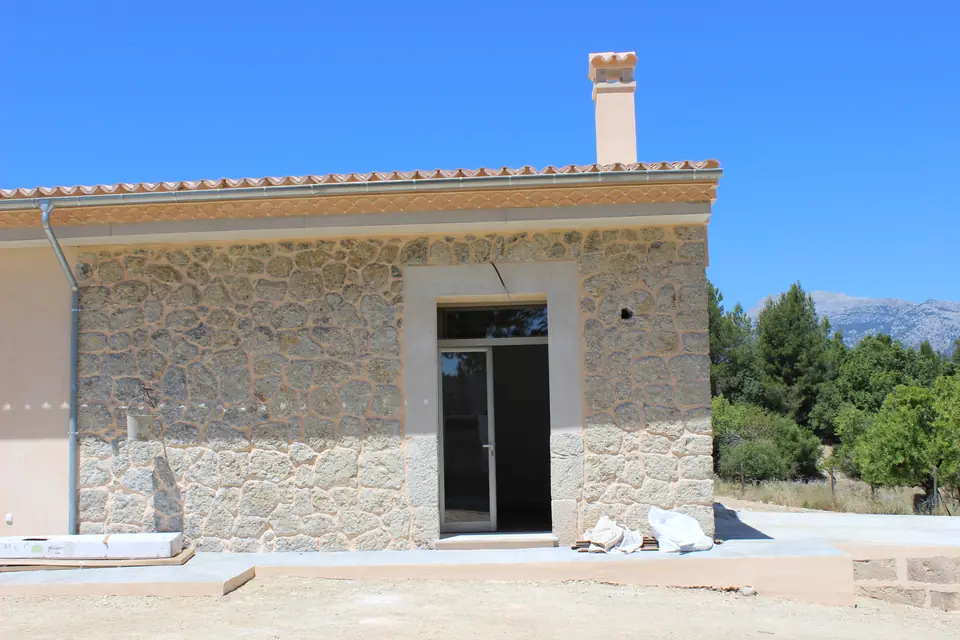
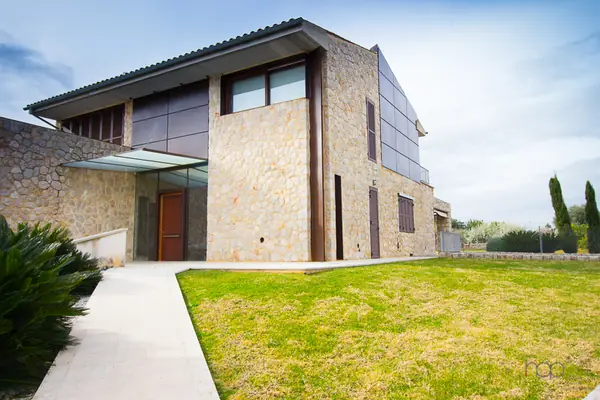
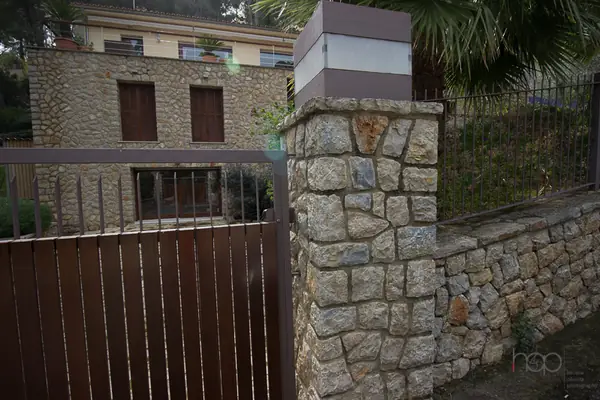
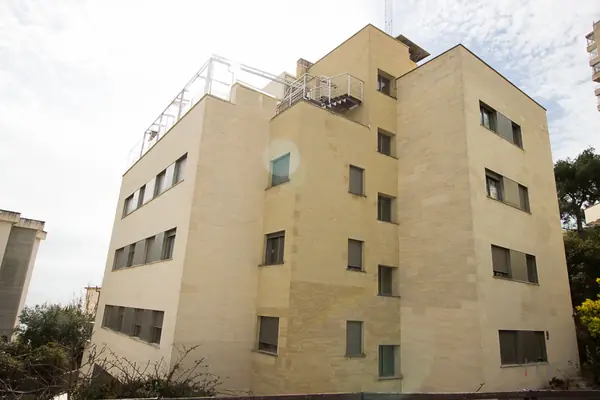
Facades under construction in Armalutx
Frequently asked questions about facade renovation
How much does it cost to renovate a facade in Mallorca?
It depends on five things. The surface area and height determine the scaffolding required, and the condition of the foundation isn't fully known until it's chipped away. The type of facade (stone, marès, plaster, or concrete), whether it's insulated, and whether the building is listed also play a role. That's why we inspect it before giving you a price, and we provide a detailed breakdown.
Is a license required to renovate a facade in Palma?
Not always. In an unprotected building, if the work does not affect the load-bearing structure, prior notification signed by a qualified professional is sufficient, and work can begin within 15 days. If the structure is affected, a building permit is required. For listed buildings, a favorable report from the Municipal Commission for the Historic Center and Catalogue is also necessary, and for listed buildings of cultural interest (BIC), prior authorization from the Consell de Mallorca (Island Council of Mallorca) is required.
Can a façade of marès or a listed building be rehabilitated?
Yes, using stone-compatible products, reversible techniques, and, in many cases, authorization from the Heritage authorities. We consolidate the original material and replace damaged blocks with matching pieces, without covering it up. In Palma, the level of protection determines what can be altered.
Is it advisable to install EIFS on an old facade?
It depends on the facade. In a brick or concrete building from the 60s or 70s, exterior insulation greatly improves comfort and energy efficiency, provided the building structure is sound. However, on a stone or marès facade that is intended to remain visible, this isn't the case: insulation is applied from the inside, allowing the wall to breathe.
Are there any grants available to rehabilitate the facade in 2026?
No open grants: the Next Generation deadline was June 30, 2025, and the funds have run out. What remains are income tax deductions for energy efficiency improvements and, if the building is in Palma, a 25% reduction in the ICIO (Construction, Installations and Works Tax).
You might also be interested in
- Building and community rehabilitationEverything a residential building needs, from the roof to the elevator.
- Roof renovationIf work also needs to be done on the roof, the same scaffolding is used.
- Structural reinforcementWhen the problem with the facade comes from beams, slabs or pillars.
- What is a ventilated facade?How it works and when it's worth it compared to other systems.
- SATE thermal insulationWhat savings it makes sense on, and on which facades.
- Salty humidity near the seaWhy does salt air damage coastal houses so much?.
Budget
Let's start by inspecting your facade
You can call or message us on WhatsApp at 625 16 47 18, or email us at info@armalutx.com. We'll come and inspect the facade and tell you exactly what it needs and what procedures are required. If the building already has an IEE (Building Inspection Report), send it to us: with that and the visit, we'll provide you with a detailed, itemized, and written quote before we begin.
- 625 16 47 18
- info@armalutx.com
- Monday to Friday, from 8:30 a.m. to 4:00 p.m.
- Carrer del General Weyler, 29 · 07300 Inca, Mallorca