Rehabilitation · Dry stone and marès
Dry stone and sandstone walls in Mallorca
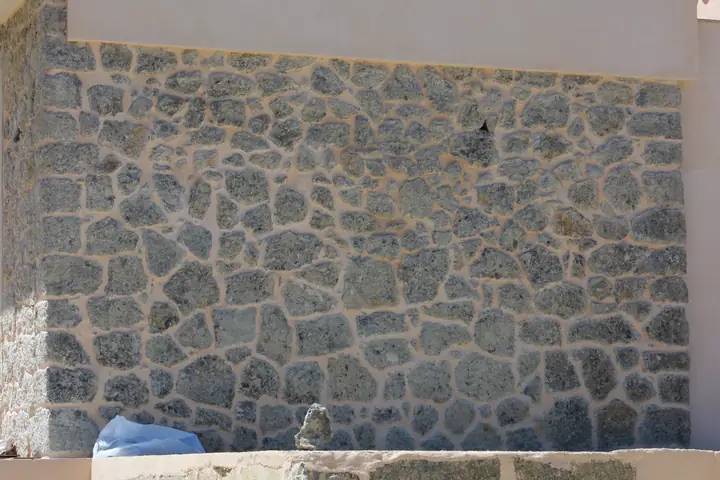
We restore and build dry stone walls (marges and paredes secas) and marès walls throughout Mallorca. At Construcciones Armalutx, our master stonemasons create them using traditional techniques and local stone. And as a construction company, if the wall supports a terrace or a house, we also handle the structural aspects.
Why Armalutx for your stone wall
Master stone craftsmen
The walls are rebuilt and erected by our master craftsmen, who know how each stone sits, how a wall is joined, and where the water has to come out.
Walls that also support
A bank that supports a terrace or a wall that supports a house is studied as a structure: foundation, drainage and, if necessary, reinforcement or underpinning.
Stone and sea compatible
We recover the fallen stone, look for marès that matches the original, and where mortar is needed, we use lime. Never cement on marès.
The wall, with the house and the farm
If there is also a facade, roof or the whole house, we carry it out in the same work, with a supervisor per trade and a single contact person.
Dry stone and marès: two ways to build a wall
Dry stone walls, the traditional dry stone wall, are part of the landscape and of the traditional Mallorcan construction. For centuries they have defined property boundaries, supported terraces, and shaped the Serra de Tramuntana. They are built without mortar, relying solely on gravity and skill, and UNESCO recognizes the art of dry stone construction as Intangible Cultural Heritage of Humanity.
Marès walls are something else entirely: hewn blocks of a very local sandstone, almost always set with lime mortar. Therefore, before touching anything, it's essential to know what kind of wall you're dealing with. A traditional dry-stone wall can be dismantled and rebuilt without mortar; a marès wall requires compatible stone and specific techniques.
We do both, on the property and in the house. If the wall is part of a larger renovation, here's how we rehabilitate them. peasant houses.
- Margins and terraces
- Walls and facades of marès
- Property enclosures
- New stone walls
What most often goes wrong in a stone wall
In both types of walls, the biggest enemy is water. That's why any intervention begins with understanding what's happening and why.
Collapses and bulges
In riverbanks, they usually come from poor drainage, soil pressure, or roots that get between the stones.
Sanding of the marès
The stone gradually breaks down into sand, mainly due to salts and humidity.
Alveolization
Small hollows form on the face of the stone block, typical of areas exposed to wind and salt.
Cement joints
A cement joint seals the wall and forces the water to come out through the stone, which is what ends up breaking.
Vegetation
Roots and ivy push the stones and keep moisture inside the wall.
How to rebuild a dry stone wall
It is a handmade craft and follows rules that have been working for centuries.
Diagnosis
Before touching a single stone, we documented the wall with photos and damage reports, decided which sections needed to be dismantled and which could be consolidated, and studied the terrain and the flow of water.
Disassembled in an orderly fashion
The stones are carefully removed from the damaged sections and separated by size for reuse.
Firm base and drainage
The base is cleaned down to firm ground and the water outlet is prepared: if the drainage continues to fail, the wall will give way again.
Mounting
Each stone rests on at least two others, the joints are not vertically aligned, and the wall leans slightly towards the ground it supports.
Reble
Behind the visible face, it is filled with small stones, the reble, which allows water to drain and distributes the pressure of the earth.
Coronation
It is finished with large, well-set stones that close the wall at the top and protect it.
Marès walls
When the wall is made of marès
Marès stone is porous and varies considerably from quarry to quarry, so finding a suitable replacement part isn't as easy as it seems. Be very careful with mortars: no cement, only lime, which allows the stone to breathe.
First, the salts are removed; only then, if necessary, is the stone consolidated. Each product is tested beforehand in a small area, because here we don't improvise.
When marès stone forms the facade of a house or building, we work with it within its facade rehabilitation, with the scaffolding that is already needed for the rest.
- Cleaning and desalination
- Stone consolidation
- New ashlars that match the originals
- Jointed with lime mortar
Stone walls in a new house
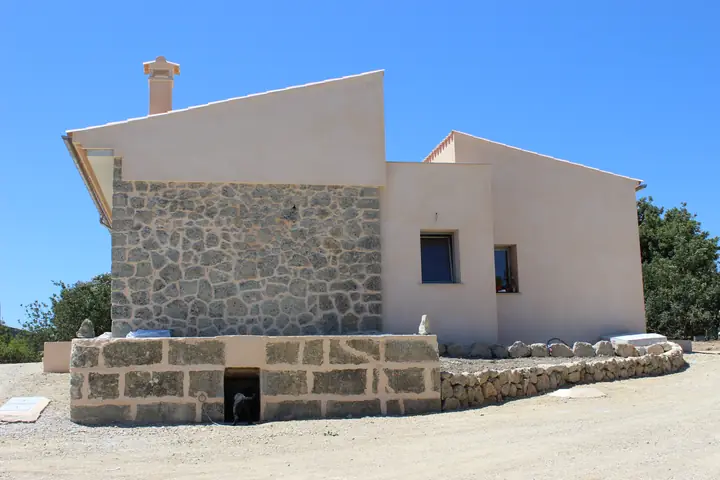
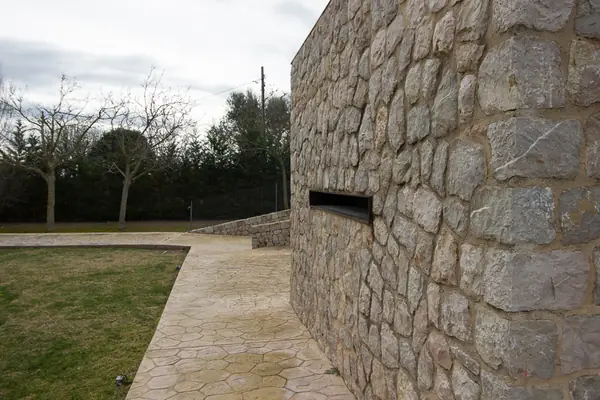
Stone isn't just for renovations. More and more new projects are incorporating dry stone or marès walls, and when done well, they make sense: they last, age gracefully, and connect the house to the landscape.
Plot enclosures
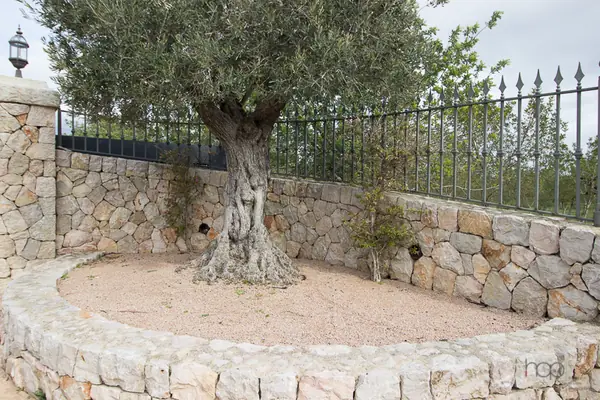
Dry stone walls to enclose the property or separate areas, built using the same technique as the old boundary walls.
Terraces and uneven ground
Margins are used to gain level ground on a sloping plot. If the slope is steep or a firm platform needs to be created, the wall is designed as a retaining wall and drainage is incorporated.
Walls and facades of the house
Stone or marès in the house itself, combined with the structure required by the project.
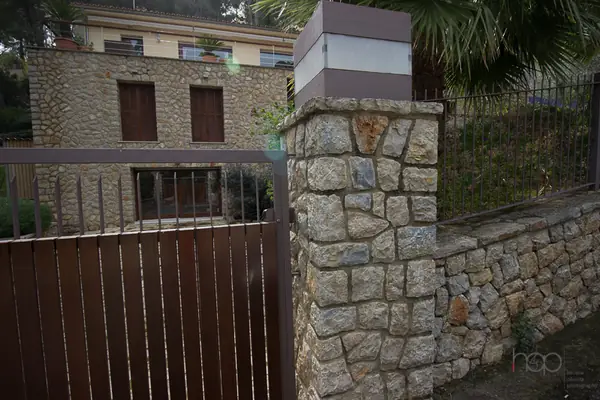
Stone and marès in our works
Maintenance: what extends the life of the wall
Once rebuilt, the wall doesn't need much care, but it does require a little attention every now and then.
After heavy rains
Check that the crown has not moved and that the water is coming out where it should.
Roots and ivy
Control them before they push stones or retain moisture.
Salts in the sea
If white spots appear or the stone begins to sand, acting quickly prevents major interventions.
Frequently asked questions about dry stone walls and marès
What is Marès stone?
It is a calcareous sandstone native to Mallorca and the rest of the Balearic Islands, formed from sand and cemented shell fragments. It is porous, lightweight, and easy to cut into blocks, which is why it has been used for centuries in facades, walls, and houses throughout the island. It is also spelled "marés.".
What is the difference between a dry stone wall and a marès wall?
Dry stone walls rely on gravity, with no mortar between the stones, and can be repaired without mortar. Marès stone walls are made with cut blocks, called ashlars, which are usually set in lime mortar. Each type is repaired differently, so the first step is to determine which one you have.
Is it possible to repair a dry stone wall without completely dismantling it?
Yes, almost always. Only the collapsed or bulging section is dismantled down to solid rock and then reassembled with its drainage system. The sound sections remain as they are, and the dismantled stones are returned to their original wall.
Why isn't the marès rejoined with cement?
Because cement is harder and more impermeable than stone. It seals the wall, and the moisture and salts seek refuge through the marès stone, causing it to crumble. Lime is softer, it breathes, and if something is going to wear down, it wears down.
Do you need permission to rebuild a stone wall or a bank?
Yes, it goes through the town hall, and the procedure depends on whether an existing wall is being rebuilt or a new one is being constructed, and on the property's location. If the wall is listed or part of a protected property, authorization from the Consell de Mallorca (Island Council of Mallorca) is also required. We check everything before starting.
Do you build new dry stone walls?
Yes, we do that too. We build new retaining walls, fences, and house walls using the same technique as the old ones. When they have to hold back a lot of earth, they're first calculated as a retaining wall, with their own foundation and drainage.
You might also be interested in
- Rehabilitation of traditional farmhouses and estatesThe entire house: structure, roof, stone and wood.
- Façade rehabilitationStone, marès and lime plaster facades, also in buildings.
- Traditional Mallorcan constructionThe island's construction methods, from the walls to the roof.
- Building materials in MallorcaMallorcan stone, marès and other local materials.
- How to protect your home from dampnessCapillarity, condensation and leaks in the houses on the island.
Budget
A wall that is falling down or a wall of marès that is crumbling?
Send us a couple of photos via WhatsApp at 625 16 47 18 or email us at info@armalutx.com. We'll come and take a look, tell you what's wrong with it and how we can fix it, and send you a detailed, item-by-item, written quote before we begin.
- 625 16 47 18
- info@armalutx.com
- Monday to Friday, from 8:30 a.m. to 4:00 p.m.
- Carrer del General Weyler, 29 · 07300 Inca, Mallorca