Rehabilitation · Traditional farmhouses and estates
Rehabilitation of traditional Mallorcan farmhouses and estates
We renovate traditional Mallorcan farmhouses, village houses, and country estates with the expertise they demand: our master stonemasons and woodworkers restore walls, sandstone, beams, and roof tiles. And at Construcciones Armalutx, if a rotten beam is discovered during the renovation, we'll fix the structure ourselves.
Why Armalutx to renovate your traditional Catalan farmhouse
Stone and wood, in the hands of artisans
Walls, sandstone, beams, and roof tiles pass through the hands of our master craftsmen. We restore what holds up and replace it with materials of the same character, so that the house remains the one you bought.
The structure, in the same work
Woodworm in the beams, weakened floors, or cracking walls: we reinforce them. With Mecanoviga, a steel profile under the beam filled with mortar, the wooden beam stays in place and the floor structure doesn't need to be dismantled.
Each trade, with its manager
Stone, wood, structure, and installations: a specialist foreman oversees each trade. The person who decides how a wall is mortared or where a beam rests is the most knowledgeable, and you always speak with the same person.
Finishes that match the house
We advise you down to the last detail, from the lime plaster to the carpentry, so that the new elements don't clash with what the house already has.
A traditional Ibizan house is not renovated like an apartment.
Here, the layout isn't entirely up to you. An eighty-year-old wooden beam structure and a marès stone wall that has been absorbing moisture from the ground for decades are the norm. And the regulations governing rural land use dictate what you can touch before anyone even mentions hydraulic tiles.
Rehabilitation means preserving what makes a house valuable (the stone, the marès, the beams, and the tiles) and updating the interior: a sound structure, a leak-proof roof, new installations, and insulation. If you're looking to redistribute and renovate a home that lacks this value, then it's a renovation, which we explain in our [link to relevant articles/courses]. full renovations in Mallorca.
It almost always starts the same way: someone buys a country estate or a village house and wants to know what they're getting into. We'll tell you as a family of builders since 1967, with more than 1,500 completed projects.
- Recovered stone, marès, beams and tiles
- Tests on beams and slabs before starting
- Rustic land and listed houses
- Installations and insulation
What we rehabilitated in a traditional Catalan farmhouse
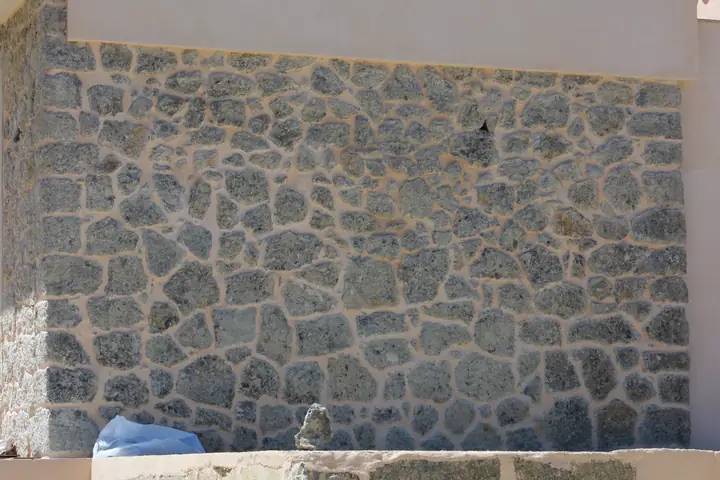
Dry stone walls and marès
Marges de la finca, paredes de marès y paredes de la casa, rehacer con la técnica siempre.
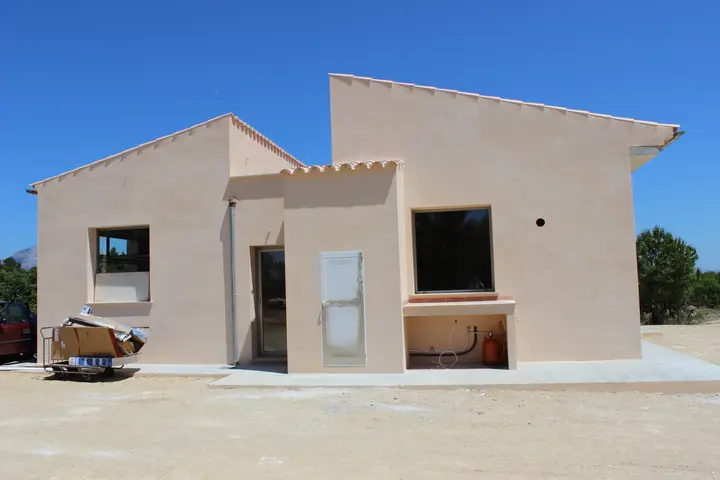
Tile roofs
Wooden beams and boards, insulation and waterproofing, with the recovered Arabic tile on top.
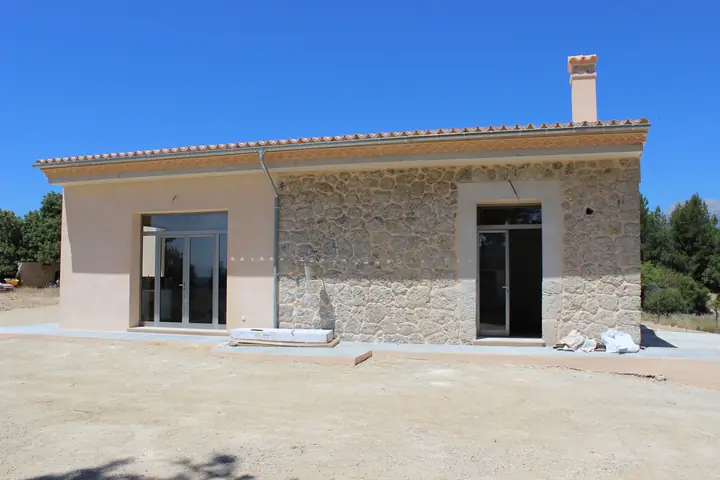
Façade rehabilitation
Clean stone and jointed with lime, replaced marès blocks and plasters that allow the wall to breathe.
Structural reinforcement
Beams, slabs, walls and foundations reinforced with Mecanoviga, carbon fiber or concrete.
Stone, tile and wood: everything that can be recovered is recovered
Only what no longer serves its purpose is replaced. A traditional Ibizan farmhouse renovated with new, imitation materials is noticeable from a meter away and loses precisely what made it valuable.
Stone and sea
We clean, repoint with lime mortar, and replace only the missing pieces, using stone from the same quarry whenever possible. Lime allows the wall to breathe; cement seals it and pushes moisture inwards, which is the most common mistake in poorly planned renovations.
Arab tile
We take it apart, clean it, and put it back on a new board with insulation and waterproofing. The old tile goes on the visible side; the new one, where it's not visible.
Wooden beams
If the beam has a sound cross-section, we treat it, reinforce it, and leave it exposed. If not, we replace it with wood of the same dimensions or reinforce it with a hidden metal reinforcement.
Insulation inside
A stone house that is well insulated on the inside maintains the thermal inertia of the wall and ceases to be that beautiful property that is impossible to heat in January.
A work by Armalutx
Real case: a stone country house in Mallorca
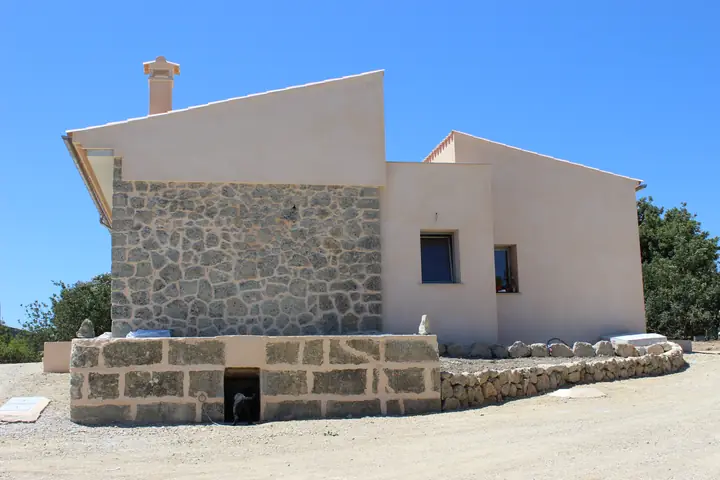
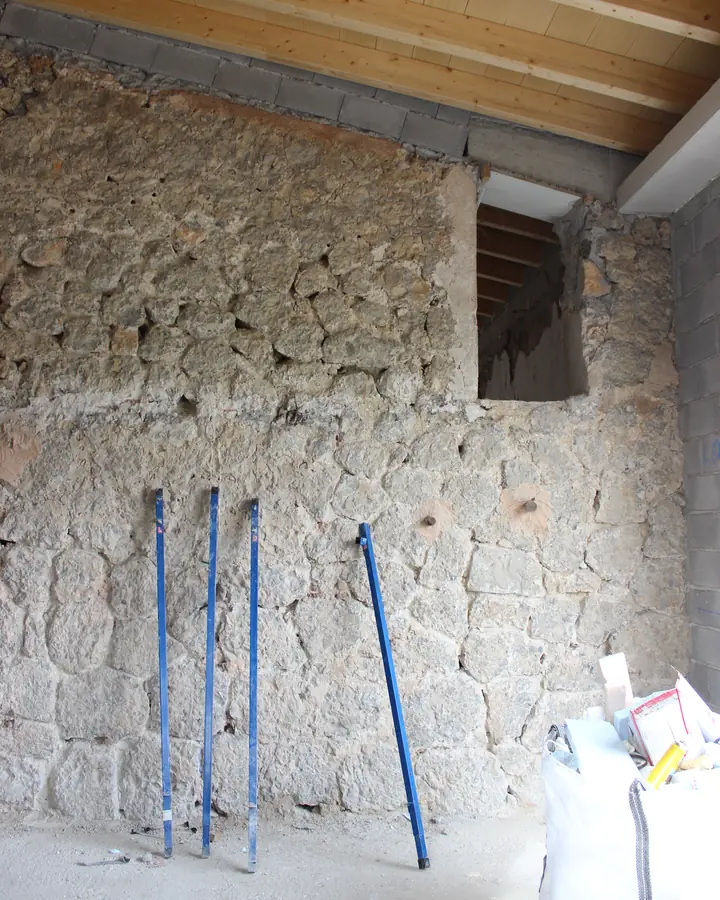
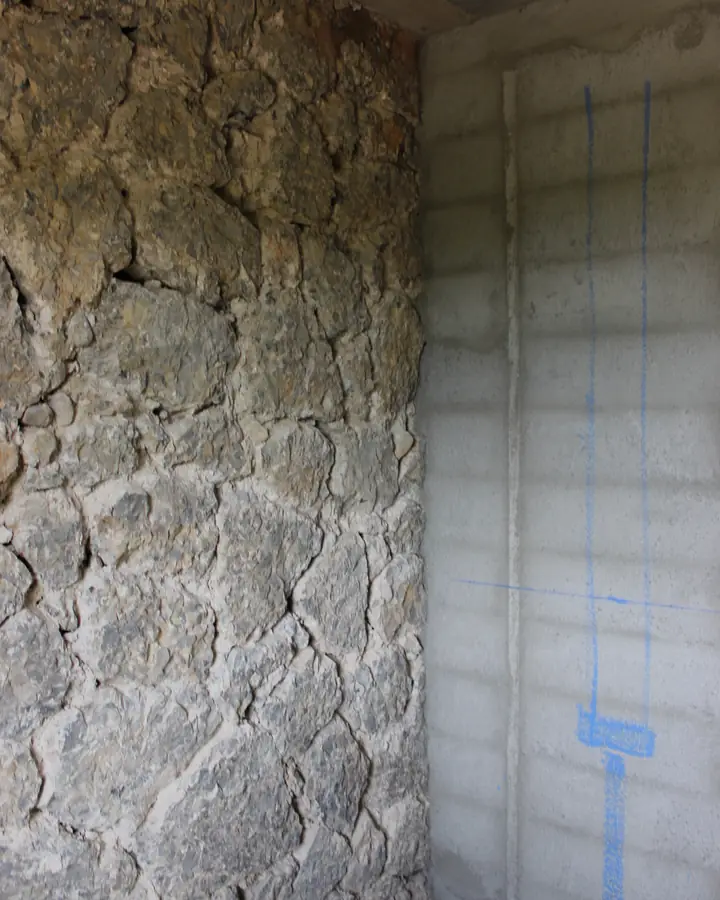
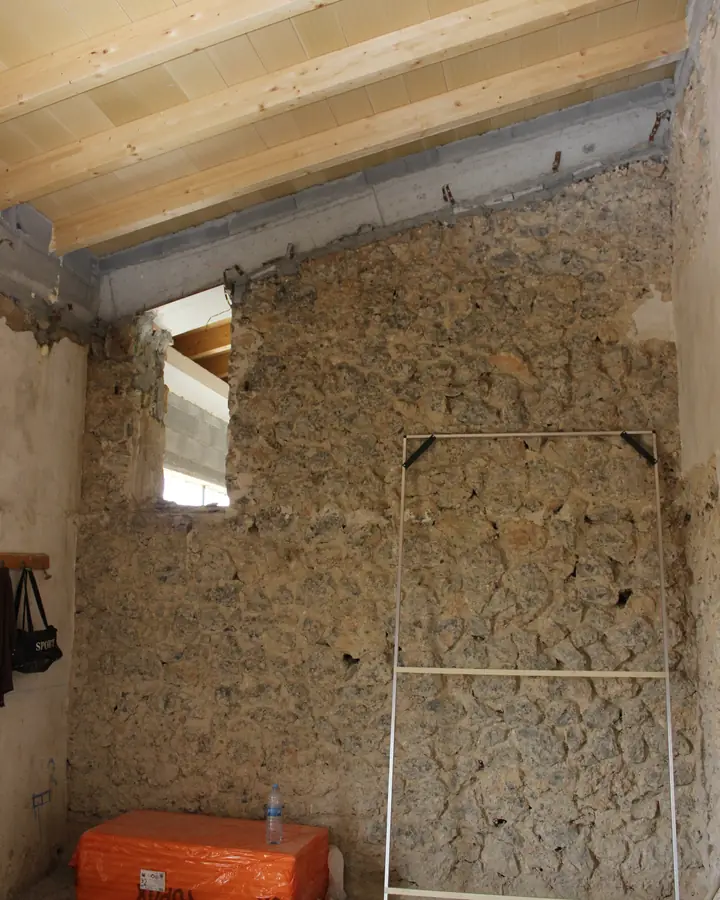
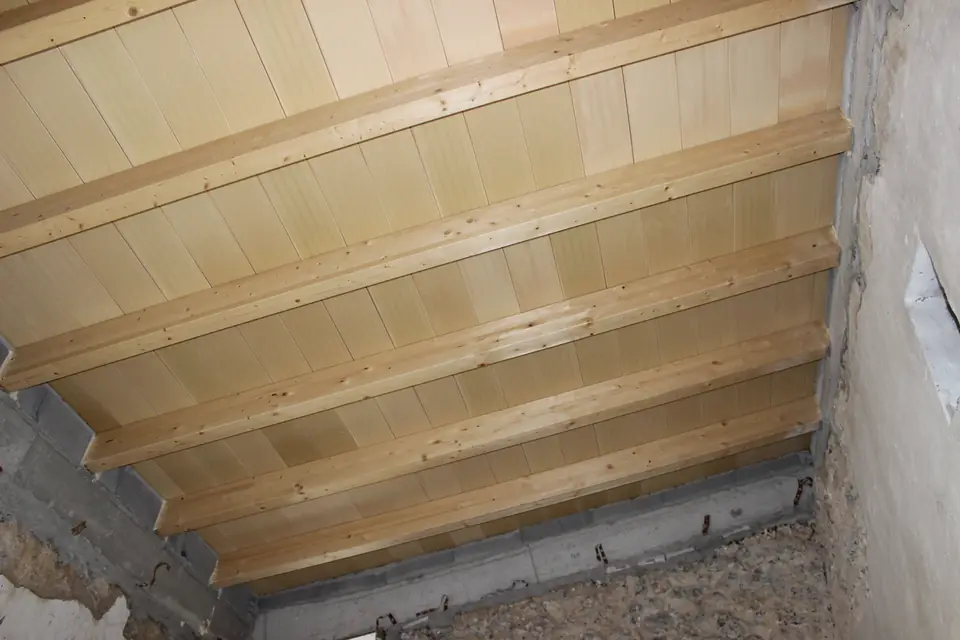
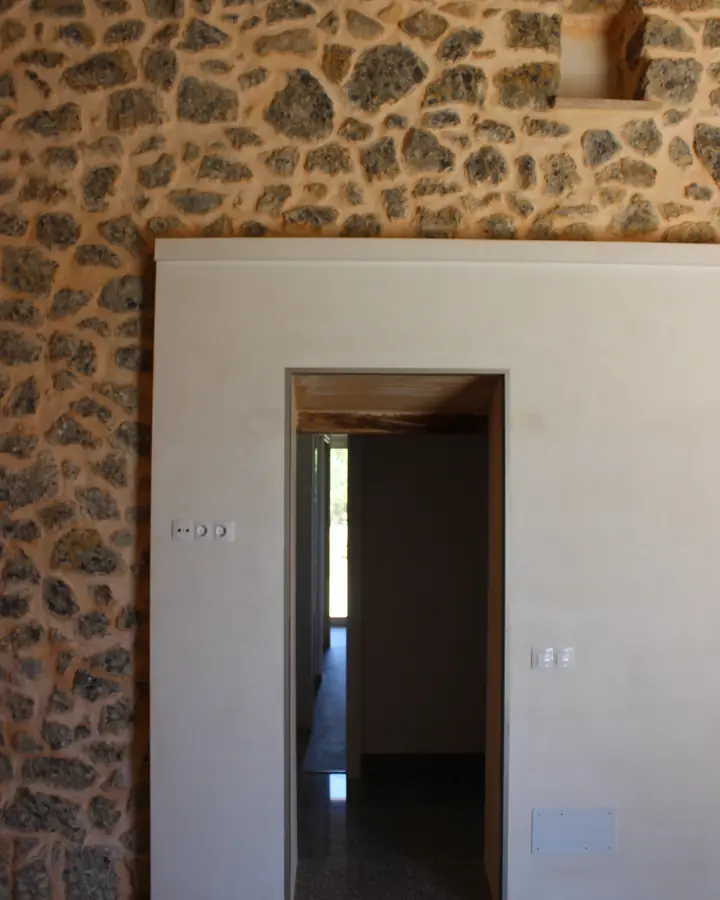
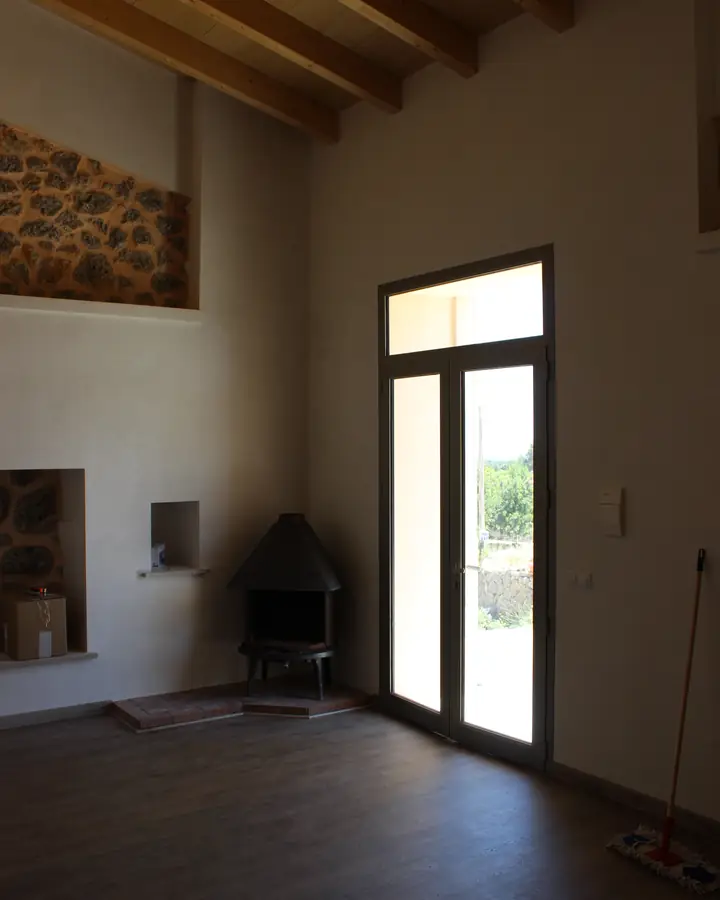
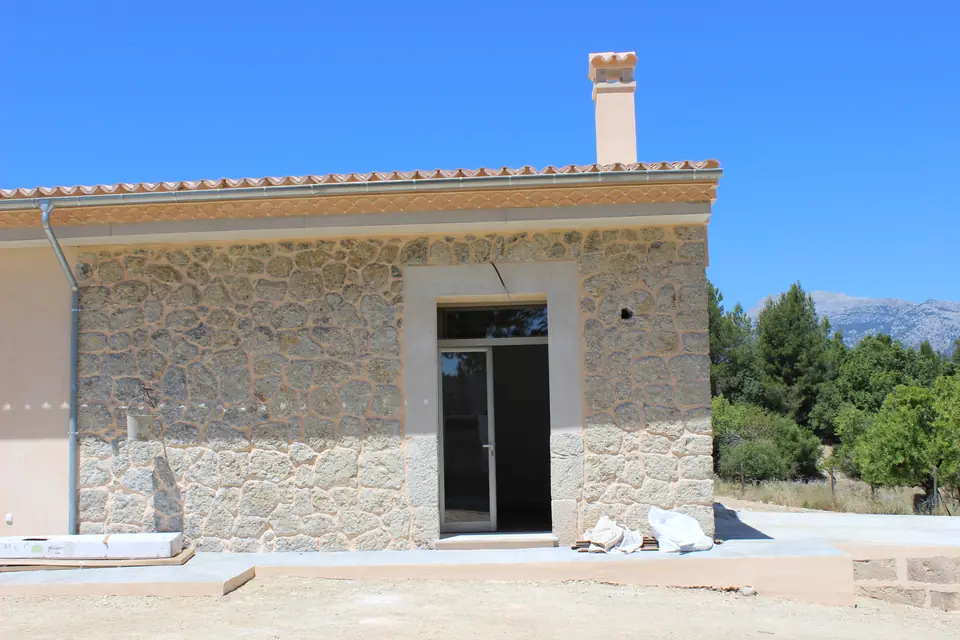
This country house retains its original stone walls. During construction, a concrete tie beam binds them together at the top and supports the new roof made of beams and wooden decking. The new openings are marked on the wall before being created, and the new walls are built alongside the old stonework and then plastered.
Once finished, the stone is visible inside and out, the roofs are made of wood and the house sits on a base of marès, topped with a traditional tile eave.
- Stone walls preserved and tied at the top
- New roof made of wooden beams and boards
- Open holes in the stone
- Exposed stone inside and out
- Marès plinth and tile eaves
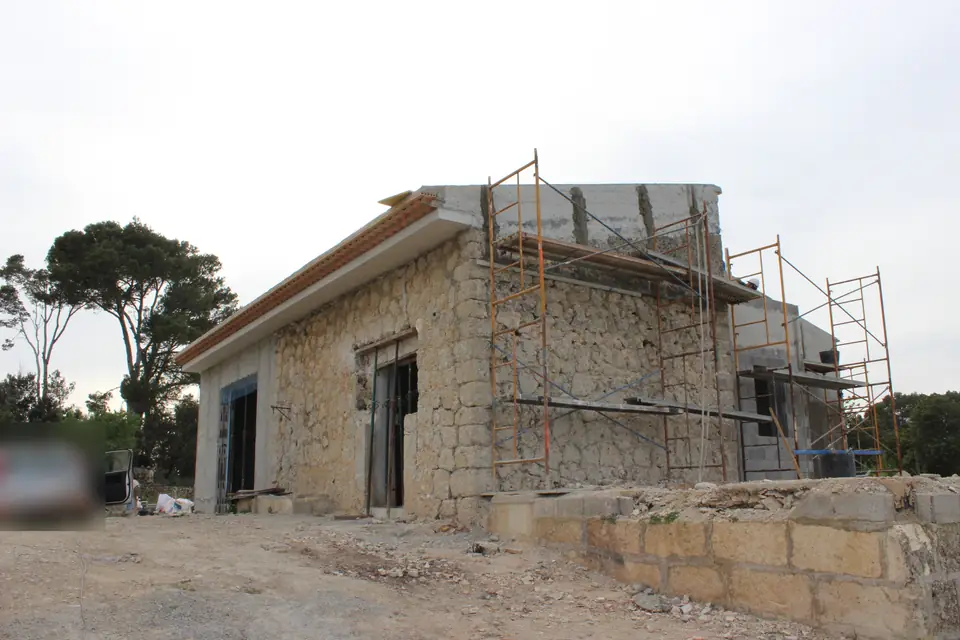
The same house, from construction to delivery
The problems that appear in almost all old properties
In a stone house over fifty years old, these four are almost always present. It's best to expect them from your first visit.
Woodworm and rot in the beams
A beam can appear sound but be hollow inside: this is detected through inspection and testing, not by visual inspection. We'll explain. How to detect damaged wooden beams in time, before the problem becomes urgent.
Capillary action
The stone or marès wall rests directly on the ground without a barrier and absorbs water: saltpeter appears and the plaster bulges up to a meter above the ground. This can be remedied with perimeter drainage, a barrier, and breathable mortars, never by sealing it, which is the classic mistake.
Cracks and seats
Not all of them are serious. It's important to distinguish between an old, stabilized foundation and a crack that continues to widen; when the problem lies in the foundations, they need to be underpinned.
Filtering covers
They have been letting water through for years without anyone noticing from the inside, and it is that water that rots the ends of the beams at their supports.
Rural land and protected houses: what you should know before buying
On a property, regulations dictate what can be done before the project itself. These five things are best known before signing the purchase agreement, not after.
Rehabilitate what already exists
A house legally built on rural land can be renovated with a permit from the town hall. The project is designed to be inwards, making good use of the existing living space.
Expanding depends on the plot
If the house is on a plot smaller than the minimum size required by current regulations, it cannot be expanded. If it meets the minimum size, the maximum buildable area and the municipal planning regulations determine the maximum expansion limits.
Changing the use is like building
Converting a barn, garage, or tool shed into a dwelling is subject to the same requirements as new construction. It requires a prior and binding report from the Consell de Mallorca (Island Council of Mallorca) regarding minimum plot size and permitted development. The Consell has three months to issue this report, following a fifteen-day public consultation period.
Listed houses
If the house or any of its elements are protected, the work that affects them also needs the prior authorization of the Consell de Mallorca.
Unlegalized parts
It's best to resolve this before starting the project. In the extraordinary legalization of buildings on rural land, the Administration has six months to respond, and if it doesn't, the application is considered denied. We explain this in our guide to legalization on rural land.
How to renovate a traditional Catalan farmhouse, step by step
Seven phases, in this order. Skipping the first one is the fastest way to run out of money.
Visit and diagnosis
We inspect slabs, beams, roof, walls, and foundations, read for dampness, and dig test pits. Based on our findings, we prepare a detailed, item-by-item, written estimate for you before we begin.
Project and licenses
Together with your architect, we prepare what the file requires: the city council license and, if the work creates a dwelling or the house is protected, the reports and authorizations from the Consell.
Dismantled and cleaned
Additions of no value, such as cement plaster, false ceilings, or partitions, are removed, revealing the original house. The usable tiles, stones, and beams are preserved.
Structure and roof
Reinforcement or replacement of beams and slabs, tying of walls and new roof with insulation and waterproofing.
Facilities
New plumbing, electricity, sanitation and air conditioning, installed without breaking what will be left exposed.
Trades and finishes
Lime plaster, exposed stone, flooring, carpentry, and painting. This is the phase where you have the most say: we'll go over it with you, material by material.
Delivery
The architect signs the final work certificate and we hand over the house to you with the documentation of what has been done.
What determines the cost of renovating a traditional Catalan farmhouse?
A figure per square meter without seeing the house is of little use: what drives the budget is under the plaster and above the roof. These are the items that matter.
The structure
Wooden beams and joists, floor slabs, walls, and foundations. Reinforcing or replacing a floor slab is what can most significantly affect the figure, and the true cost is not known until test pits are dug.
The cover
Remove the tile, repair or rebuild the board, insulate, waterproof and replace the original tile.
The facilities
In an old building there is almost never anything usable: plumbing, electricity, sanitation and air conditioning are all complete.
The finishes
It's what everyone thinks about first, and it's usually the most predictable part of the budget.
When is it not advisable to renovate a traditional Catalan farmhouse?
We say it at the beginning, even if it costs us a lot of work.
When what has been built is not enough for what you need
If you need 300 m² and the legal house is 120 m², it's very likely that the rural land regulations won't allow you to reach that size. It's best to look for another property.
When there are volumes that cannot be legalized
Buying the problem to inherit it is expensive.
When you're looking for a short-term investment
Between the paperwork and the construction, the money is tied up for a long time.
When what you want is a modern house
A restored traditional Asturian farmhouse will still have thick walls, small openings, and ceilings marked by the structure. That's its charm, but you have to appreciate it.
Frequently asked questions about the rehabilitation of traditional farmhouses
Is it possible to extend a traditional Asturian farmhouse on rural land?
It depends on the plot. If the property doesn't meet the minimum size requirements stipulated by current planning regulations, the law doesn't allow for any expansion of the house, even if it's legal. If it does meet the minimum, the maximum buildable area and local regulations will determine how much you can expand. Before buying, ask your architect to check the permitted size and dimensions of the plot.
Is a report from the Consell de Mallorca necessary to rehabilitate a property?
No, if the property already exists and is legal: to renovate it, the town hall processes the permit. A prior and binding report from the Consell (local government) is mandatory when a new house is built or when another building, such as a barn, is converted into a dwelling. If the house is listed, prior authorization from the Consell is also required for any work affecting its protected elements.
How much does it cost to renovate a traditional Mallorcan farmhouse?
It depends primarily on the condition of the structure, the roof, and the installations, which in an older property are almost always replaced. That's why we don't give a price per square meter without seeing the house: we visit it, carry out exploratory work where necessary, and then assign a price to each item.
Is it worth buying a traditional Catalan farmhouse to renovate it?
It depends on two things: whether the legally permitted floor area is sufficient for your needs, since expanding isn't always possible, and whether the structure is in good condition. A property with sound floors and a recently rebuilt roof is a great buy; one with corroded beams and dampness everywhere can cost as much to repair as it did to buy. The preliminary inspection is worth every penny.
Can I live in the house while it's being renovated?
In a complete renovation, no: work is done simultaneously on the structure, roof, and utilities, leaving the house without services for months. In phased, partial renovations, it's possible to live with the construction, although it lengthens the timeline and increases the overall cost, because it requires protecting the structure and reorganizing the work.
Do you renovate traditional Mallorcan farmhouses?
Yes. We work from Inca, covering all of Mallorca, and we travel to any country house or village property. If you'd like us to see yours, we're available Monday to Friday, from 8:30 a.m. to 4:00 p.m., at +34 625 16 47 18, also via WhatsApp.
You might also be interested in
- Building and community rehabilitationIf you're interested in an apartment building: facade, roof and structure with the community.
- Traditional Mallorcan constructionHow the houses on the island were built with stone, marès, lime, wood and tile.
- Ideas for renovating an old houseWhat to keep and what to change when a house has a history.
- Is it possible to build on rural land?What the regulations allow on a rural plot in Mallorca.
- Mechanism Beam GuideWhat it is, when to use it and how to install it, explained by the person who installs it.
Budget
Let's talk about your property before construction begins.
If you own a traditional Mallorcan farmhouse or country estate and want to know what can be done with it, the first step is to see it. We'll visit the property, inspect it, and provide you with a clear assessment of its structure and a realistic investment range, without any inflated figures. You can call us at +34 625 16 47 18, message us on WhatsApp at the same number, or email us at info@armalutx.com.
- 625 16 47 18
- info@armalutx.com
- Monday to Friday, from 8:30 a.m. to 4:00 p.m.
- Carrer del General Weyler, 29 · 07300 Inca, Mallorca