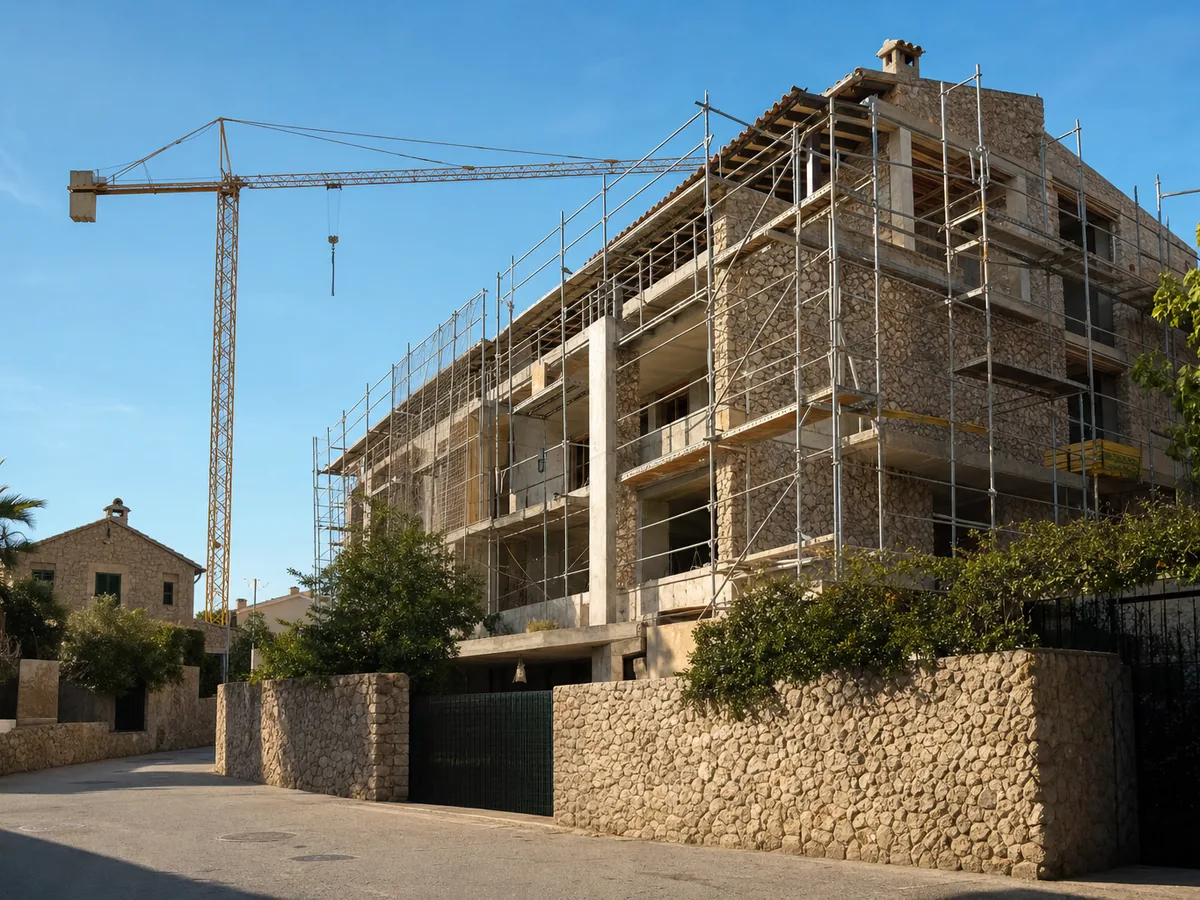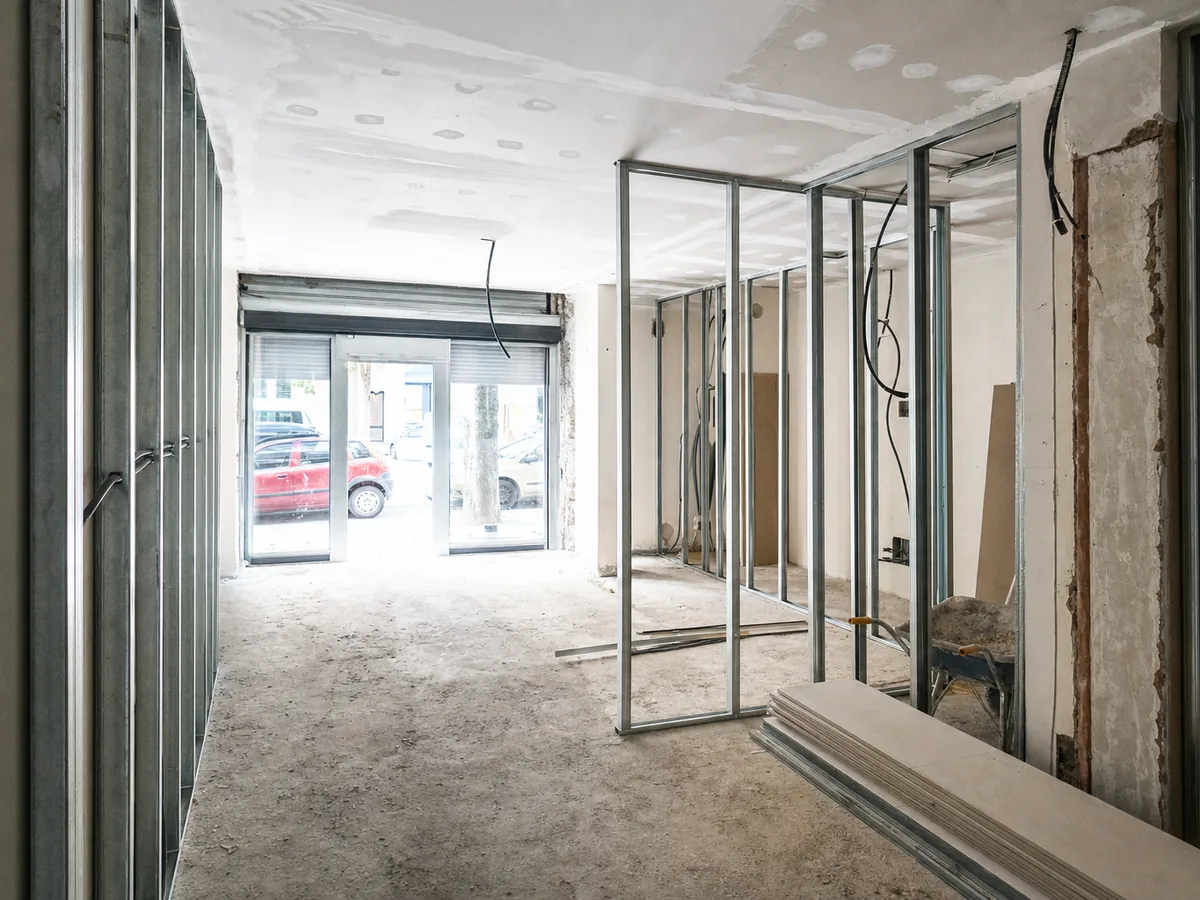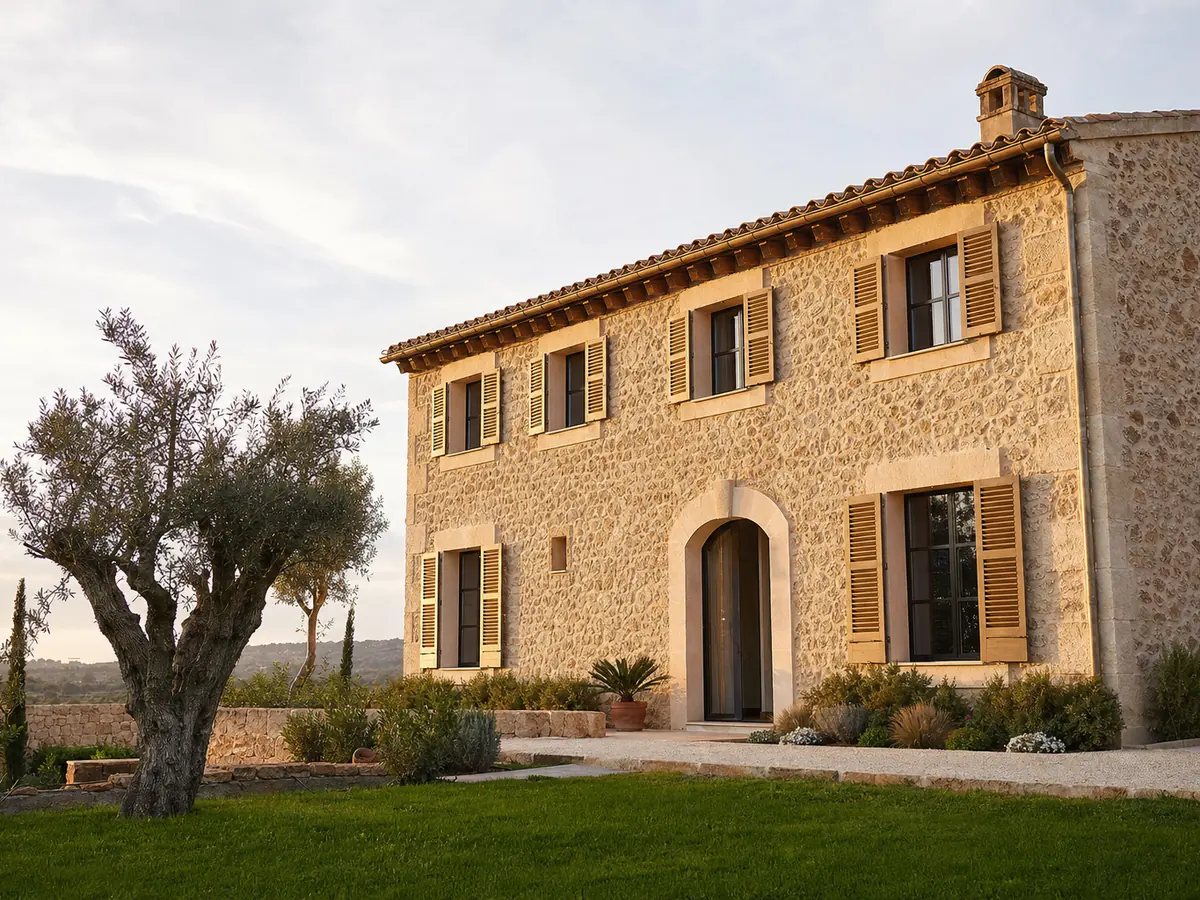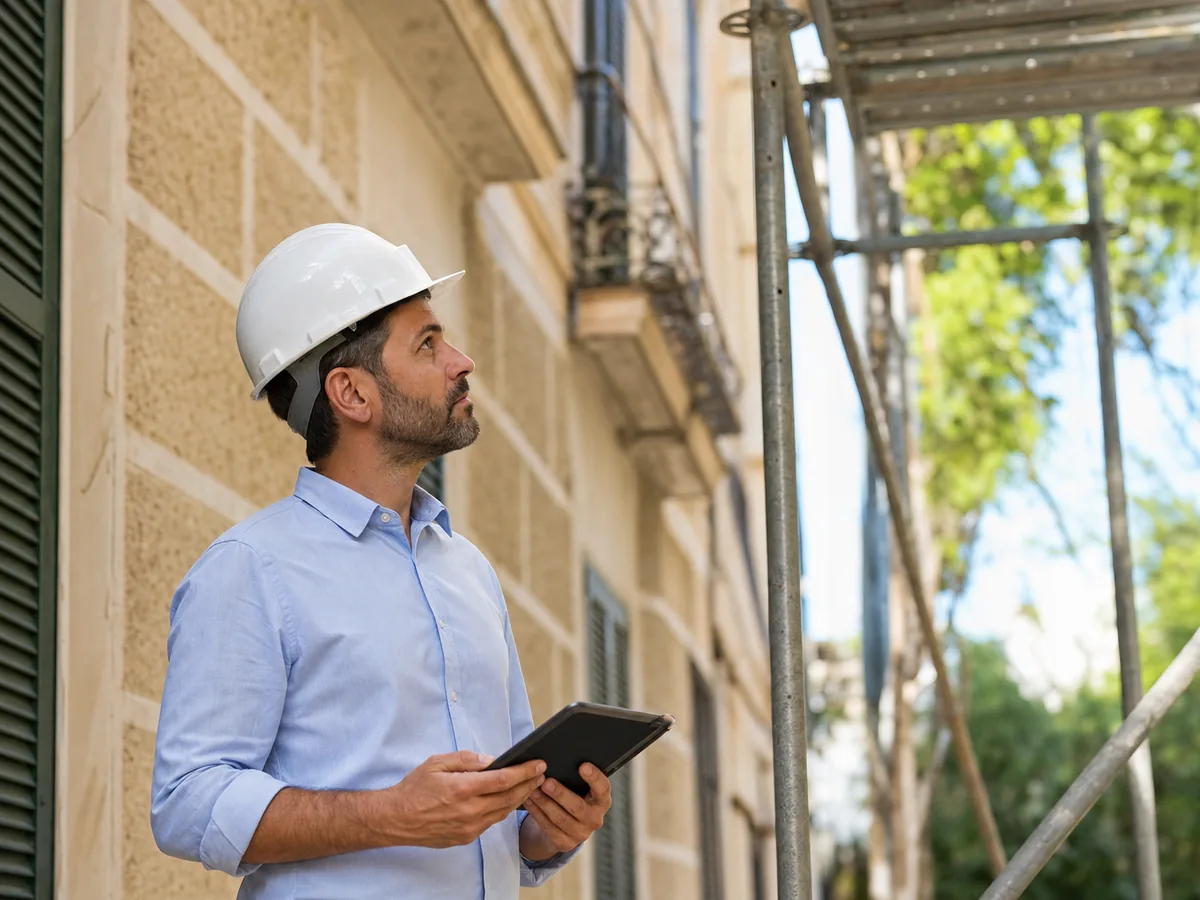
The building inspection (ITE), now the Building Assessment Report (IEE), is compulsory in Mallorca for every building that turns 50, whatever its use, and is renewed every 10 years. It assesses the state of repair, accessibility and energy efficiency. At Armalutx we do not just detect the defects: we carry out the structural repairs the inspection reveals, with more than 50 years in the trade.
If you manage a owners' association or own an older building in Palma, the building inspection (ITE) is a procedure you'll have to deal with sooner or later. Many of the city's 1960s and 70s apartment blocks are already required to undergo this inspection. At Construcciones Armalutx, we've been working on the structures of these Mallorcan buildings since 1967: we know what a building inspection looks for and, above all, we know how to repair them without any surprises.
What is the technical building inspection (ITE) and how does it differ from the IEE?
The building inspection is the regular, compulsory review of a building's condition carried out by a qualified professional (a registered architect or technical architect). Since 2015, the classic ITE has evolved into the Building Assessment Report (IEE), which is more comprehensive. The traditional ITE only looked at the state of repair; the IEE adds universal accessibility and energy performance certification.
In practice, people still say "ITE" for both things. The framework that regulates them today is the Royal Legislative Decree 7/2015 of the Land and Urban Rehabilitation Law (Articles 29 and 30), implemented in the islands by Law 12/2017 on urban planning of the Balearic Islands and by each town council's bylaws. When the report requires work, the next step is renovation works for owners' associations in Mallorca.
Is the ITE (Technical Building Inspection) mandatory in Mallorca?
Yes. Building inspections in Mallorca are mandatory by law. Since 14 June 2026, all buildings in the Balearic Islands that reach 50 years of age must undergo this inspection every ten years, and the previous requirement of a 30-year maintenance inspection is no longer in place. The responsibility for commissioning the inspection lies with the property owner or the owners' association.
Control is exercised by each city council. In the capital, the Palma City Council manages the Building Assessment Report, and the report is then included in the Register of building assessment reports of the Government of the Balearic Islands. For listed buildings or buildings with heritage protection, it is also advisable to consult the Consell de Mallorca.
How often is the ITE (Technical Building Inspection) carried out?
The ITE/IEE is renewed every 10 years from the date the building was first subject to the requirement. The first report must be submitted upon reaching the specified age (50 years for the complete IEE), and from then on it is repeated in ten-year cycles.
The specific timeline is determined by each municipality's ordinance, based on the year of construction. As a reference, in 2026, buildings erected around 1976 (reaching their 50th anniversary) and those from 1966, which would be due for their second inspection, will be subject to scrutiny. If your building dates from that period, it's best to get it inspected before you receive a notification from the city council.
What does a building inspection check?
The technician tours the building and checks the elements that guarantee its safety and habitability, in accordance with the requirements of Technical Building Code. These are the key points of a building technical inspection in Palma:
- Structure and foundation: pillars, slabs, beams and load-bearing walls; cracks, deflections or deformations.
- Facades and projecting elements: balconies, cornices and cladding that may detach onto the public road.
- Roofs and terraces: waterproofing, leaks and condition of materials.
- Sewerage networks and downpipes: leaks, blockages and associated dampness.
- Universal accessibility: entrance, lift and barrier-free routes.
- Energy efficiency: certificate of the building's thermal performance.
How much does the ITE (Technical Building Inspection) cost in Mallorca in 2026?
The price of a building inspection (ITE) in Mallorca in 2026 starts at around €170 + VAT for small properties and rises with the size of the building. In owners' associations, the usual range is between €350 and €1,500, or calculate it at a rate of about €50 to €100 per dwelling.
The cost is unregulated and depends on the number of dwellings, their age, and their state of repair. The report itself is the inexpensive part; the significant expense arises if defects are found that require repair. Therefore, it's crucial that the inspector truly understands how to address structural issues.
What happens if the ITE (Technical Building Inspection) comes back unfavorable?
A building inspection (ITE) can have three possible outcomes, and not all of them carry the same obligations. If the inspection reveals deficiencies or is unfavorable, the property owner is required to rectify them within the timeframe set by the inspector and the local council. This is where Armalutx makes the difference: we sign off on the diagnosis and carry out the work.
| ITE result | What does it mean | What needs to be done |
|---|---|---|
| Favourable | The building is compliant; with no significant deficiencies. | Submit the report and wait for the next cycle (10 years) |
| With deficiencies | There are pathologies that need correcting, but they are not urgent. | Carry out the repairs within the established timeframe and certify the correction. |
| Unfavorable | Safety risk; serious deficiencies | Act immediately: shore up, reinforce and rehabilitate urgently |
When the report detects structural problems, we step in with our work on when and how structural reinforcement is done and bring the building back to a sound condition.
When is it advisable to get ahead of the ITE (Technical Building Inspection)?
There's no need to wait for a letter from the city council. It's worth inspecting and taking action beforehand in several common situations in Palma's older buildings:
- Cracks that grow: if cracks appear in load-bearing walls or pillars, have them checked now. We help you find out when cracks in walls are dangerous.
- Dampness and leaks: persistent stains on ceilings or the facade usually hide a bigger problem.
- Facade with detached sections: a piece of masonry falling into the street is a real risk; facade renovation in Mallorca avoids scares and fines.
- Before selling or buying: a clean report is a selling point and avoids surprises.
Acting early is almost always cheaper: a deficiency detected in time can be repaired with a limited intervention, not with emergency work.
From inspection to construction: who repairs what the ITE detects
Most companies issue the report and their work ends there; then you have to find a construction company. At Armalutx we close the loop. As a leading construction company in Mallorca, we go from inspection to execution without intermediaries, which is key when the problem is structural.
The structural reinforcement of buildings in Mallorca is our niche: underpinning foundations, reinforcing floor slabs and pillars, treating cracks and consolidating facades. Here we explain how to reinforce a house that is already built while respecting the original Mallorcan architecture.
Frequently asked questions about the ITE in Mallorca
Who can sign the building technical inspection in Mallorca?
Only a qualified professional—a registered and licensed architect or building engineer—can sign the building inspection report in Mallorca. A report from an unqualified company is not valid. At Armalutx, we work with qualified professionals who prepare the IEE (Building Inspection Report) and, if structural deficiencies are found, our team repairs them and certifies the repairs to the local council.
Is the ITE the same as the energy certificate?
No. The energy performance certificate is only one of the three parts of the Building Assessment Report, along with the state of conservation and accessibility. The ITE/IEE is a more comprehensive document and is mandatory for older buildings, while the energy certificate is also required to sell or rent a property.
What happens if my building fails the ITE inspection in Palma?
Failure to submit the Building Assessment Report is considered a planning violation. Balearic law sets fines ranging from €600 to €3,000, and in Palma, the ordinance specifies these fines at €600 to €1,500 per cadastral reference, or up to €2,999 if the building is protected, in addition to the obligation to undergo the inspection. In 2024, the City Council opened proceedings against 3,467 buildings that had not submitted the report. If the building suffers damage and the Building Assessment Report was not up to date, the responsibility falls on the property owner.
How long does it take to complete a building inspection?
A technical visit to a medium-sized building is usually completed in a day, and the report is written within a few days. The actual timeframe depends on what is found: if the building is sound, it's quick; if structural repairs are needed, the schedule is dictated by the work itself. That's why we work with a fixed budget, with no surprises.
Your building, in good hands since 1967
More than 1,500 projects all over Mallorca and 99% satisfaction back up the way we work: approachable, serious and with structure as our speciality. We are a family firm from Inca that treats every building with the respect the island's architecture deserves.
If your building's ITE is due or has already come back with defects, let's talk before the problem grows. Call us on +34 625 16 47 18, message us on WhatsApp or email info@armalutx.com and we will advise you, with no obligation, on your building's inspection in Mallorca.