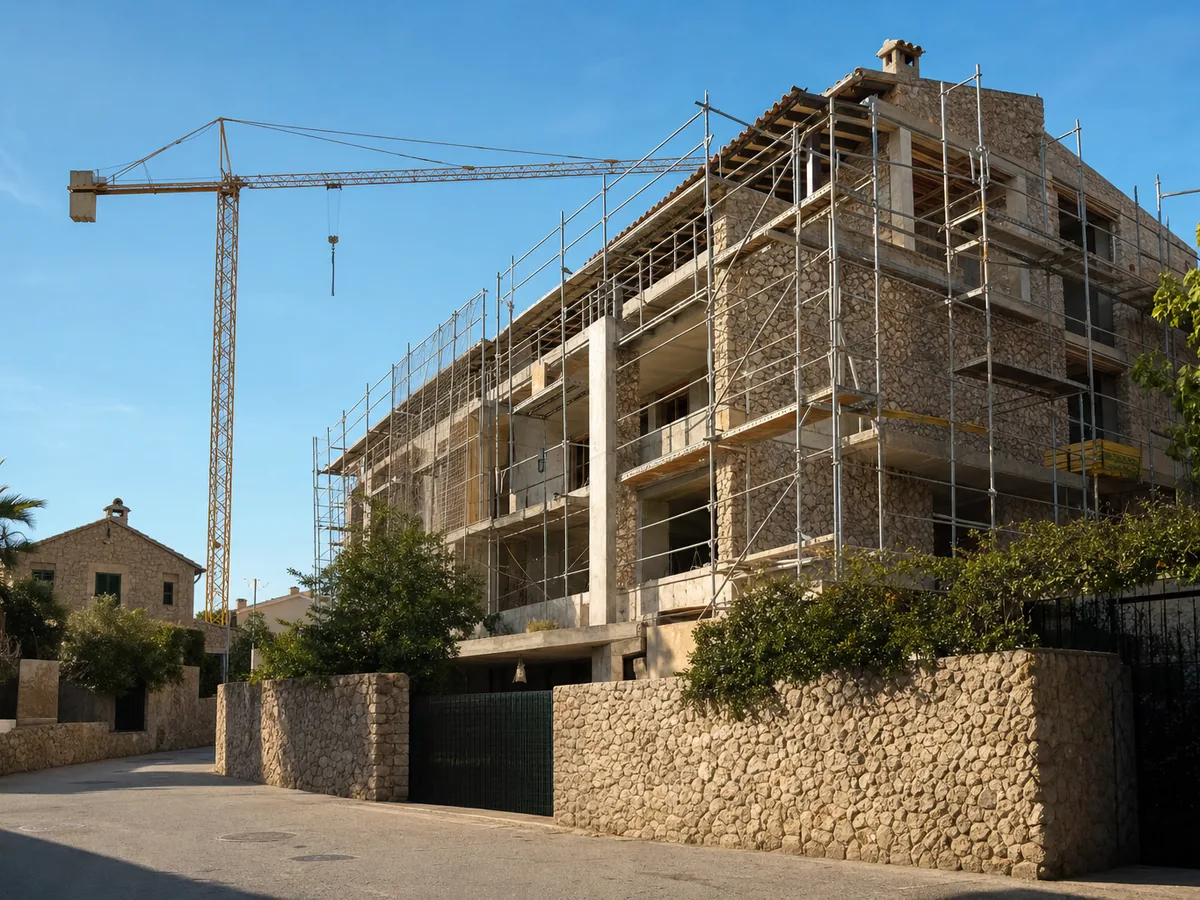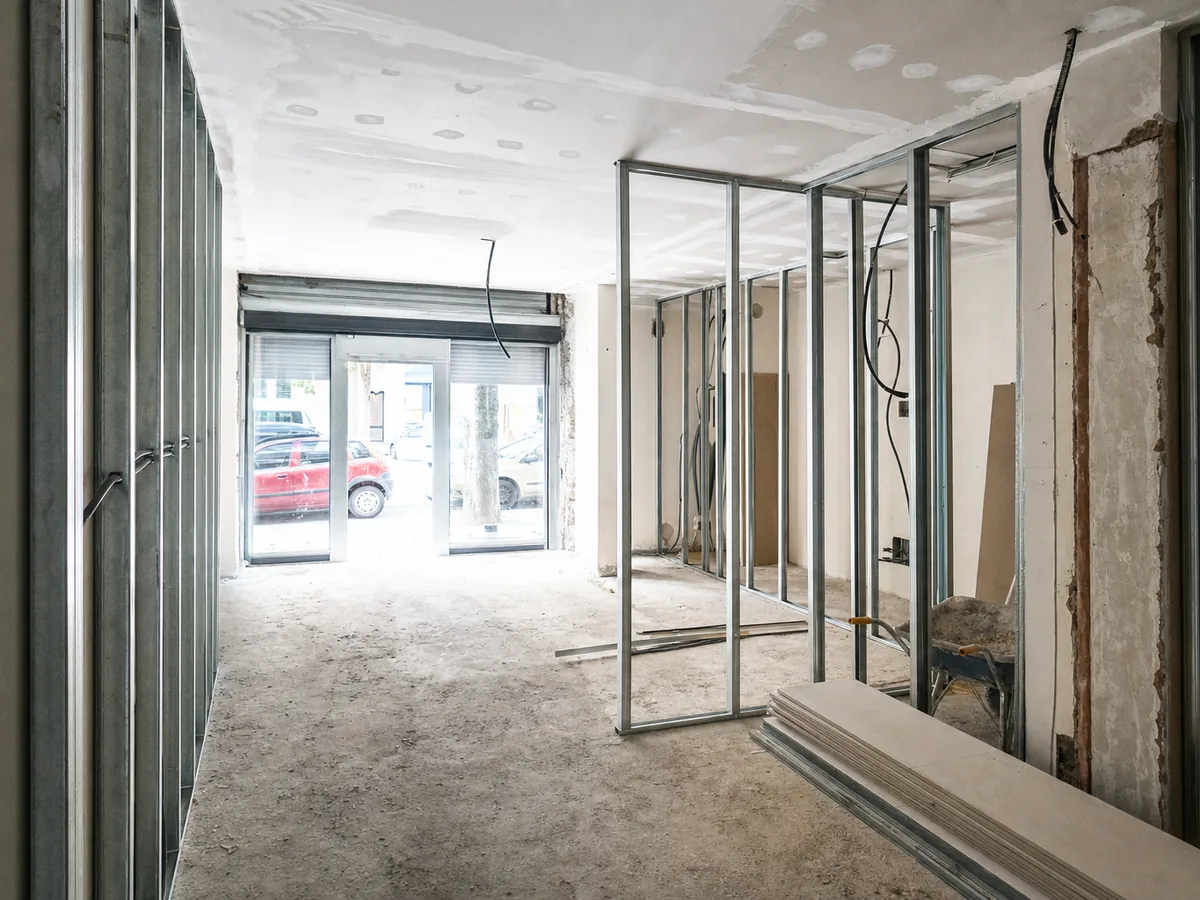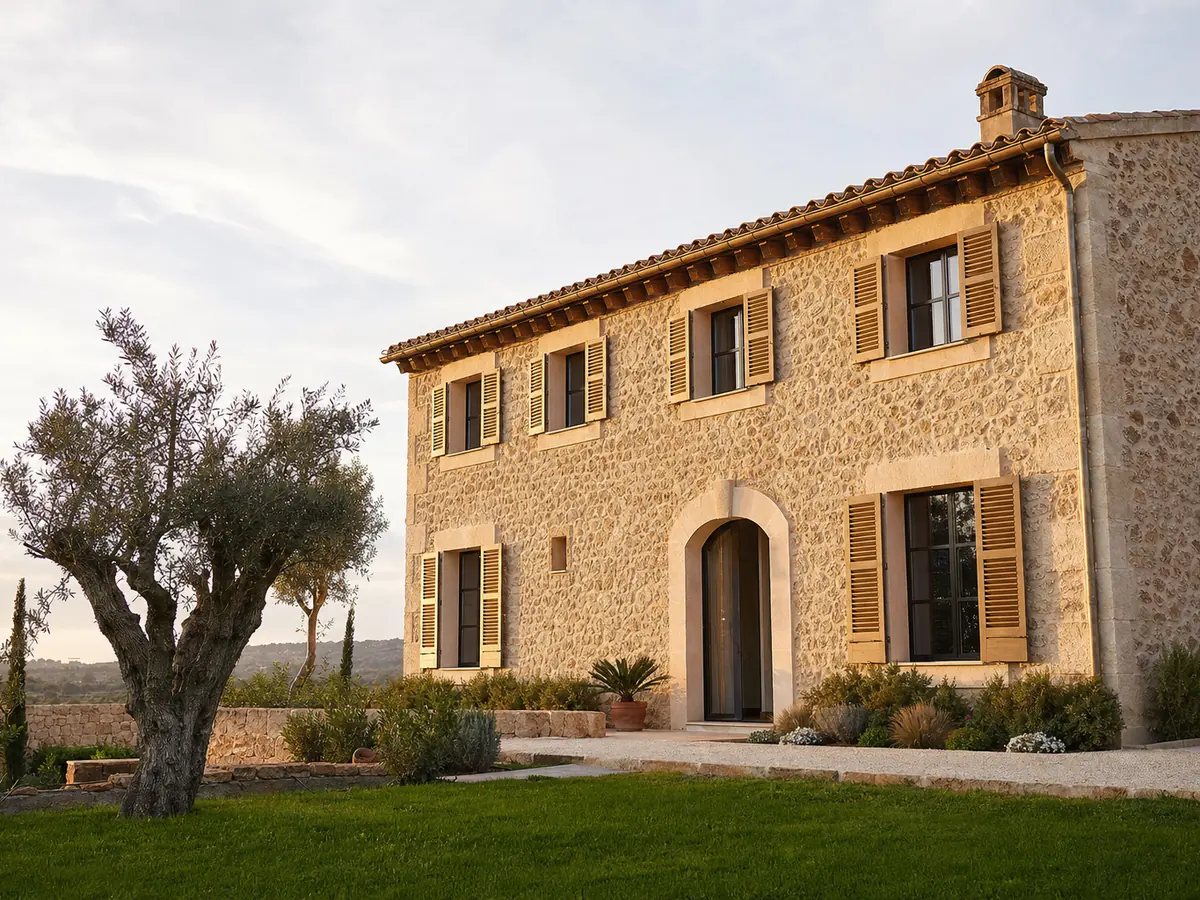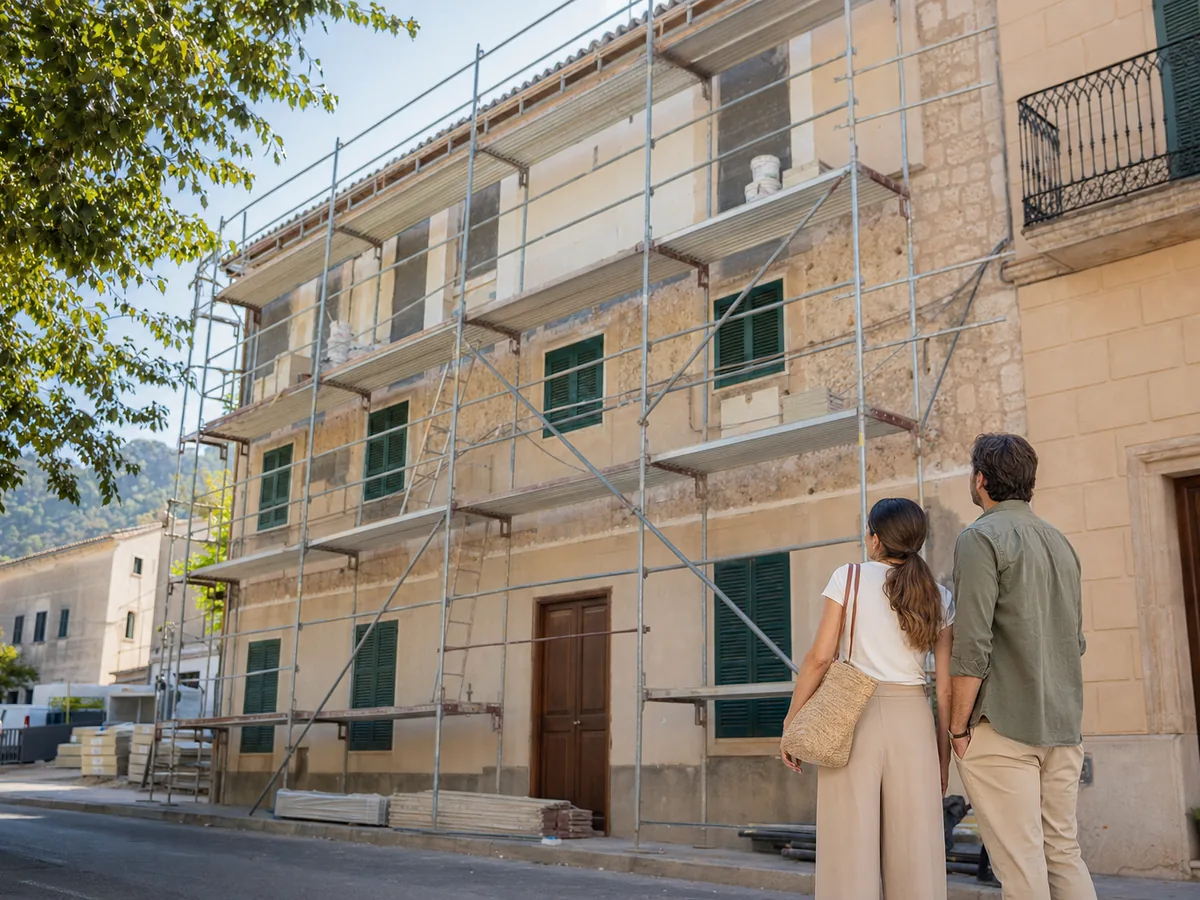
Refurbishing a residential building in Mallorca costs between €50 and €150/m² of façade with an external insulation (SATE) system and between €34 and €150/m² of roof. Refurbishment grants cover between 40% and 80% of the cost, up to a maximum of €6,300 to €18,800 per dwelling. Energy efficiency works are approved by a simple majority of owners and shares, and no resident can block them if the cost does not exceed twelve months of communal charges.
Working for a residents' association is nothing like working for a private client. There are fifteen or fifty people to deal with, a managing agent, a quote that has to be approved at a meeting and families still living in the building while the facade is hacked off. We have been doing it in Mallorca since 1967, and what associations value most is not the price: it is that the job finishes when we said it would.
What rehabilitation works are being carried out in the communities of Mallorca?
The five most frequent interventions are facade rehabilitation, roof renovation, waterproofing of communal terraces, structural reinforcement, and improvement of the thermal envelope. In buildings from the 1960s and 70s—the majority of Palma's buildings—these interventions are usually carried out together.
- Facades: making good, repair of slab edges, external wall insulation (SATE) and new render.
- Roofs and terraces: waterproofing, insulation and renewal of gullies and parapets.
- Structure: reinforcement of beams with aluminosis or carbonation, and repair of overhangs.
- Thermal envelope: insulation and joinery, the item that unlocks the biggest grants.
- Accessibility: ramps, adapting entrance halls and pre-installation for a lift.
- Common facilities: soil pipes, water mains and electrical renewal of the communal areas.
How much does it cost to renovate a residential building in Mallorca?
It depends on the item, so it's best to see it broken down rather than as a single figure. A facade with SATE insulation ranges from €50 to €150/m² depending on the insulation and thickness, and a roof ranges from €34 to €150/m² depending on the system.
| Item | Price 2026 |
|---|---|
| SATE facade with EPS | 55 – 95 €/m² |
| SATE facade with rock wool | 80 – 130 €/m² |
| High-performance SATE (XPS 120 mm) | 110 – 150 €/m² |
| Sloped roof renovation | 34 – 150 €/m² |
| Waterproofing of communal terrace | 20 – 50 €/m² |
| Structural reinforcement with mecanoviga | 180 – 260 €/ml |
| Removal of asbestos cement | 8 – 25 €/m² |
On top of those figures you have to add scaffolding, design, site supervision and health and safety. On a full facade refurbishment the scaffolding can account for between 10% and 15% of the cost, and that is why it pays to group all the external work into a single job.
What majority is needed to approve a rehabilitation project?
Works to improve energy efficiency are approved by a favourable vote of the majority of owners who in turn represent the majority of shares, under article 17 of the Horizontal Property Law. On top of that, since 2026 a simple majority is enough for energy refurbishments with public funding of at least 30% of the cost.
And one point that resolves many discussions at meetings: if the cost passed on to each owner, once the subsidies have been deducted, does not exceed the amount of twelve monthly common expenses, the resident who voted against is equally obliged to pay. They cannot object or be exempted, because it counts as a general expense of the building.
The works necessary for the conservation and safety of the property do not even require prior agreement: they are mandatory for the community, regardless of what is voted.
What aid is available for rehabilitating a building in the Balearic Islands?
The refurbishment programmes of the Ministry of Housing financed with European funds cover from 40% of the cost, if the primary energy saving reaches 30-45%, up to 80% when the saving exceeds 60%, with a maximum of between €6,300 and €18,800 per dwelling depending on the level of improvement.
There are additional increases on top of the base aid: 5 % for listed buildings, 5 % for coordinated actions in more than ten buildings, and 10 % for vulnerable groups. The usual requirements are four: community agreement, technical project, energy performance certificate prior to work, and ITE approved or in process.
The mistake that causes the most lost grants: applying after the work has already started. You should always apply beforehand. You can see the details in our guide housing rehabilitation grants in the Balearic Islands.
How can the work be organized without rendering the building uninhabitable?
Working one facade at a time and in phases, with guaranteed access to the building entrance at all times, schedules agreed upon with the community, and protection of clotheslines, windows, and air conditioning units. Families continue to live in their homes throughout the entire construction process.
In practice, this translates into three commitments we make in writing: a phased schedule provided before starting, a single point of contact with the property manager, and advance notice to affected residents for any work requiring access to their homes. It sounds basic. It's precisely what goes wrong in most community projects that later need to be salvaged.
What role does the ITE play in building rehabilitation?
The Building Technical Inspection (ITE) picks up the defects and sets out the compulsory works, and it is also a requirement for accessing the grants. An unfavourable report obliges the association to carry out the works listed within the period set by the town council.
The smart thing to do is take advantage of this moment. If the building inspection (ITE) requires facade repairs, erecting scaffolding for insulation at the same time costs a small additional percentage and opens the door to subsidies that cover a large part of the work. Doing only the bare minimum required and then having to erect scaffolding again in five years is the most expensive option in the medium term.
Why choose Construcciones Armalutx for your association's job
We are a construction company founded in 1967, with over 1,500 projects delivered in Mallorca and our own site crews. In residents' associations that matters especially: whoever is on the scaffold answers to us and not to a subcontractor nobody can reach when a problem turns up.
We work to a fixed quote and a phased programme, two things a managing agent needs in order to defend the job at the owners' meeting. And we know the island's building stock: marés facades, slab edges degraded by salt, Arabic tile roofs and 1960s structures with carbonation. You can see our specific service for facade renovation in Mallorca.
When NOT to undertake a complete rehabilitation
- When the community has no funds or financing agreement. Starting a job without the levy sorted out ends in a stopped site and scaffolding invoicing for months.
- When there are less than two years left until an ITE (Technical Building Inspection) that may change the scope. Better to get it done first and design with the report in hand.
- When there is only one localised defect. If the problem is a specific overhang, that overhang is repaired; a comprehensive intervention is not necessary.
Frequently asked questions about community rehabilitation in Mallorca
Can a resident refuse to pay the levy for a refurbishment job?
No, if the work has been approved by the legally required majority or if it is necessary for the preservation and safety of the building. On energy efficiency works, moreover, the law prevents objection when the cost passed on, after deducting grants, does not exceed twelve months of communal charges. The association can pursue non-payment through the courts.
How long does the renovation of a residential building's facade take?
Between two and five months for a medium-sized building, depending on the façade area, the number of floors and whether external wall insulation (SATE) is fitted. The timescale stretches if structural defects turn up when the render is hacked off, which is fairly common in coastal buildings over fifty years old.
Who processes the rehabilitation grants, the community or the construction company?
They are usually handled by the managing agent together with the technician who drew up the design, who is the one who produces the energy certificate and evidences the saving achieved. The construction company supplies the documentation of the work carried out and the invoices, which are essential for the final justification of the grant.
Is it possible to renovate a building in Mallorca during the tourist season?
Yes, although in tourist municipalities there are restrictions on building work and on occupying the public highway between June and September, above all on the seafront and in historic centres. The usual approach is to plan the bulk of the job from October to May and leave interior work or work with less noise impact for the summer.
What guarantees do community rehabilitation works have?
The Building Regulations Act sets one year for defects in the finishes, three years for those affecting habitability — including leaks through the facade or roof — and ten years for structural damage. SATE systems and waterproofing membranes add the manufacturer's guarantee on top, between ten and fifteen years.
Request a quote for your association's job
If your association has the ITE outstanding, a deteriorated facade or recurring leaks, we will prepare a fixed quote and a phased programme that the managing agent can take to the meeting with everything clear. We also look at which grants fit your case before starting, which is when they can still be applied for.
Call us at 625 16 47 18 or write to us at info@armalutx.com. We are a construction company in Mallorca with over 50 years and based in Inca, with work all over the island.