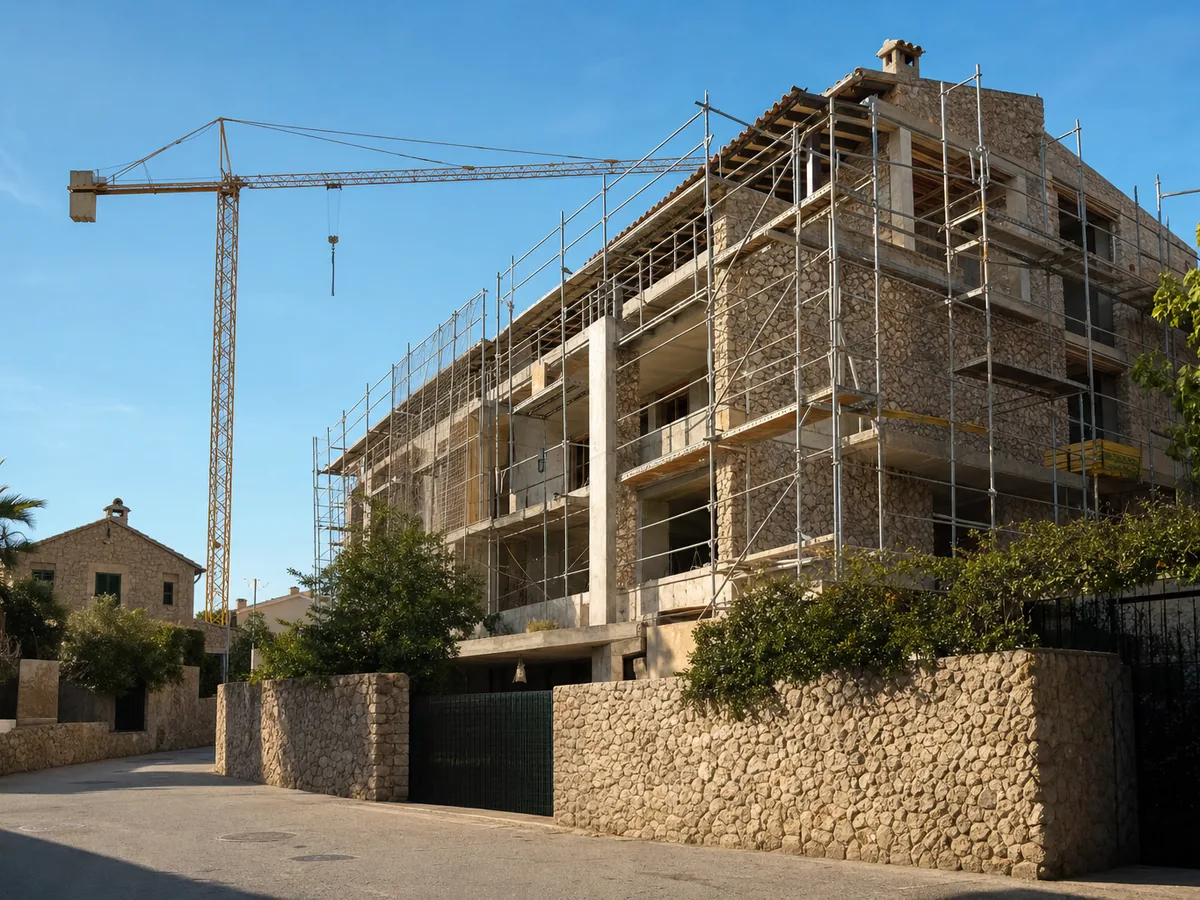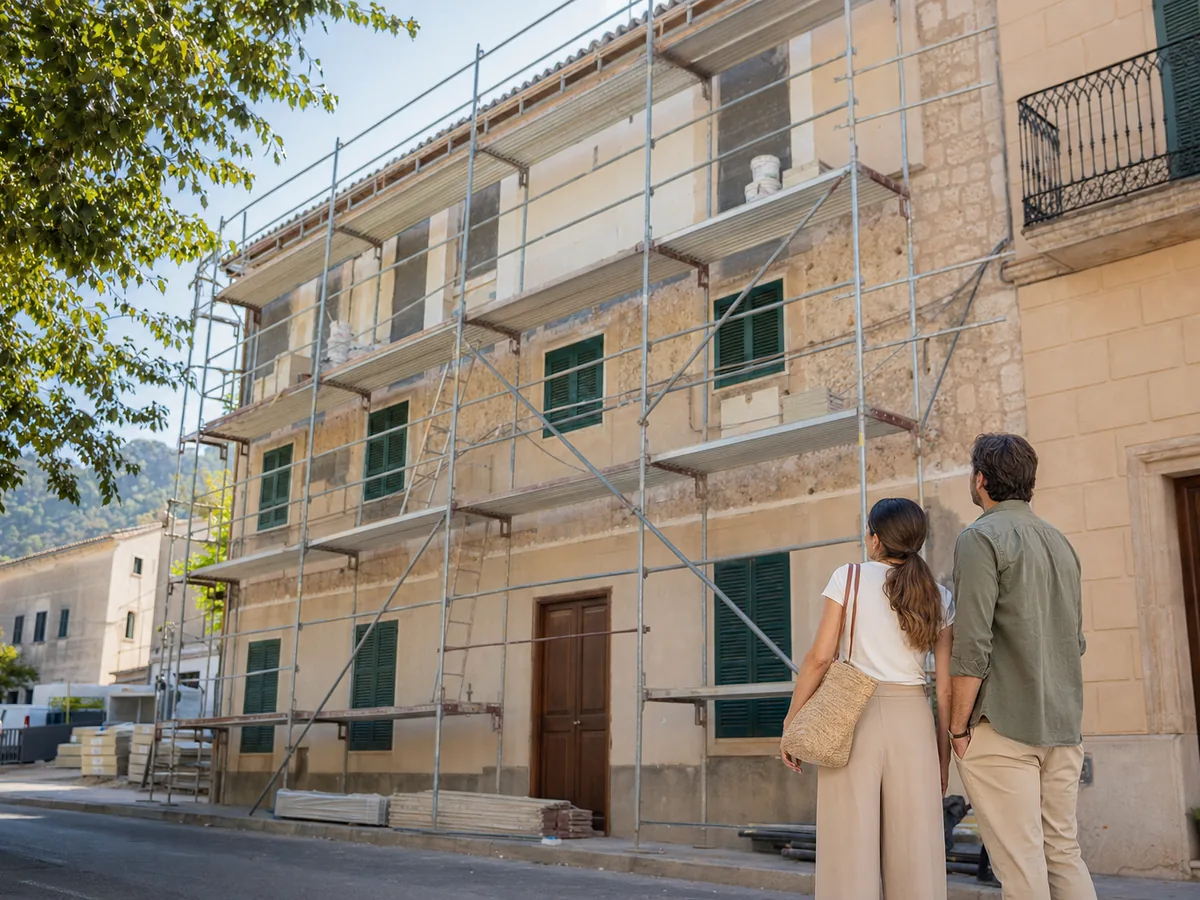
Rehabilitating a traditional Mallorcan farmhouse costs between €1,800 and €2,800/m² when the work touches the structure and the building services, rising to €2,800-€5,000/m² with high-end finishes. The figure is decided by what you cannot see: the condition of the timber beams, the damp in the marés sandstone walls and the state of the floor slab. Since the Balearic urban planning Law 12/2017, on rural land you may consolidate and rehabilitate but not extend freely, and the permit needs a report from the Consell de Mallorca, which adds twelve months or more to the timeline.
A traditional Mallorcan farmhouse isn't renovated like an apartment. You don't control the layout here: the rules are set by an eighty-year-old timber joist floor, a marés sandstone wall that has been drawing moisture from the ground for decades, and rural land regulations that decide what you can touch before anyone even mentions hydraulic tiles.
At Construcciones Armalutx we have been working on country properties across the island since 1967, with more than 1,500 projects delivered. And the conversation always starts the same way: someone has just bought a beautiful possessió and wants to know what they are getting into. This page answers that.
What can be renovated in a traditional Mallorcan farmhouse on rural land?
On rural land, you can rehabilitate, consolidate, and renovate what already exists, in addition to the necessary works for hygiene, safety, and sanitation. What you cannot do freely is extend the building or add new structures: Law 12/2017 on urban planning of the Balearic Islands closed that door in January 2018.
This surprises many people. And it's the first thing you should know before signing the purchase agreement, not after.
In practice, this means the project is designed from the inside out. The existing built area is reclaimed—often including barns, garages, or tool sheds that add up to perfectly legal square footage—the interior is redistributed, and everything beneath the plaster is cleaned up. For a completely new house in a rural area, the minimum plot size is 14,000 m², and only one house is permitted per plot. If your property already has a house, this process isn't necessary: the value lies in the existing structure.
How much does it cost to renovate a traditional Mallorcan farmhouse in 2026?
A traditional Mallorcan farmhouse rehabilitation involving the structure, the roof and full building services costs in 2026 between 1,800 and 2,800 €/m². If the finish is high-end—custom carpentry, selected natural stone, home automation—the price range increases to €2,800-€5,000/m². A more contained intervention, without touching the structure, can stay at €650-950/m², but in a property over fifty years old that is the exception.
Translated: a 250 m² house in complete renovation rarely goes below €450,000 and with villa finishes it goes above a million.
Why is the range so wide? Because three cost items drive everything else:
- The structure. Replacing or reinforcing a timber joist floor can account for 20-30% of the quote.
- The roof. Remove the tile, clean the board, waterproof it and replace the original recovered tile.
- The building services. In an old country house there is nothing worth keeping: plumbing, electrical and climate control all have to be replaced in full.
The finishes, which is what everyone thinks about first, are usually the most predictable part of the quote.
What pathologies almost always appear in an old Mallorcan farmhouse?
In a stone house over fifty years old, four problems appear with a regularity that no longer surprises us: damaged wood in the floors, rising damp in the walls, settling in the foundations, and roofs that have been leaking for years without anyone noticing from inside.
The woodworm and rot in wooden beams, it's the first thing to check. A beam can look sound but be hollow inside; this is detected through inspection and testing, not by eye. We'll tell you more how to detect if wooden beams are damaged before it becomes urgent.
The rising damp is the second. The marés sandstone and rubble wall sits directly on the ground, with no barrier, and draws water upwards. It shows as efflorescence and render that bulges about a metre above the floor. It is solved with perimeter drainage, a chemical barrier and breathable mortars — never by sealing, which is the classic mistake.
Then come the cracks. Not all of them are serious, but it's good to know when a crack in the wall is dangerous and when it's an old seat that's already stabilised. When the problem is at the bottom, the solution lies in the foundation underpinning.
And in many properties, reinforcement is needed without dismantling the house. That's where our techniques come in structural reinforcement work in Mallorca: the Mecanoviga takes over the load of a deteriorated joist without removing the floor slab, and carbon fibre reinforces beams and slab edges without adding weight or altering the appearance. In protected heritage buildings, this is what makes it possible to intervene without spoiling the house.
What licences are needed to renovate a rural property and how long does it take?
In rural areas, approval from the town hall is not enough: the project also needs a favourable report from the Consell de Mallorca, and the council doesn't issue the final licence until it has it. That's why the waiting times are longer: an urban plot is usually resolved in 3-6 months, while a rural one takes longer 12 months or more.
That timeline needs to be included in the planning from the very beginning. It makes the difference between starting construction in the spring or waiting until the following year.
Two nuances worth keeping in mind in 2026:
- If the house has any parts that are not legalised, beware: the recent Balearic omnibus law eliminated the positive administrative silence in the legalisations. It's no longer acceptable to let the deadline pass.
- For works in urban areas, the Palma City Council has implemented a responsible declaration for the execution project, reducing the average start time from two months to just a few days. In rural areas, for the time being, the longer process remains the standard procedure.
We handle the coordination with the technical team and the monitoring of the application. It's not an extra: on a property, the paperwork is part of the construction process.
How can you restore the marés stone, the Arabic tile, and the exposed beam without losing the house?
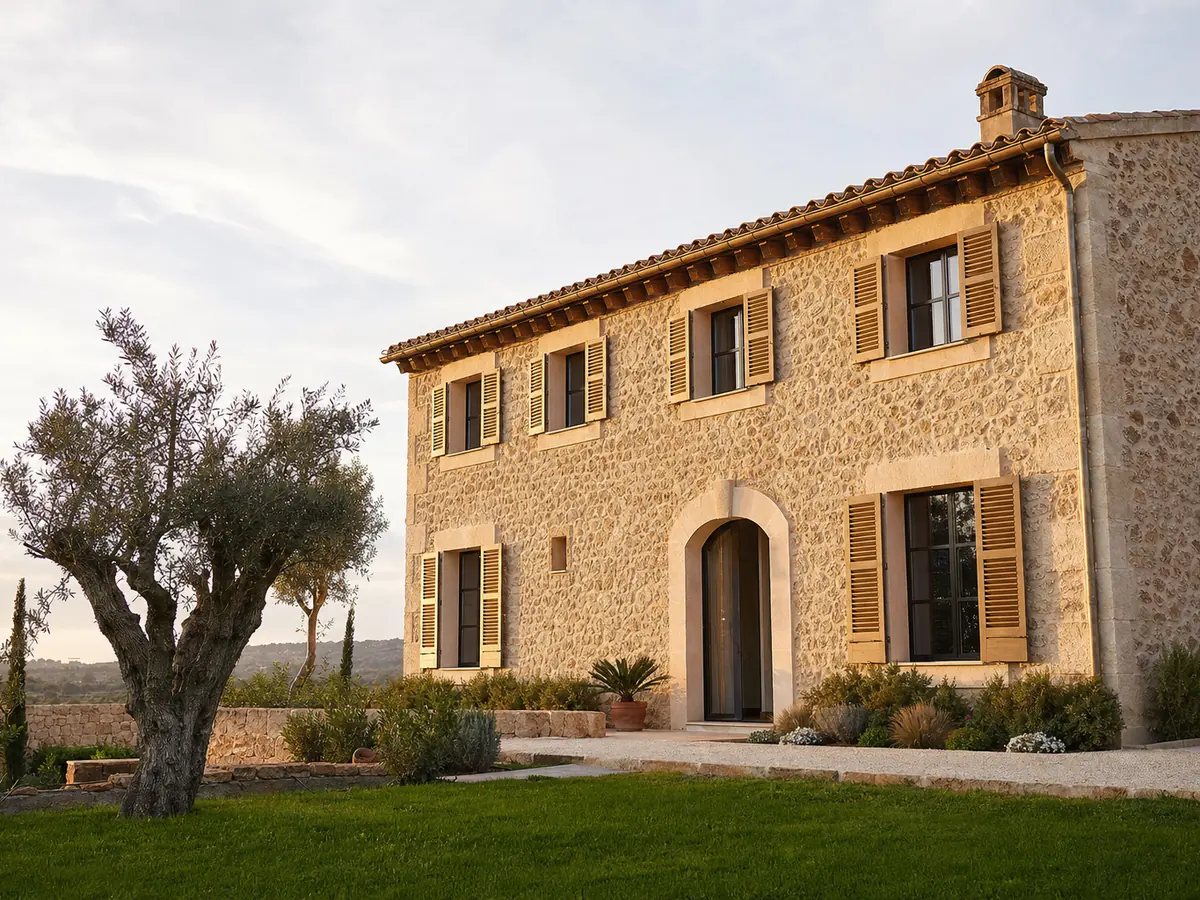
The rule is simple: salvage everything that can be salvaged and only replace what no longer does its job. A traditional Mallorcan farmhouse rehabilitated with imitation new materials shows from a metre away, and it loses precisely what made it valuable.
At stone and marés we clean, repoint with lime mortar and replace only the missing pieces, sourcing stone from the same quarry whenever possible. Lime lets the wall keep breathing; cement seals it and pushes the damp inwards. It is the most common mistake in poorly planned rehabilitations. On freestanding walls we apply the same techniques as in the rehabilitation of dry stone and marés walls.
At the roof, the original Arabic roof tiles are removed numbered, cleaned and laid again on a new board with insulation and waterproofing. The old tiles go on the visible face; the new ones where they cannot be seen.
At wood, if the beam still has a sound cross-section it is treated, reinforced and left exposed. If not, it is replaced with laminated timber of the same dimensions, or resolved with concealed metal reinforcement.
And there's a layer that you can't see but that changes the whole house: the thermal insulation. A stone house that is well insulated on the inside maintains the thermal inertia of the wall and ceases to be that beautiful property that is impossible to heat in January.
In what phases is it done and how long does the work last?
- Technical visit and diagnosis. Tests in floor slabs, inspection of roof and foundations, moisture readings. Without this, there is no reliable estimate, only an optimistic figure.
- Project and processing. Drafting with the technical team and submitting the file to the city council and the Consell.
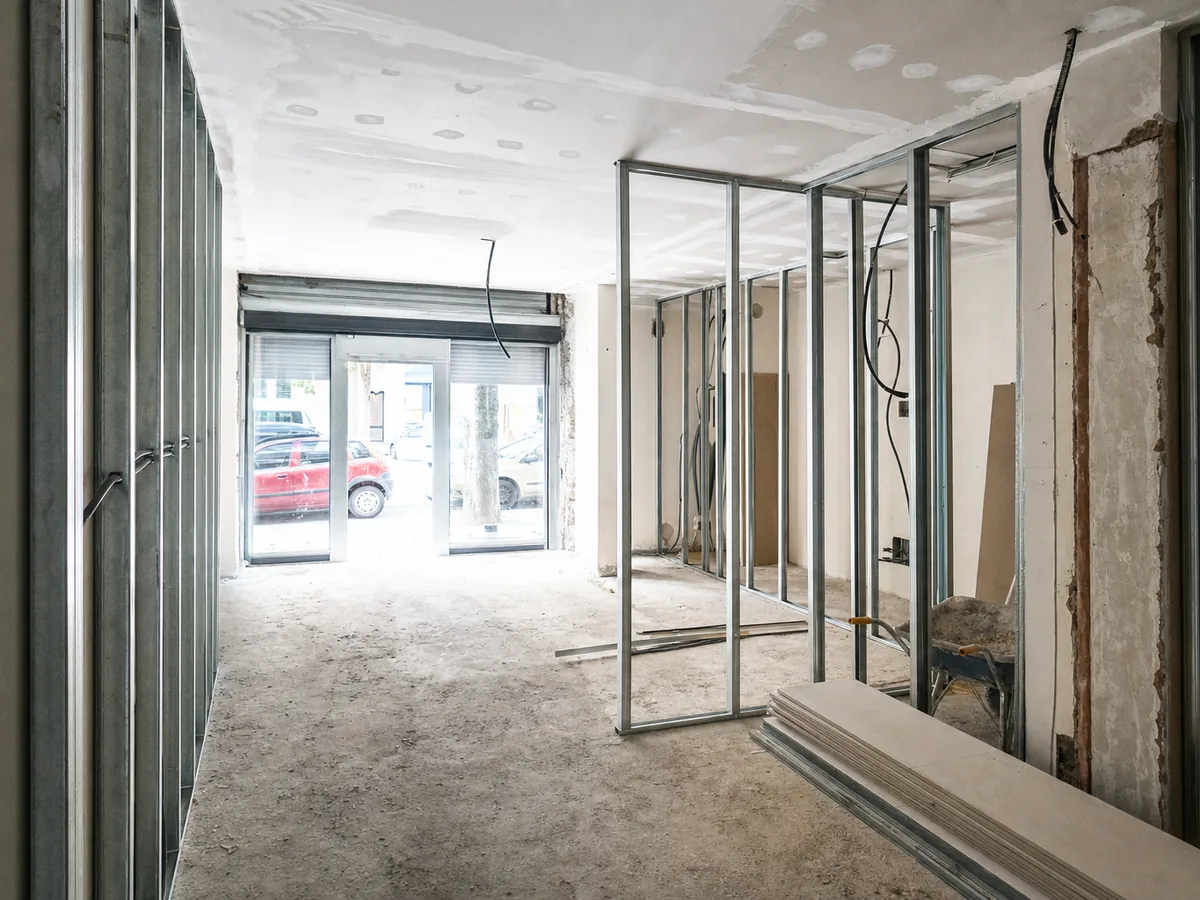
- Selective demolition and remediation. Selective demolition and stripping out. The valueless additions are removed and the real house appears.
- Structure and roof. Reinforcements, replacements, waterproofing.
- Facilities. Building services.
- Masonry and finishing. Lime plastering, flooring, carpentry, painting.
- Final delivery and legalisation. Certificate of completion of work and documentation.
From start to finish, a complete building renovation typically takes between 9 and 14 months. Including the necessary permits, the entire project is planned over two years. We prefer to state this upfront.
Frequently asked questions about the rehabilitation of traditional Mallorcan farmhouses
Is it possible to extend a traditional Mallorcan farmhouse on rural land?
Generally speaking, no. Since the entry into force of Law 12/2017 on urban planning in the Balearic Islands, new buildings and extensions beyond those necessary for hygiene, safety, sanitation, consolidation, renovation, and rehabilitation are prohibited on rural land. Each municipality and land category also has its own specific limitations, so the definitive answer depends on the planning regulations applicable to your particular plot.
How much does it cost to renovate a 250 m² traditional Mallorcan farmhouse?
With work on the structure, the roof and full building services, a 250 m² traditional Mallorcan farmhouse costs in 2026 between €450,000 and €700,000, at €1,800-€2,800/m². With high-end finishes the figure can exceed one million. The real quote depends on the condition of the floor slabs and the roof, which is what is assessed during the technical visit with test openings.
How long does it take to get a licence to rehabilitate a property on rural land?
Between twelve months and a bit more, compared to the usual 3-6 months for an urban plot. The difference is that for rural land, the application requires a favourable report from the Consell de Mallorca (Island Council of Mallorca) in addition to the municipal licence, and the town hall doesn't make a decision until it receives it. It's advisable to start the process as soon as the project is finalised.
Is it worth buying a traditional Mallorcan farmhouse to renovate?
It depends on two things: whether the existing building area is sufficient for your needs—since expanding isn't an option—and whether the structural condition is as it appears. A property with sound floors and a recently rebuilt roof is a great buy. One with corroded beams and widespread dampness can cost as much to repair as it does to buy. The preliminary inspection is worth every penny.
Can I live in the house while it's being renovated?
In a complete renovation, no. Work is done on the structure, roof, and utilities simultaneously, leaving the house without services for months. With phased, partial renovations, it is possible to live with the construction, although this lengthens the timeframe and increases the overall cost because it requires protecting the building and reorganizing the work.
When NOT to rehabilitate a traditional Mallorcan farmhouse
- When the built area is not enough for your programme. If you need 300 m² and the legal house is 120 m², the rural zoning regulations won't allow you to reach that size. It's best to look for another property.
- When there are volumes that are not legalised and there is no possibility of legalisation. Buying the problem to inherit it is expensive.
- When the interest is purely for short-term investment. Administrative delays mean that money is tied up for a long time.
- When what you're looking for is a modern house. A restored farmhouse will still have thick walls, small openings, and ceilings dictated by the structure. That's its charm, but you have to appreciate it.
Let's talk about your property before the work starts
If you own a traditional Mallorcan farmhouse or estate and want to know what can be done with it, the first step is to see it. We conduct a technical visit, including soil tests, and provide you with an honest assessment of its structural condition and a realistic investment range, without any inflated figures.
We are a construction company in Mallorca with our own team since 1967 and headquarters in Inca, we work throughout the island. You can also see how we approach the home renovations in Mallorca and the traditional Mallorcan construction. Call us at +34 625 16 47 18 or write to us at info@armalutx.com.