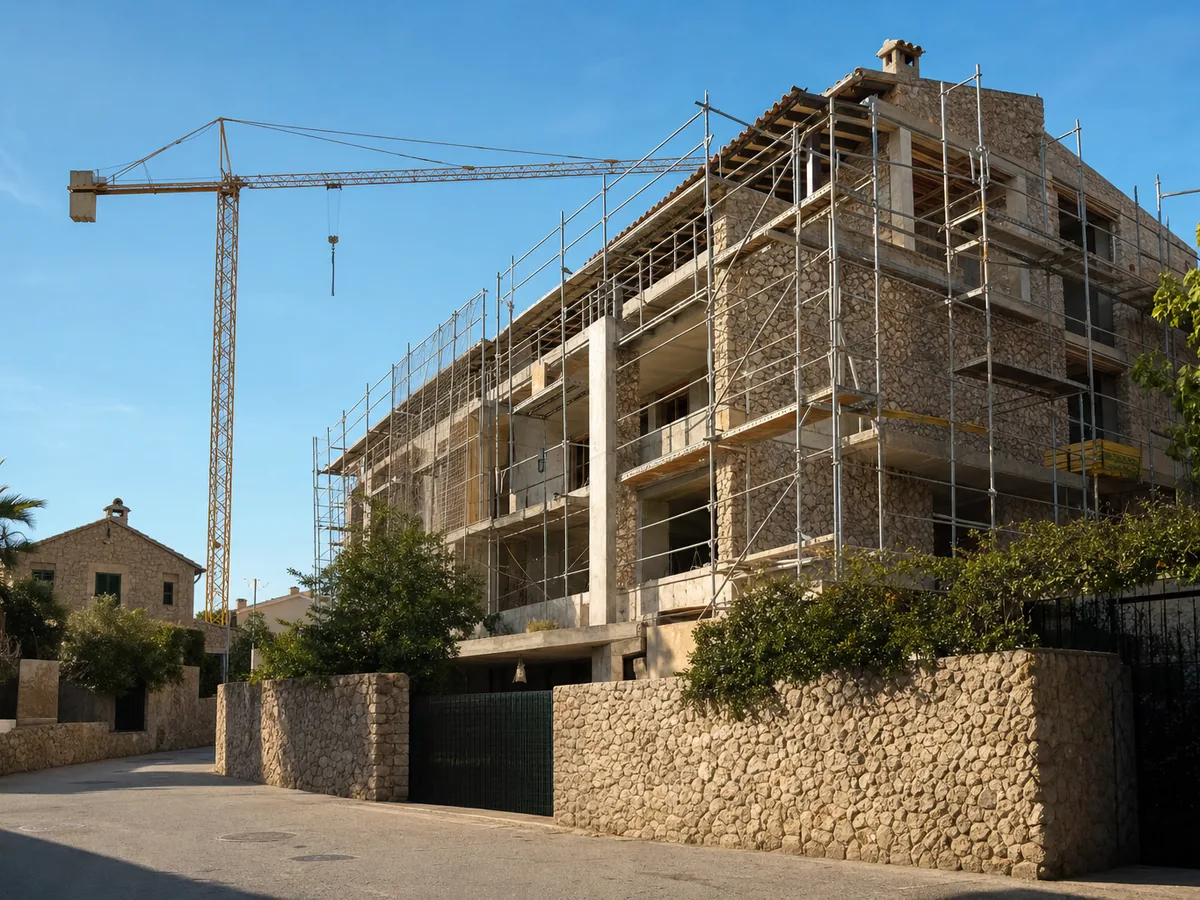
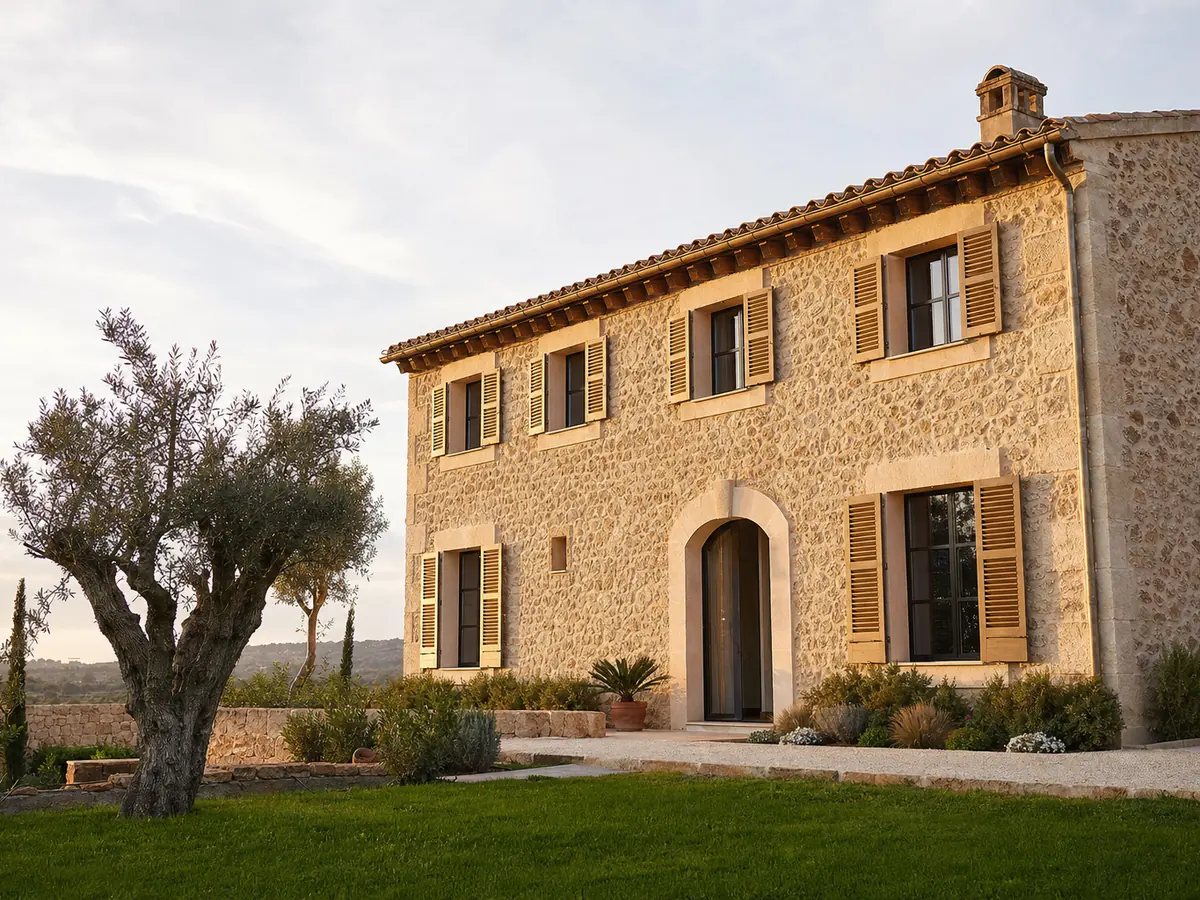
Dry stone walls are not just construction elements: they are an essential part of Mallorca's landscape and memory. They have been delimiting lands, supporting terraces, and telling silent stories in the Serra de Tramuntana and other corners of the island for centuries. Therefore, talking about the rehabilitation of dry stone walls (marés) in Mallorca means caring for heritage, protecting the safety of homes and properties, and living with a legacy that is still very much present.
The heritage value of dry stone
The dry stone technique - that way of building without using mortar, with pure gravity and skill - is recognized by the UNESCO as Intangible Cultural Heritage. In Mallorca, it's mixed with marés, a very typical sandstone, giving these walls a unique character. Restoring them is much more than fixing what's fallen down: it's keeping alive a traditional construction system that is part of both rural and urban identity.
Is a dry stone wall the same as a sandstone wall?
Although they are sometimes confused, not all walls follow the same logic. Dry-stone margins work by gravity, without any joints between stones, while sandstone walls—with their well-cut blocks—usually have some type of mortar, especially lime. Therefore, when we talk about rehabilitation, we must know what type of wall we are dealing with. If it's a traditional margin, it's dismantled and rebuilt without mortar. If it's sandstone, compatible stone is sought and specific techniques are used.
What usually fails the most
In both types of walls, moisture is the greatest enemy. At the edges, slumps or bulges often result from poor drainage or ground movement. In sandstone walls, the stone can gradually disintegrate (sand buildup) or form small holes (alveolization), especially due to the action of salts or the weather. Therefore, any intervention always begins there: by understanding what is happening and why.
How to rehabilitate a dry stone wall
Here the process is almost artisanal. The damaged stones are carefully removed, the base is thoroughly cleaned, and the stones are replaced following rules that have been in place for centuries: each stone must rest on at least two others, the joints must not align vertically, and the interior—the famous rebel— Allow the water to drain well. This method hasn't changed much and lives on thanks to the Mallorcan margers, true guardians of this technique.
When the wall is made of sandstone
In these cases, the approach changes. Marés is porous and varies considerably from quarry to quarry, so finding a suitable replacement stone isn't as easy as it seems. Great care must also be taken with mortars: no cement, only lime, which allows the stone to breathe. Sometimes consolidating products are applied, but only after ensuring the salts have been removed. Everything is tested beforehand, without improvisation.
Regulations and protection
In the Serra de Tramuntana, any work on dry stone walls must comply with the Special Plan for the Dry Stone Route. And throughout the island, the Historical Heritage Law of the Balearic Islands requires permits if the wall is listed. This often means that technical supervision and the intervention of a certified master waller are required. This isn't a hindrance; it's a guarantee that things are done well.
Diagnosis before starting
It's not just a matter of simply arriving and chipping away. Before touching a single stone, the condition of the wall must be thoroughly documented. Photos, plans, and damage reports help determine which sections need to be dismantled and which can be reinforced without dismantling everything. On sandstone walls, the presence of salts or moisture is also analyzed. And on the margins, the terrain and water flow are studied, because if drainage continues to fail, the wall will collapse again.
The marger, a key figure in Mallorca
The marger is much more than a builder. He or she understands the language of stones, how they fit together, how they blend into the earth, and how they will withstand the passage of time. In Mallorca, we have the Escola de Margers (School of Margers) and a professional guild that accredits those who master this art. Including a marger in a project isn't a whim: it's a commitment to durability, tradition, and respect for the environment.
Materials that respect the environment
Restoring these walls also means embracing sustainability. Using local stone, or even recovering fallen stone, avoids unnecessary transport and maintains consistency with the landscape. For sandstone walls, choosing the right quarry and using natural lime mortars helps create a much more environmentally friendly construction cycle. Furthermore, keeping these walls standing avoids resorting to artificial solutions that disrupt the island's aesthetic.
Maintenance that extends the life of the wall
Once restored, the wall doesn't require extensive maintenance, but it does require a little attention from time to time. After heavy rains, it's a good idea to check that the upper part hasn't moved. Vegetation that could push stones down or cause dampness should also be controlled. In the case of sandstone, checking periodically for signs of wear or salts can prevent major interventions in the future.
Aids that can make a difference
Both the Consell de Mallorca and other institutions offer grants for the rehabilitation of dry-stone walls in the Serra de Tramuntana mountains. These grants cover part of the costs and are designed for individuals, municipalities, and organizations. Thanks to them, investing in the rehabilitation of dry-stone walls (marés) in Mallorca doesn't have to be a luxury: it can become an affordable and sustainable investment.
A living heritage in contemporary architecture
More and more new projects are incorporating dry stone walls as part of their design. It's not just about respecting the past, but about integrating a technique that remains relevant today. Restoring dry stone walls not only adds beauty, but also authenticity, durability, and a direct connection to the Mallorcan landscape. This applies equally to traditional farmhouses and modern homes. If the wall is part of a larger property, here's what it means rehabilitating a traditional Mallorcan farmhouse from beginning to end.
Construcciones Armalutx: Your Construction Company in Mallorca
At Construcciones Armalutx, we understand that the rehabilitation of dry stone walls (marés) in Mallorca is not a simple commission. It's a way of caring for the island, maintaining its character, and ensuring that each construction makes sense in its surroundings. That's why we work with experienced wall builders and technicians who are well-versed in the demands of heritage. Our approach combines tradition and modern solutions, always with respect, commitment, and a clear vision: to create lasting works that speak of Mallorca. If you're looking for a construction company in Mallorca that works with its head and heart, we're here