The kitchen island has become a multifunctional space for socialising and enjoying meals, making it an ideal choice for renovating your kitchen space. However, to ensure it serves its purpose for decades to come, choosing the best material for your kitchen island is essential.
On this island, where interior design merges with Mediterranean elegance, your choice not only defines the aesthetics, but also the durability and value of your home.
Here, we explore options ranging from classic marbles to innovative composites, tailored to unique practical needs and lifestyles.
Why is it important to choose a good material for a kitchen island?
To choose the best material for a kitchen island, you must first understand that it's a long-term investment. It's not just a piece of furniture, but a surface that will withstand cuts, spills, heat, and daily use.
In addition, it must age gracefully and maintain its structure for as long as possible. Therefore, it must meet three key criteria:
Proven durability and resistance
This point in particular is key; it must withstand knives, hot pots, and acidic liquids without deteriorating.
Refined finishes and careful design
On the other hand, the best material for a kitchen island should be one that harmonises with the style, whether this space is rustic, minimalist, or modern.
Ease of maintenance and sustainability
As professionals in the sector, we always recommend one that minimises the use of aggressive chemicals..
This is intended to always seek the well-being of those who spend their daily time in the space, in addition to reducing the environmental footprint with the best material for a kitchen island.
In Spain, where 68% of these premium remodels include islands (according to the 2023 Kitchen Trend Report), the choice of material makes the difference between a functional space and a work of art.
The best materials for kitchen islands
How do you find that perfect balance between functionality and elegance? The answer to choosing the best material for a kitchen island lies in understanding every detail, from texture to its ability to withstand the test of time.
Natural stone kitchen islands: marble, granite, and quartz
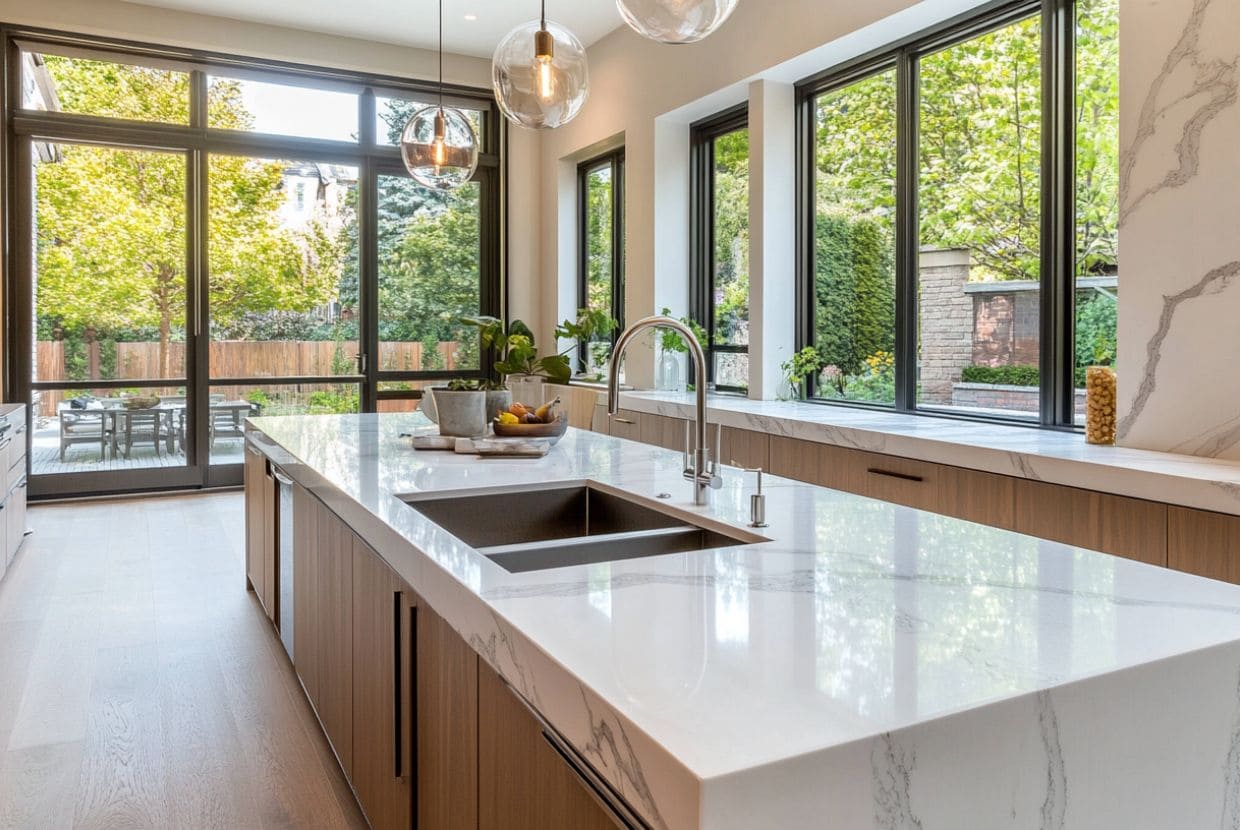
Marble, synonymous with timeless luxury. Ideal for open-plan kitchens.
- Advantages: perfect for kneading, has natural freshness.
- Disadvantages: Porous; requires annual sealing. Price: €150–400/m².
Granite, proven strength in professional kitchens.
- Advantages: Scratch-resistant. Perfect for large families.
- Disadvantages: Limited colour range. Price: €120–300/m².
Quartz, the best material for a kitchen island if you're looking for balance.
- Advantages: non-porous, antibacterial (NSF certified). Uniform colours.
- Disadvantages: Sensitive to extreme heat. Price: €200-500/m².
Hardwood kitchen islands
Oak, walnut or teak bring warmth to cottage or Nordic kitchens.
- Advantages: repairable (sanding and varnishing). Thermal insulation.
- Disadvantages: Vulnerable to moisture and impact. Requires periodic oiling. Price: €100-250/m².
Modern composite kitchen islands
In this case, their sustainable production and adaptability to humid climates make them the preferred choice when you're looking for the best material for a kitchen island, offering durability without sacrificing a cutting-edge look. If you're undertaking the entire project, here's our kitchen renovation in Mallorca.
Silestone kitchen islands
Composed of quartz and resin.
- Advantages: Over 300 shades, stain resistance. Ideal for white kitchens.
- Disadvantages: Avoid placing hot pots directly on the surface. Price: €250–600/m².
Dekton kitchen islands
- Advantages: UV, heat and scratch resistant.
- Disadvantages: High cost. Price: €400-900/m².
Neolith kitchen islands
Similar to Dekton, but with finishes that imitate wood or concrete.
- Advantages: Lightweight (ideal for suspended islands). Environmentally friendly (no toxic resins).
- Disadvantages: Limited design variety. Price: €350–800/m².
How to choose the best material for a kitchen island based on its intended use?
As we mentioned before, each use requires different properties: stain resistance, heat resistance, or a warm feel for long conversations. For this reason, as professionals, we want your choice of the best material for a kitchen island to not only withstand everyday use, but also improve it.
Best material for a kitchen island with sink
Dekton and Neolith in particular stand out for being waterproof surfaces, resistant to chemicals, and do not discolor. They are also zero porosity and easy to clean.
Best material for a kitchen island intended as a preparation area
Quartz or granite undoubtedly stands out here, since it provides hygienic and cut-resistant areas.
Best material for a kitchen island designed for dining
When looking for warmth for family breakfasts, for example, wood or Silestone are recommended and favourable; Additionally, as an added bonus, beige or grey tones create a casual atmosphere.
Current trends in kitchen islands in interior design
- Tactile textures: matte marble or Dekton with a rough finish.
- Super thin thicknesses: 1.2 cm countertops instead of 3 cm, for an ultra-modern look.
- Technological integration: wireless charging zones on quartz or Silestone islands.
- Double height: one part for cooking (resistant material), and another for eating (warm wood).
In Mallorca, the best material for a kitchen island in 2025 is one that combines local craftsmanship (such as pink Binissalem marble) with sustainable technology.
At Construcciones Armalutx we are specialists in kitchen renovations in Mallorca.
Are you ready to start this renovation? As professionals in full renovations in Mallorca , our team has been designing kitchens for over 20 years. Our approach is reflected in:
- Top quality materials.
- Custom design.
- Sustainability.
We're your best option in Mallorca! At Construcciones Armalutx, we tailor our services to your needs exclusively, paying attention to every detail. We also offer personalized advice to address any questions you may have.