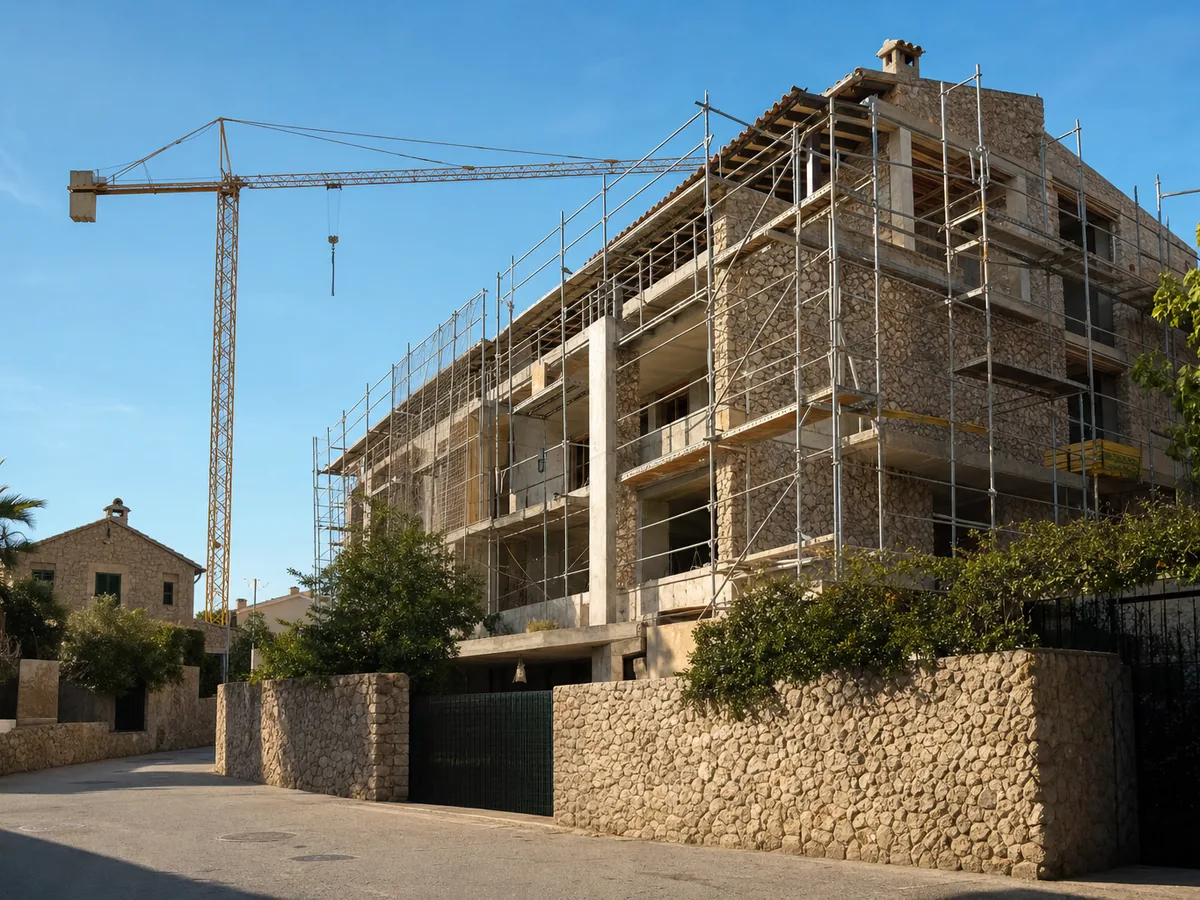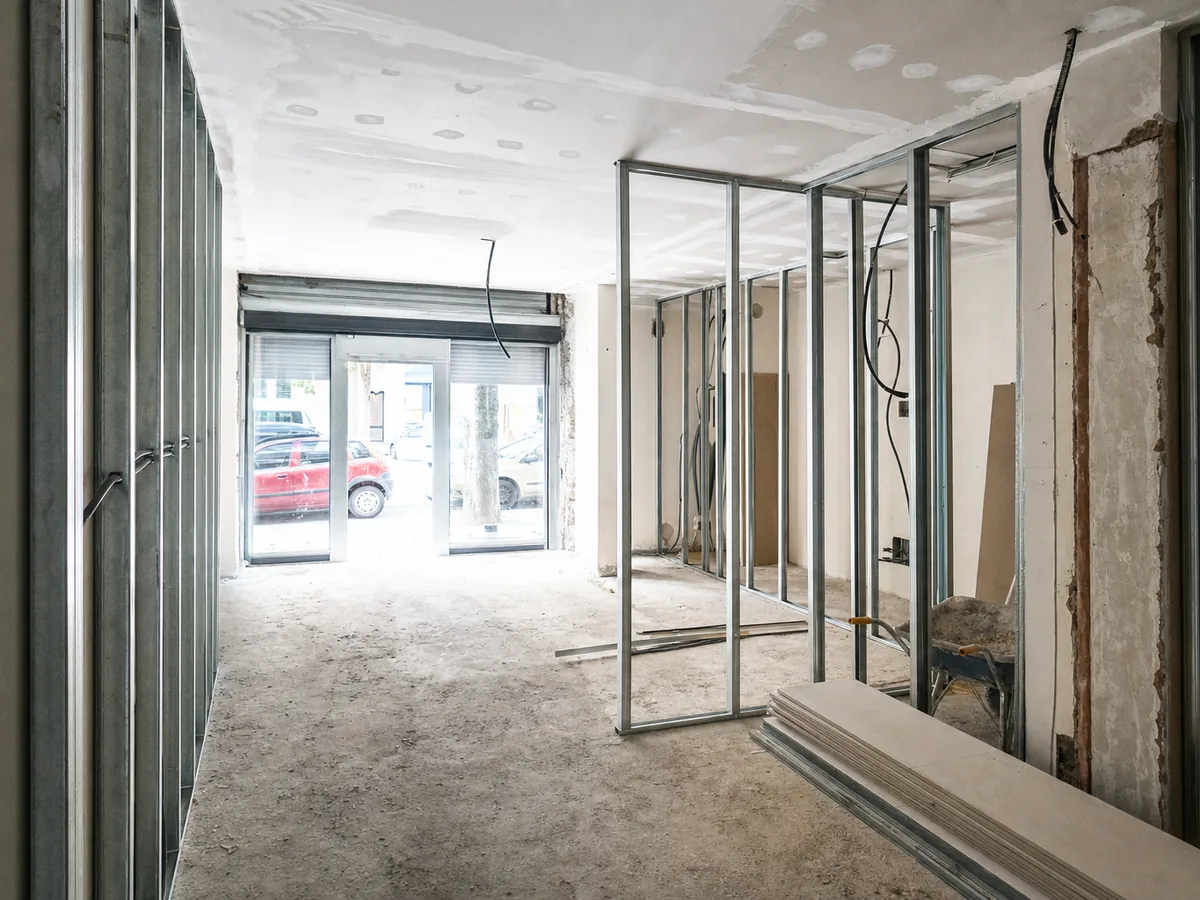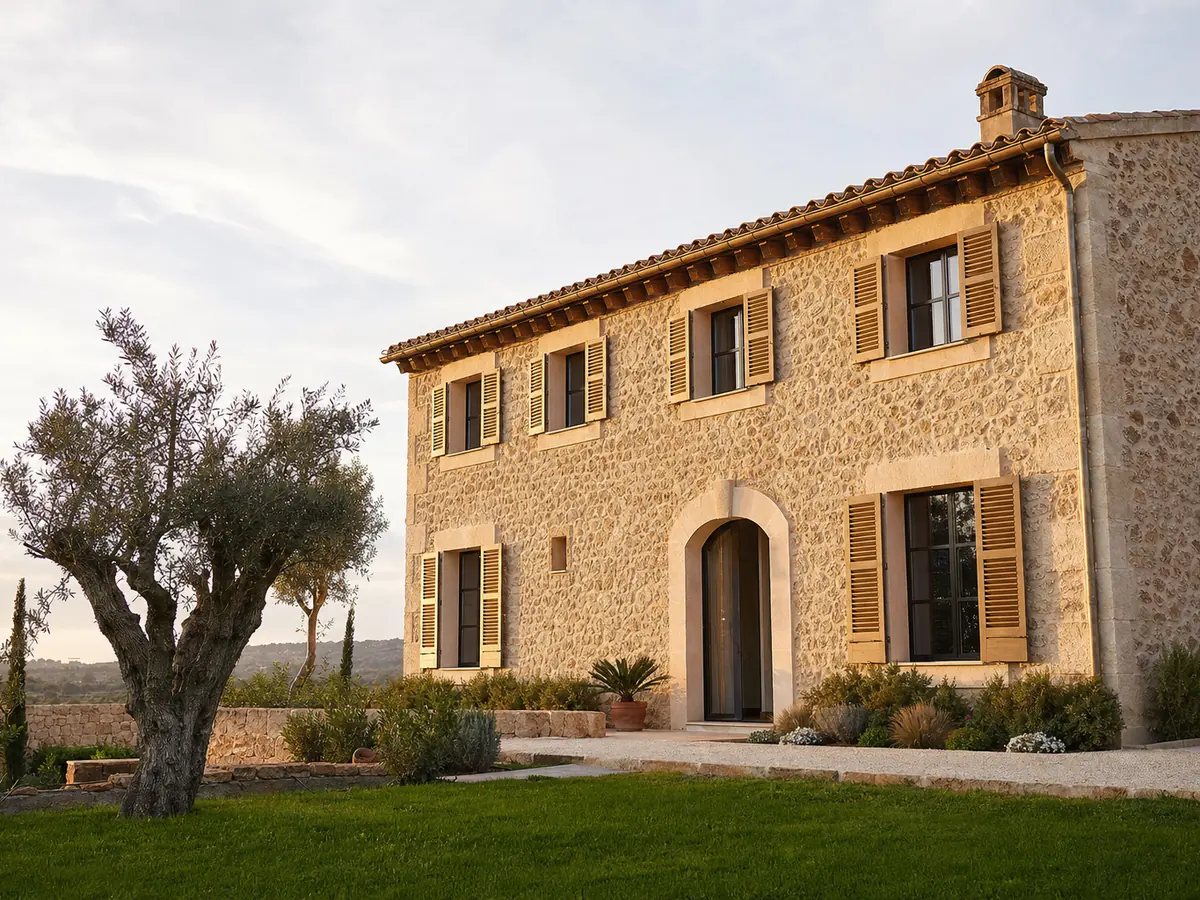
Building a detached house in Mallorca takes between 14 and 22 months from signing the contract with the architect to receiving the keys. This range covers everything from simple projects in small villages in the Raiguer region to luxury villas in areas like Son Vida or Deià. The actual median, based on data from completed projects in Armalutx (1,500 projects over 59 years), is around 17 months for a standard 200 m² detached house. This article breaks down, phase by phase, how long each step takes and what truly affects the overall timeframe in Mallorca.
The deadline for building a house in Mallorca
The timeframe is divided into three main phases: planning and design (3-7 months), permit processing (2-6 months), and construction (9-14 months). Under ideal conditions—a client who decides quickly, a responsive local council, and a well-defined project from the outset—a 200 m² house is delivered in 14 months. Under realistic conditions, with some reasonable unforeseen circumstances, it takes 17-19 months. If there are mid-construction design modifications, lengthy permit processing times, or supply issues, it can easily reach 20-24 months.
Detailed timeline: how long each phase of construction takes to build a house in Mallorca
This is the table with the deadlines per phase for a traditional single-family home of 180-220 m² in Mallorca, based on actual construction delivered in 2024-2026:
| Phase | Typical duration | Grades |
| Purchase of the land and urban planning verification | Variable (1-12 months) | Not included in the construction period; assumed to be completed at the start |
| Selection of architect and commissioning firm | 2-4 weeks | Includes comparisons and initial meetings |
| Preliminary design and validation with the client | 4-6 weeks | Distribution, volumes, preliminary quality decisions |
| Basic project | 6-10 weeks | Document submitted for license |
| Processing of major works permit | 8-26 weeks | It depends a lot on the local council (see table below) |
| Implementation project (in parallel with license) | 6-10 weeks | Construction details, measurements, detailed budget |
| Selection of construction company and signing of contract | 4-8 weeks | Budget comparison and negotiation |
| Mobilization of work and layout | 1-2 weeks | Fencing, connections, temporary installations |
| Earthworks and foundations | 4-8 weeks | Longer in soils with rock or groundwater |
| Structure (floors, walls, roof) | 8-14 weeks | Reinforced concrete, blockwork, pitched or flat roof |
| Exterior enclosures and carpentry | 4-6 weeks | Facades, windows, exterior doors |
| Facilities (water, electricity, air conditioning, gas) | 6-10 weeks | In parallel with interior masonry |
| Interior finishes | 8-14 weeks | Flooring, tiling, false ceilings, interior carpentry, painting |
| Kitchen, bathrooms, built-in furniture | 3-5 weeks | Partial overlap with finishes |
| Urbanization, garden and swimming pool | 4-10 weeks | In parallel with the interior work, when possible |
| Final exams, certificates and delivery | 3-5 weeks | Bulletins, completion certificate, supply registration |
Including actual overlaps (several phases running in parallel), the total timeframe is between 14 and 22 months. If you'd like to see the process flow from another perspective, we explain it in our guide on step-by-step guide to a successful new construction project.
Why does construction in Mallorca take longer than on the mainland?
There are three island-specific factors that lengthen construction times compared to regions like Madrid or Catalonia. Understanding them helps with realistic planning:
- Island logistics: all materials not produced on the island are shipped by sea. A stock shortage in Mallorca can take 2-3 weeks to replenish, compared to 3-5 days on the mainland. This particularly affects engineered wood products, high-end bathroom fixtures, appliances, and custom-made exterior carpentry.
- Tourist seasonality: between June and September, the island receives the bulk of its 15 million annual tourists. This saturates the airport, port, main roads, and labor supply (some of whom move to the hospitality sector). Construction projects with critical phases in the summer tend to slow down.
- Building permit processing times: the real estate sector in the Balearic Islands is experiencing a boom (new construction permits in Palma will exceed 501,000 in 2025 according to the COAIB), which is overloading municipal technical services. Law 4/2025, passed in July, aims to expedite the process, but its impact is still limited in the daily operations of most municipalities.
Building permit deadlines by municipality: Palma, Inca, Calvià and the rest
The building permit processing time is the variable that fluctuates the most in the timeline—and the one you have the least room to expedite. These are the current average processing times in 2026 for major construction permits for single-family homes:
| Municipality | Average time frame for major works permit |
| Palma | 14 – 26 weeks |
| Calvià | 12-20 weeks |
| Andratx | 14 – 22 weeks |
| Sóller | 10-18 weeks |
| Pollensa, Alcúdia | 12-20 weeks |
| Inca, Manacor, Felanitx | 8 – 14 weeks |
| Lloseta, Selva, Mancor de la Vall, Búger | 6 – 12 weeks |
| Sineu, Sencelles, Costitx, Petra | 6-10 weeks |
Small towns aren't always the fastest: sometimes they have less technical staff and fewer governing board meetings where licenses are approved. What makes the difference is: a complete file from the start and a project that complies with the General Urban Development Plan (PGOU) without needing additional reports.
What delays a construction project: 5 most frequent causes in Mallorca
These are the five most common reasons we see in projects that take longer than planned. All of them are avoidable or manageable if they are known from the start:
- Mid-construction project modifications. Moving the kitchen after the utility connections are already in place adds 2-4 weeks and a considerable cost overrun. Decisions should be made before starting, not during.
- Delays in obtaining the license due to an incomplete file. A technical report, a calculation, or a certificate from the COAIB (Official Association of Architects of the Balearic Islands) is missing. The city council returns the file, and the timeframe starts all over again.
- Delayed deliveries. Custom exterior carpentry, premium bathroom fixtures, and imported flooring can take 8-12 weeks to arrive. These must be ordered when the project is signed, not when you need them.
- Adverse weather conditions. Winter storms, heavy rains in autumn, and high temperatures in the middle of August can halt critical phases (roofs, exteriors, concrete slabs on extremely hot days).
- Poor coordination between the architect, surveyor, and construction company. If these three roles are not aligned and there are no regular site meetings, pending decisions accumulate and the project slows down due to inertia.
What can and cannot be accelerated in a construction project
Not everything is equally compressible. This is the operational reality:
- Accelerable: the project phase (if you arrive with clear ideas and decide quickly), the selection of a construction company (if you have previous references and compare in parallel), and the interior work deadlines (if the supplies are in the warehouse before starting).
- Things that can't be accelerated: the building permit (it depends on the city council), the earthworks and the foundation (the concrete setting times are fixed), the final tests and closing procedures.
- Not accelerable: technical guarantees such as the curing of structural concrete (28 days to reach nominal strength), leak tests of installations (minimum one week), processing of certificates and supply registrations with the companies.
Trying to speed up what technically cannot be accelerated is the fastest way to buy future problems: poorly cured concrete, poorly tested installations, certificates that arrive late and block the move.
Differences between traditional and modular construction in Mallorca
Modular construction (industrialized, prefabricated) significantly reduces construction time: a 150 m² modular home can be delivered in 6-9 months from the signing of the contract. However, it has real limitations on the island:
- Limited traditional aesthetics: many inland and rural municipalities require a Mallorcan aesthetic (marés stone, Arabic roof tiles, traditional geometry). Standard modular solutions often need adaptations that reduce their time advantage.
- Transport logistics: bringing prefabricated modules to the island is complex and expensive (maritime transport of large pieces, access to construction sites in rural areas).
- Legalized rural land: in many plots with rural classification, modular solutions do not fit with the conditions of the local PGOU without modifications that distort them.
Therefore, in Mallorca, traditional construction with modern building systems (reinforced concrete, block masonry, state-of-the-art insulation systems) remains the standard for most homes. For a broader view of what is being built on the island and why, see our guide on building materials in Mallorca.
How to calculate backwards to move in on a specific date
If you have a target start date—September of the following year to start the school year, before summer for the tourist season—you need to subtract the relevant timeframes to know when to begin. For a standard 200 m² single-family home:
- To move in September 2027: sign with architect in March-June 2026.
- To move in April 2028: sign with architect in September-December 2026.
- To move in before summer 2027 (June): sign with architect in January-March 2026.
These calculations assume medium-term timeframes. If your municipality has a fast-track licensing process (Inca, small towns), you can subtract 4-6 weeks. If it's Palma or Calvià, add 4-6. And leave an 8-10 week buffer for unforeseen circumstances—that's reasonable and not excessive.
Frequently asked questions about construction timelines in Mallorca
What is the fastest possible timeframe for building a house in Mallorca?
For a traditional 150-200 m² single-family home in an inland municipality with expedited permitting, a finalized project plan from the outset, readily available materials, and a construction company with immediate availability: 12 months from project signing to delivery. This is a record timeframe—only achievable with all variables perfectly aligned. The realistic average is 15-18 months.
Why is the license taking so long?
The urban planning process involves: a technical review of the project by the municipal architect, verification of compliance with the General Urban Development Plan (PGOU), potential sectoral reports (heritage, environment, river basin), approval by the governing board, and notification. Each step has its own legal deadlines. Law 4/2025 aims to streamline this process, but the effects will be gradual.
Can I start building before I have the license?
No, absolutely not. Any major construction work without a valid permit will result in immediate work stoppage, a fine of €600 to €60,000 depending on the severity, and the obligation to rectify the situation afterward (which is more expensive and slower than getting the permits right from the start). You can, however, carry out preliminary work: a geotechnical study, project definition work, and hiring a construction company, all contingent upon obtaining the permit.
What happens if the weather delays the construction?
The weather in Mallorca is quite predictable. Severe storms are rare but do occur (October-March). Good planning ensures that the most critical phases (foundations, roofing, slab) are carried out outside the months of greatest risk. If, despite everything, work is halted due to weather conditions, it is not considered a breach of contract by the construction company—it is considered force majeure.
How much does it cost to speed up a construction project?
Accelerating the design phase is free (depending on your decision-making speed). Accelerating the construction phase is expensive: switching to double shifts or adding trades increases the cost by 15-30% to reduce the timeframe by 4-8 weeks. At Armalutx, we only recommend this when the deadline is truly critical and the additional cost is clearly justified.
Request a realistic estimate of the timeframe for your house.
If you're planning to build in Mallorca and need a realistic timeline tailored to your specific situation (municipality, plot size, building type, specifications), call us at +34 625 16 47 18 or email us at info@armalutx.com. In our initial consultation, we'll assess your actual circumstances and provide you with a realistic, indicative timeline—not optimistic sales deadlines that are ultimately unmet. Our coverage for new construction is detailed in construction company for new builds in Mallorca, and we explain the licensing periods in more detail in building permits in Mallorca.