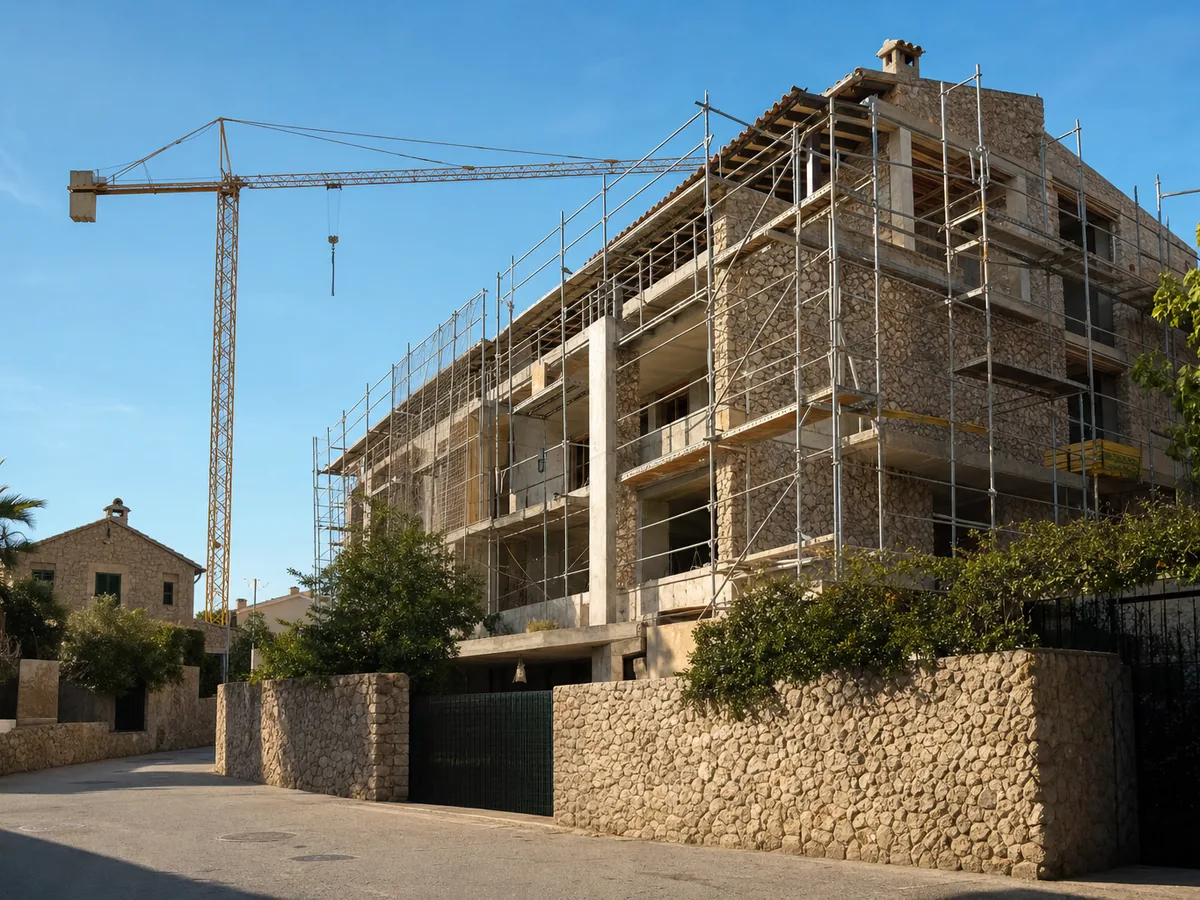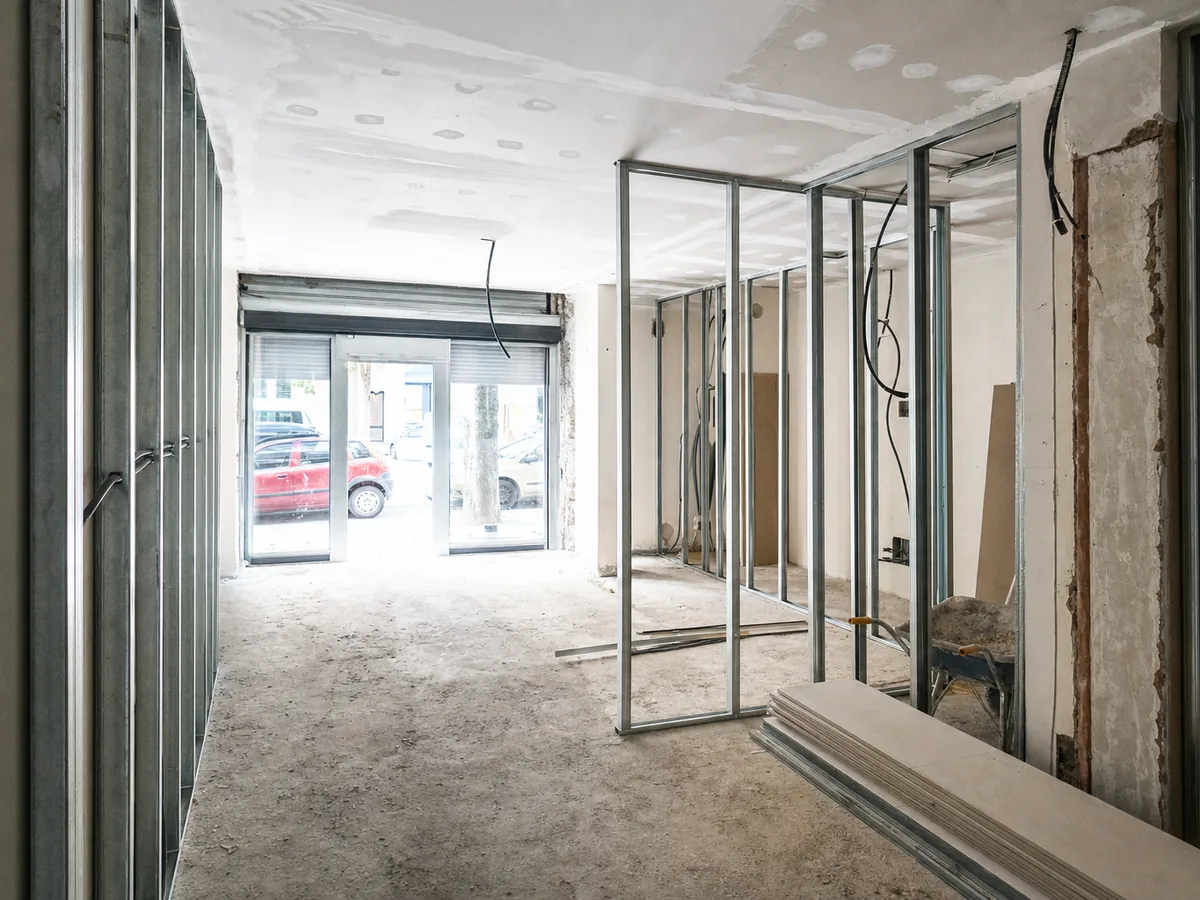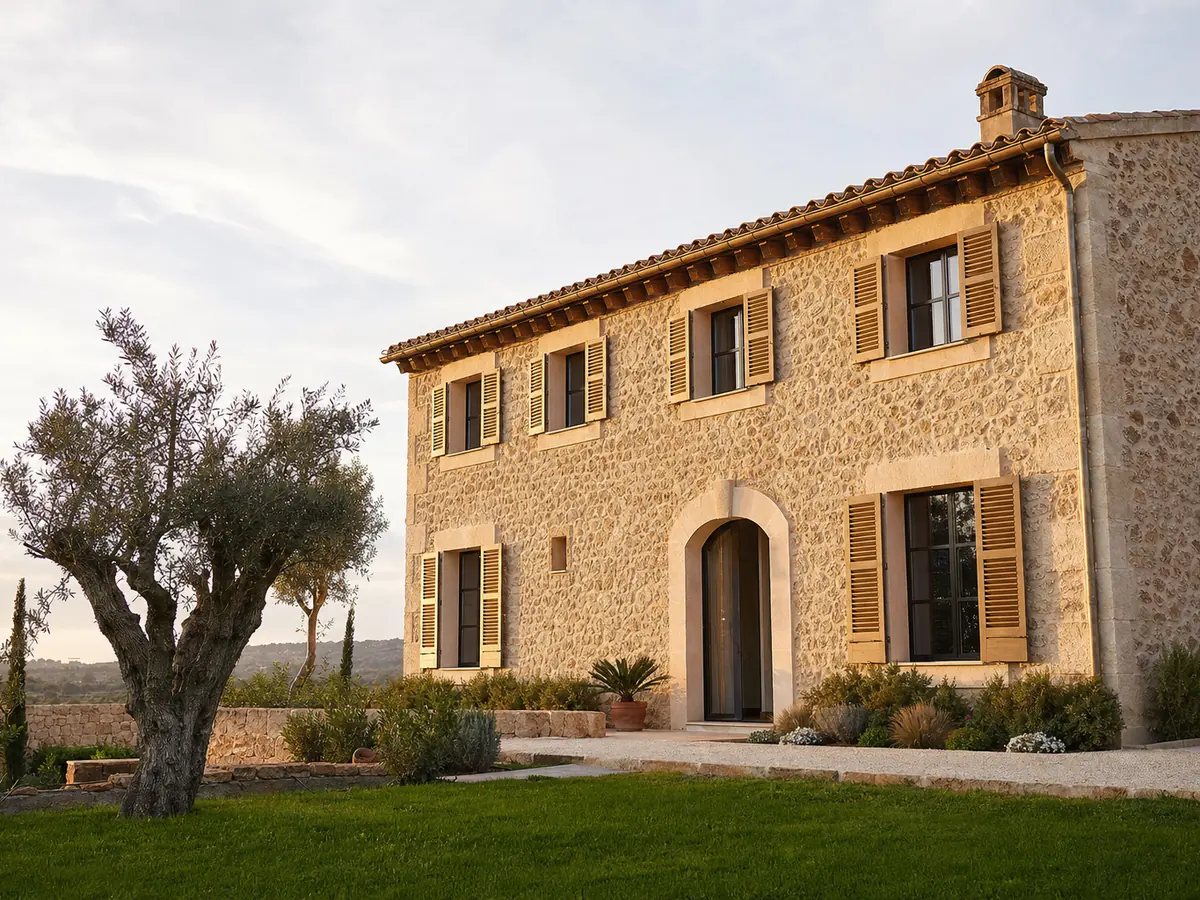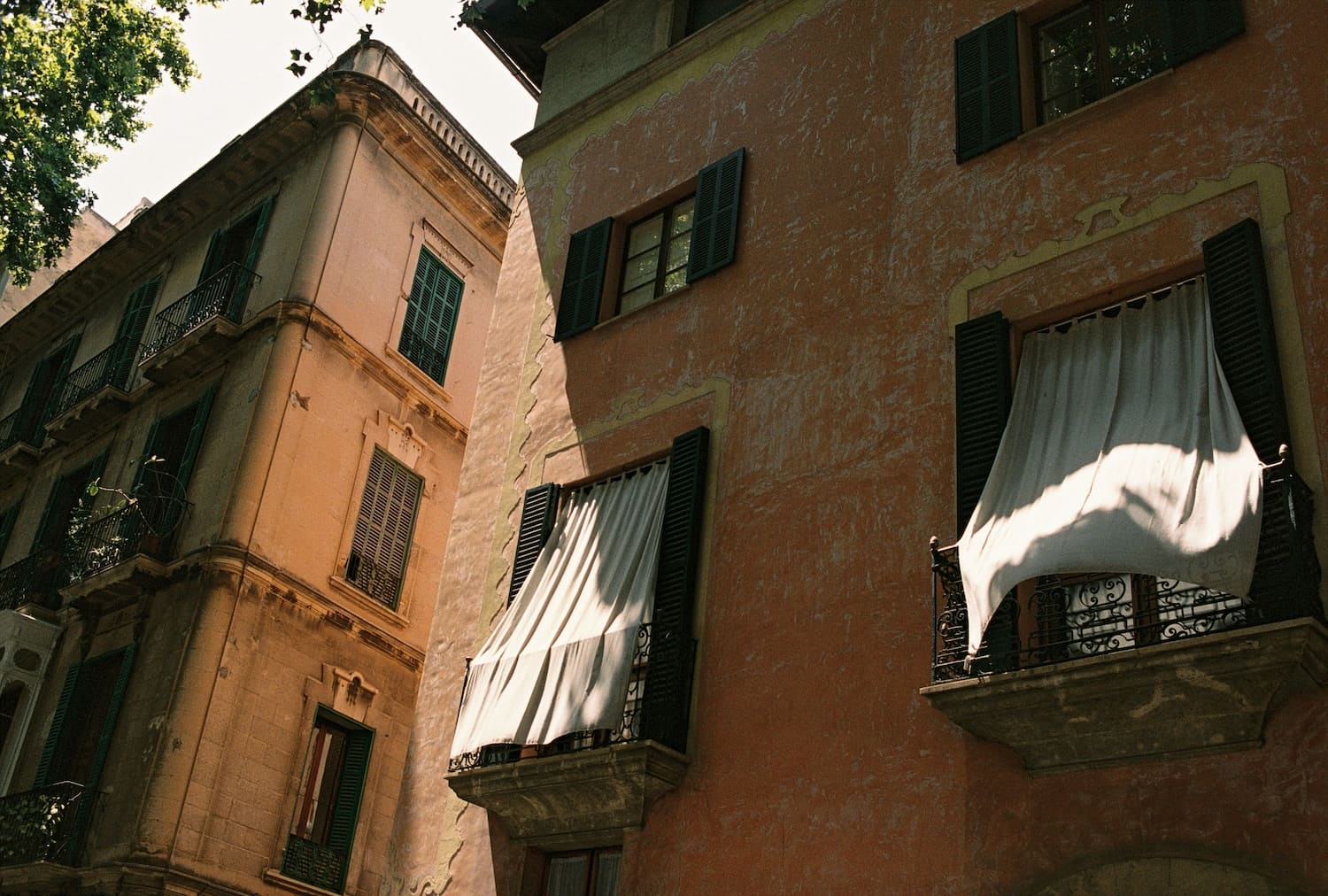
Renovating an old building in Palma's historic center costs between €1,200 and €2,500/m² in 2026—between €301 and €801 more than a standard renovation outside the center. The difference isn't just in the materials: it's in the heritage regulations, the processing times with the Historic Center office, the protected architectural elements that cannot be altered, and the unexpected discoveries that arise when opening walls with five centuries of history. This guide explains everything you need to know before you begin—and why doing it right remains one of the most profitable investments you can make in Mallorca.
Why renovating in Palma's old town is a special case
Palma has one of the best-preserved historical ensembles in Spain: buildings from the 13th century (after the conquest by Jaume I in 1229), stately palaces from the 16th-18th centuries, traditional Mallorcan houses with interior courtyards, marés stone facades, green shutters and hydraulic floors that have not been made the same way for 100 years.
This has two opposing consequences:
- It makes the work more expensive and complicated: the Special Protection Plan for the Historic Center (PEP) classifies buildings and elements by levels of protection, and each level imposes specific restrictions on what you can modify.
- It significantly increases the market value of the asset: in April 2026, the average price per square meter for sale in Palma reached €5,152/m² according to Idealista—an all-time high, a 9.81% year-on-year increase. In the city center, the figure rises to €6,993/m². A well-executed renovation of an old building in the historic center is one of the best real estate deals you can make in Mallorca.
If your renovation is for a single apartment and not an entire building, you'll also be interested in the specific guide on renovate apartment in Palma, which covers the community of owners, facilities and particularities of the old town from the point of view of the individual owner.
Levels of heritage protection: how it affects your work
The Special Protection Plan for the Historic Center (PEP) classifies buildings into four levels. Knowing your building's level is the first thing to check:
| Level | What's included | What you can modify |
| A — Comprehensive protection (BIC and similar) | Unique heritage: cathedral, listed palaces, buildings declared Cultural Heritage Sites | Conservation only. No volumetric modification or alteration of significant elements. |
| B — Structural protection | Buildings with significant architectural value: facade, original layout, unique features | Preservation of the façade, main staircase, courtyard, and protected elements. Allows for the reorganization of secondary interiors. |
| C — Environmental protection | Buildings that contribute to the urban ensemble: facade, heights, alignment | Façade preservation and alignment. Much more freedom in the interior. |
| D — Without specific protection | Smaller buildings that do not compromise the value of the complex | Greater flexibility: interior modifications are permitted and, in some cases, replacement. |
The protection level can be checked with the Historic Centre Service of the Palma City Council. It is advisable to do this before buying the building if the investment is significant—a change of project due to the protection level could invalidate the entire financial plan.
Typical architectural elements that you CANNOT touch (without specific authorization)
These are the most common protected elements in old buildings in Palma's historic center. At levels A and B, they are untouchable. At level C, they usually require a specific report for any modification.
- Facades with exposed marés stone or traditional plaster: they cannot be chipped away to be plastered with cement, nor can they be painted with plastic. Only hydraulic lime mortars and breathable mineral paints are permitted.
- Traditional exterior joinery: green Mallorcan windows and shutters. If they are damaged, they are restored or replicated respecting the original geometry, section, and color.
- Wrought iron balconies and railings: they are being restored. Replacement with new models requires an identical replica.
- Interior courtyard with sandstone staircase and galleries: the courtyard is the heart of the Mallorcan manor house. Its geometry, materials and elements (paving, well if present, balustrades) are untouchable.
- Original hydraulic floors: very common in patios and ground floors. They are restored in situ or pieces are preserved if there is partial replacement.
- Exposed wooden beams on the main floor: they are part of the building's heritage value. They have been restored.
- Cisterns and wells in courtyards: protected in many cases for their archaeological value.
- Original interior decoration: plasterwork, frescoes, special hydraulic floor tiles, carved doors. In buildings A and B, these are untouchable.
In our article about traditional Mallorcan construction we describe these elements in detail and why their architectural value is so relevant to the identity of the island's buildings.
What you CAN modernize without losing the character of the building
Heritage protection does not mean freezing a building in the 18th century. What is permitted—and often necessary for the building to remain habitable—is:
- Complete renovation of installations: plumbing, electricity, air conditioning, fiber optics. They are run hidden or through discreet conduits.
- Modernizing kitchens and bathrooms: with almost complete freedom as long as protected elements are not affected. This includes kitchens with islands, bathrooms with spacious showers, and home automation.
- Improved thermal and acoustic insulation: interior wall linings with air gap and insulation, replacement of interior woodwork, raised access flooring. No alterations to the facade.
- Reorganization of secondary interior partitions: on levels B and C, it is permitted to rearrange rooms without touching structural walls or protected elements.
- Air-source heat pumps with hidden outdoor units: this is already accepted in many cases as long as they are visually integrated and do not impact the patio or facade.
- Functional changes (from office to housing, from housing to office): change of use compatible with the urban planning zoning of the PGOU, with a specific license.
What is the application process like with the Historic Center?
Renovating in Palma's old town is not handled the same way as in any other neighborhood. The typical procedure for a major heritage project follows these steps:
- Prior consultation with the Historic Center Service: request to the city council regarding the feasibility of the proposed intervention. Response time: 4-8 weeks.
- Survey of the current state: detailed plans, photographs of protected elements, heritage report. This is done by the project architect.
- Technical project with heritage impact report: document that specifically describes how the protected elements are respected.
- Visa from the Official College of Architects of the Balearic Islands.
- Application for a major works permit with a complete file, including a heritage impact report, a proposal for traditional materials, and a work schedule.
- Sectoral reports: Historic Center Service, Cultural Heritage of the Consell de Mallorca when applicable, possible archaeological reports on buildings prior to the 15th century. In old buildings, it is advisable to review the building technical inspection in Mallorca.
- Municipal approval and license notification.
- Start of construction with technical direction and, sometimes, archaeological supervision (mandatory if elements below the original pavement are touched).
The total processing time is between 4 and 9 months, depending on complexity. Buildings classified as A or with complex applications may take longer. We discuss the general licensing framework in detail in our guide on [topic missing] building permits in Mallorca.
How much does it cost to renovate an old building in Palma in 2026?
The price depends on the level of protection, the initial condition, and the coverage area. These are the current market ranges:
| Type of intervention | Indicative price |
| Interior renovation with new installations (without touching protected elements) | 1,200 – 1,700 €/m² |
| Comprehensive renovation with restoration of heritage elements | 1,700 – 2,500 €/m² |
| Complete rehabilitation of a stately building (A or B) | €2,500 – €4,000/m² |
| Rehabilitation with change of use (office to housing, etc.) | Add €200-400/m² additional |
To this must be added technical fees (architect + quantity surveyor + visa): between 9% and 14% of the PEM. And a contingency margin of 10-15% — in heritage construction, discoveries during execution are the norm, not the exception.
Where are budgets most diverted in heritage works?
These are the five items that generate the most cost overruns compared to the initial budget. Knowing them in advance allows you to set aside some leeway:
- Archaeological or construction findings: undocumented ancient walls, archaeological remains, hidden frescoes. These may partially halt construction for a technical report and modify the project.
- Specific traditional materials: hydraulic lime mortars, custom-cut marés stone, reclaimed Arabic roof tiles, hand-forged ironwork. They cost 2-4 times more than their industrial equivalents.
- Skilled labor: master craftsmen for plasterwork restoration, blacksmiths, and traditional carpenters. Hourly rate significantly higher than standard labor.
- Additional Heritage requirements during the work: finishes, treatments or interventions that are requested due to modification during execution.
- Unforeseen structural reinforcements: wooden beams with rot not detected in the project, weak foundations, walls without bonding.
Real cases: 3 typical typologies in the old town of Palma
In 59 years we have completed projects in many buildings in the center of Palma. These are three examples of the types of projects we are most frequently asked to undertake:
- Complete 16th-18th century manor house (level B): typically 400-800 m² distributed across a ground floor (entrance hall and coach houses), main floor (principal rooms), and mezzanine or attics. Comprehensive renovation including restoration of the courtyard, staircase, hydraulic tile floors, woodwork, and complete modernization of installations. Timeframe: 12-18 months; investment: €500,000 - €2,000,000 depending on size and quality.
- Multi-family residential building (level C): 19th-20th century tenement building with 4-8 apartments. Comprehensive renovation preserving the façade, staircase, and common elements; complete modernization of each apartment. Timeframe: 10-14 months per unit, phased in.
- Ground floor with commercial premises converted into a dwelling (level C): change of use, enlargement of openings in the interior facade if permitted, new installations, preservation of facade and entrance. Timeframe 6-9 months, investment €100,000-€250,000.
The details of how we approach each one are implicit in our page of apartment renovations in Mallorca, where we explain the fixed budget model and signed deadlines that we also apply to heritage works.
Frequently asked questions about renovating old buildings in Palma
How do I know the level of heritage protection of my building?
You can check this at the Historic Center Service of the Palma City Council, either in person or through the municipal website. You will need the exact address and the cadastral reference. The consultation is free and provides information on the level of protection and any specific restrictions. For significant investments, we recommend checking this before purchasing the building.
Can I install air conditioning in a historic building?
Yes, in most cases. Air source heat pumps or integrated ductwork are acceptable in PEP levels B, C, and D, provided the outdoor units are visually integrated (not visible from the street or a protected interior courtyard) and the ductwork is concealed. Specific restrictions may apply in level A and are assessed on a case-by-case basis.
What happens if I want to expand the surface area of a protected building in Palma?
Height or volume expansions are highly restricted in levels A, B, and C. In most cases, they are not permitted or only under very specific conditions (recovery of documented historical volume, integration with the original composition). Level D allows for more flexibility, within the limits of the local General Urban Development Plan (PGOU). Prior consultation is recommended before planning any expansion.
How long does it take to renovate a building in Palma's old town?
For a complete renovation of 200-300 m² in a B or C zoning area: between 14 and 22 months from project signing to completion. Of that time, 4-9 months are for permit processing (longer than in other areas due to interventions in the Historic Center and, occasionally, Cultural Heritage) and 9-14 months are for construction. For complete stately buildings in an A or B zoning area, the timeframe can reach 24-30 months.
Is it profitable to renovate an old building in Palma to rent or sell?
In most cases, yes, if you buy at a reasonable price. The price per square meter for sale in Palma city center reached €6,993 in April 2026 (Centre area, according to Idealista). Buying a building to renovate at a price that, added to your investment, leaves you below the market price after the renovation remains the most solid business model in Palma city center—more solid than new construction, because the supply of building land in the old town is practically exhausted.
Request a consultation about your building without obligation.
If you own an old building in Palma's historic center and want to know what intervention is feasible, its level of protection, and the actual investment required, call us at +34 625 16 47 18 or email us at info@armalutx.com. We offer a free preliminary technical visit: we assess the building's condition, verify its protection status with the Historic Center, and provide you with an estimate of the investment. If you proceed, we will deliver a detailed cost estimate with a fixed and signed timeframe construction company in Mallorca we have been working on heritage projects in Mallorca since 1967.
This content is for guidance only and does not replace direct consultation with the Historic Centre Service of the Palma City Council or with a registered architect specializing in heritage.