There's been a lot of talk lately about hybrid wood-concrete structures. And it's no coincidence. This type of construction is beginning to change the way we think about homes, especially when we want them to be comfortable, beautiful... and long-lasting.
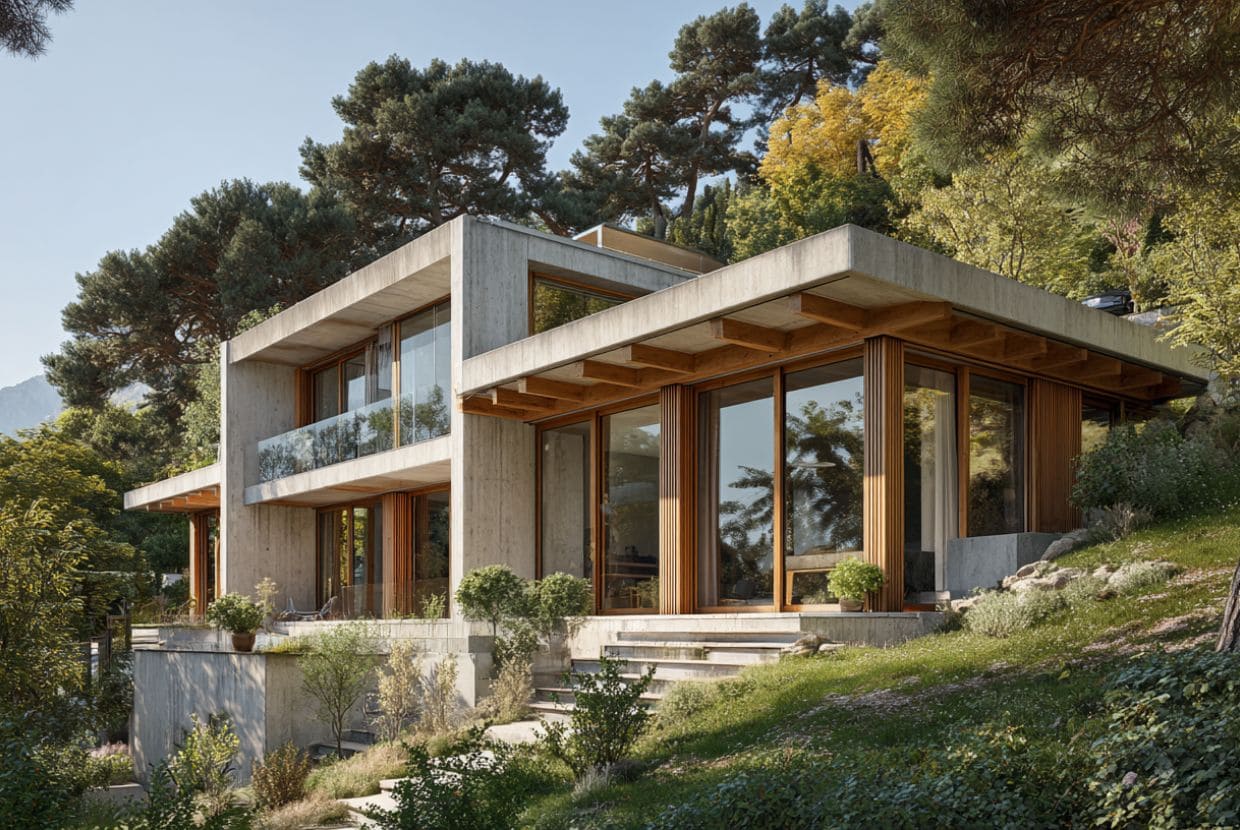
The interesting thing is in the mix. On the one hand, the wood provides that warm, light, homey feeling. On the other, the concrete gives it structure and strength. Together, they form a solution that makes sense both technically and aesthetically.
More and more people—families, architects, developers—are looking for different, sustainable options with personality. And this combination has everything it needs to be a real answer to that quest.
What are hybrid wood-concrete structures?
There's not much mystery to it, although it does involve quite a bit of technique. It's a system that unites wood and concrete so they work together. The wood is responsible for withstanding traction (when forces pull it), and the concrete resists compression (when they push it). This collaboration creates very stable pieces that withstand loads and vibrations well.
On site, laminated wood panels—CLT or GLT, as appropriate—are placed on top of a layer of concrete. To ensure that the two materials interact properly (so to speak), metal connectors or special adhesives are used. This is key: without a good connection, no hybrid structure will work.
Advantages of hybrid wood-concrete structures in housing
Structural strength and safety
One of the things most valued by those who choose this system is its strength. The whole structure holds up much better than a structure made solely of wood. There's less deformation over time, and the house responds better to everyday stresses. Vibrations, point loads... all of this is significantly reduced.
Acoustic and thermal comfort
Concrete provides mass, which helps dampen sound. Wood, meanwhile, insulates and naturally regulates humidity. And this combination is noticeable. Living in such a house is more pleasant: less noise, more thermal stability.
Aesthetics and interior design
Here we enter more subjective territory, of course, but it's important. Exposed wood—on ceilings, for example—completely changes the atmosphere of a home. It gives warmth and closeness. And when combined with concrete, which has a more sober feel, the contrast is modern without losing the natural touch. A combination that many seek without even knowing it existed.
Fire behaviour
Although it sometimes raises doubts, solid wood doesn't burn as one might imagine. It chars on the outside, predictably, and that gives you time to evacuate. Concrete also protects connectors and reinforces the entire structure.
Sustainability and energy efficiency
By working with certified wood and low-impact concrete, the environmental footprint can be significantly reduced. And if we add to that the energy savings achieved through insulation and thermal inertia, the result is a much more efficient home than a traditional one.
Applications of hybrid wood-concrete structures in housing
No, this isn't exclusive to tall buildings or public projects. Private homes—whether single-family homes or small blocks of flats—can also benefit.
- Composite forgings: very common. They allow you to cover large spaces without having to fill the entire space with pillars or beams.
- RenovationsIn older homes with wooden structures, a layer of concrete can be added to reinforce the structure. This provides added insulation and stability without adding too much weight.
- Extensions: Since wood is light, it allows for elevated floors or new floors without overloading the existing ones.
- Open designs: large rooms, open spaces… this type of structure makes it possible.
Technical challenges and solutions in hybrid wood-concrete structures
This all sounds great, but it also has its share of complexity. And it's important to say so.
Connection between materials
We must ensure that the wood and concrete work as a single element. To achieve this, the connectors must be well calculated and positioned. It's not just a matter of adding screws here and there: there's a technical criterion behind it.
Long-term behaviour
Materials change over time. Wood sags slightly, concrete shrinks. If this isn't taken into account, problems can arise over the years. That's why these projects use specific calculations that take this behaviour into account.
Vibration control
In a home, a floor that vibrates or sounds hollow when walking is uncomfortable. That's why great care is taken in the design of the floor to avoid these sensations. It's about finding the right balance between rigidity and comfort.
Humidity
There's little room for error here: the wood must be protected. If moisture enters and a proper construction solution isn't used, the risk of deterioration is real. That's why we work with quality finishes and carefully monitor the environment.
Aesthetics and added value in hybrid homes
Beyond the technical aspects, what you experience when you're inside a hybrid house is something very special. Wood provides warmth. Concrete provides strength. That combination, well thought out, has something special.
It doesn't just improve comfort: it also adds value. Anyone who sees a house built like this notices it. And so does anyone who lives in it.
Trends in the residential market
These types of solutions are gaining ground. They've been used in other countries for years—Canada, Austria, Germany—and in Spain, the trend is growing. In places like Mallorca, where both design and sustainability are valued, hybrid wood-concrete structures are beginning to make their presence felt.
It's not a fad, but rather a natural evolution. A way of building that better meets today's demands: efficiency, personality, and real comfort.
Factors to consider before building a hybrid home
If you're thinking about building with this system, there are some things you should be clear about from the start:
- Work with a company that has real experience in this type of structure.
- Request a complete technical project, with all the details well defined.
- Think from the beginning about insulation, air conditioning, and how they integrate with the structure.
- Use responsible materials: certified wood and concrete that reduces environmental impact.
At Construcciones Armalutx, we are your luxury construction company in Mallorca.
At Construcciones Armalutx, we've long been committed to hybrid wood-concrete structures as a real, promising option that makes perfect sense for quality homes. As a Mallorca Construction Company, we like to work with materials that speak for themselves, that combine tradition and technology without forcing anything.
Do you have in mind a home that feels cozy yet solid? We can help you make it happen. From the design to the last detail. With care, honesty, and without over-promising. Just good decisions, made with judgment.
If you want to talk about the project you have in mind, we are here.