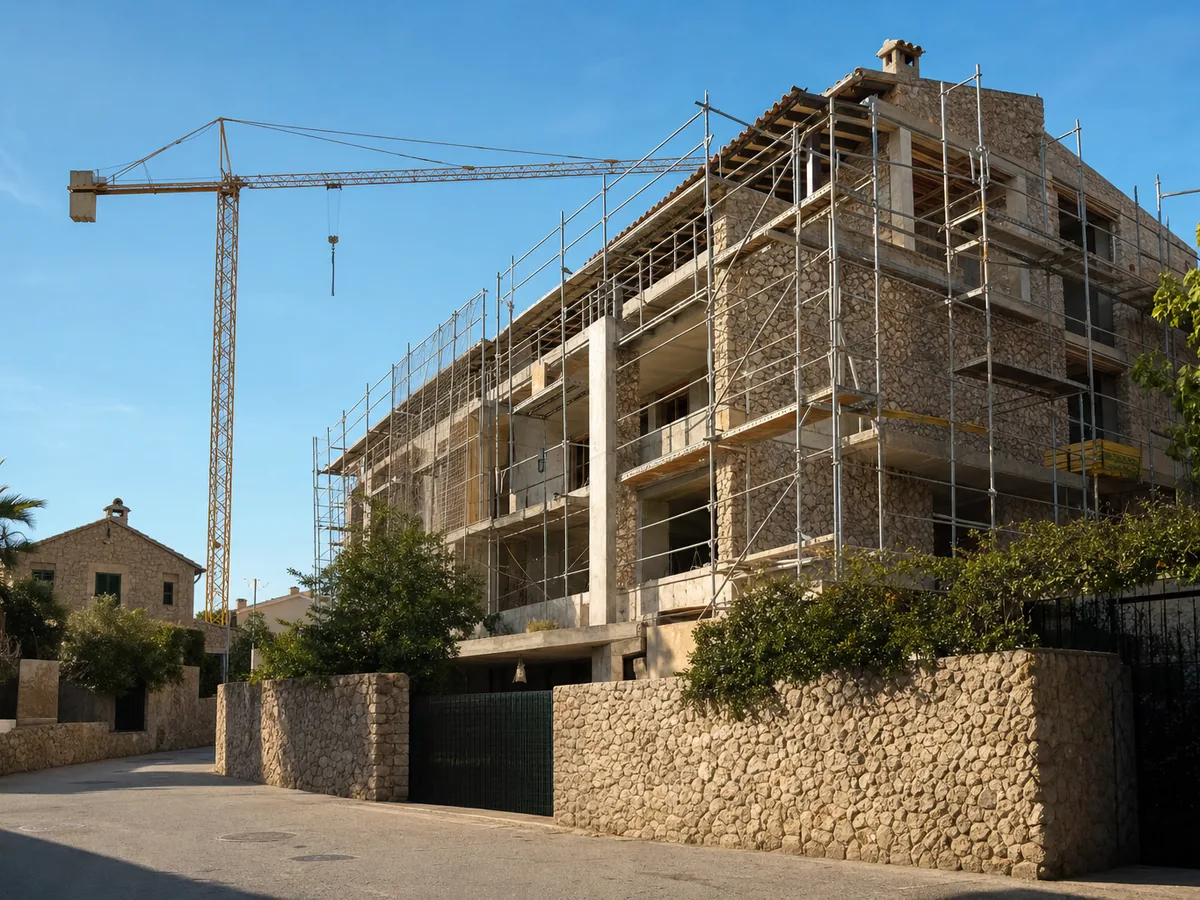
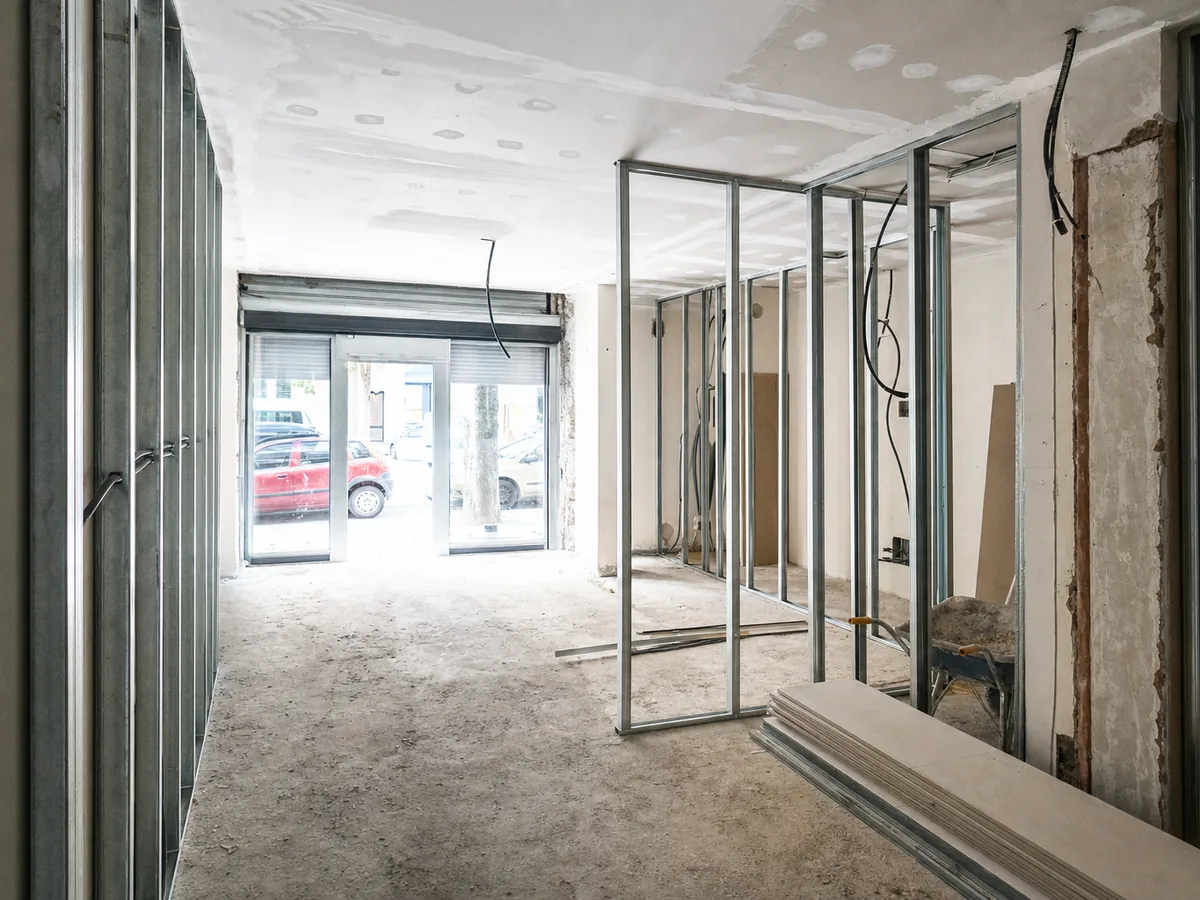
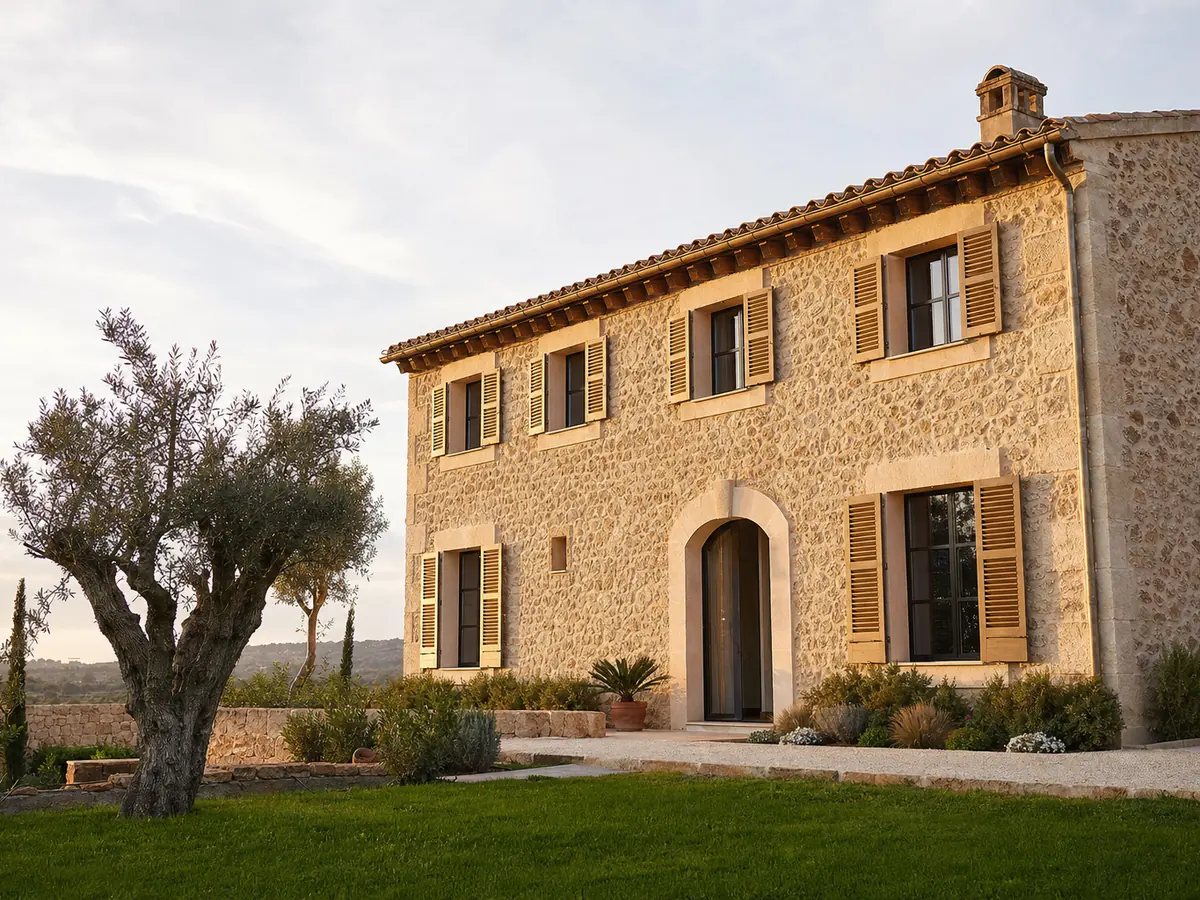
Mallorca has become, unsurprisingly, one of the most sought-after destinations in the Mediterranean for those looking for more than just a vacation. In 2025, the island continues to attract a type of traveller who prioritises privacy, personalised comfort, and characterful surroundings. Therefore, the construction of villas for vacation rentals has established itself as a very attractive opportunity for both those looking to invest and those seeking a second home that also generates income. Of course, before taking the plunge, it's a good idea to look beyond profitability and be very clear about the regulations that apply in the Balearic Islands.
The push for residential tourism in Mallorca
The tourist profile has changed considerably. It's no longer uncommon to see people who previously stayed in five-star hotels now opt for private villas, where they can be at their leisure. The value of these properties has skyrocketed, especially those with pools, fine architecture, and captivating views.
Why is this happening? Well, for several reasons.
For example, so far this year, more than 7 million passengers have passed through Palma Airport, which gives an idea of the stability of international demand. Added to this is the fact that the price per night in high-end villas can exceed €3,000, and in highly sought-after locations, even exceed €8,000. During the summer, occupancy easily reaches 85%, with travellers from different countries, not just the usual ones.
In short, everything points to the fact that investing in the construction of villas for vacation rentals continues to be profitable. However, you must do the calculations correctly, understand the deadlines, and comply with all legal requirements.
What the regulations say about tourist rentals in villas
The Balearic Islands have been tightening their legal framework to bring some order to tourism growth. Today, there are several important points that must be clear from the outset:
The basics of ETV (Tourist Homestays)
- Only villas or single-family homes are permitted. Tourist apartments are prohibited in Palma, and restrictions are also strict throughout the rest of the island.
- To legally rent, you must purchase tourist parking spaces from the Consell de Mallorca. Each space costs approximately €3,500.
- The home must be at least five years old. This means that if you build it today, you won't be able to rent it out as a residential property immediately.
- You will also need the first occupation licence (which in new construction replaces the habitability certificate from 2024 onwards), the presentation of the DRIAT and registration in the new state register of tourist accommodations from July 2025.
- Finally, we must not forget the eco-tax, which must be collected from the guest and declared to the ATIB.
Taxes: How a tourist village taxes
The tax aspect depends on how the rental is managed. If the property is rented as is, without any extras, the activity is not subject to VAT, and the income is taxed as real estate capital gains. However, if hotel-like services are offered (such as cleaning during the stay or changing sheets), then 10% VAT applies and it is considered an economic activity.
How much does it cost to build a villa for rent?
This is one of the key points. Initial budgets often fall short. To give you a realistic idea, here are some figures:
- Construction: in Mallorca, building a mid-to-high-end villa costs between €1,800 and €3,200 per square metre.
- Technical expenses and licences: you need to add between 10% and 15% to the construction budget.
- Furnish and equip exteriors: minimum €80,000, although it can be considerably more depending on the desired level.
- Tourist bed places: for an 8-place villa, the cost would be around €28,000.
- The plot: it all depends on the area, but in premium locations going over €500,000 is not unusual.
In total, building a villa of approximately 220 m² with a pool and high-quality finishes can cost around 1.4 million euros.
What profitability can be expected?
The final profitability depends on several factors: location, type of property, how it's managed, and the time of year it's rented out. Here are three realistic examples:
- Medium scenario: An annual occupancy rate of 47%, with an average rate of €675 per night, generates approximately €117,000 per year. Net profitability would be around 4%.
- Optimistic scenario (prime zone): rates above €1,000 a night and higher occupancy → net return close to 7%.
- Weakest scenario: in less powerful locations and with lower prices → net profitability of approximately 2%.
As you can see, the key is choosing the right location and managing it well. The luxury segment, on the other hand, tends to offer greater stability in the face of changes in demand.
Possible risks (and ways to control them)
As with any investment, there are risks here too. Some of the most common:
- Changes in regulations: this is an area that can change fairly often. Working with specialist local advisers helps a lot.
- Age restrictions: that 5-year minimum can delay income. A viable alternative is to buy a villa that is already built and licensed.
- Evolution of the tourism market: although Mallorca keeps strong demand, travel habits change. Ideally, have several sales channels and adjust prices dynamically.
- Budget overruns: cost overruns are quite common. That is why it is advisable to work with reputable construction companies, agree fixed prices and leave a safety margin.
Key steps before investing in a tourist villa
If you're thinking about launching a project of this type, it's best to follow a clear order. Here's a roadmap of sorts:
- Select the land and confirm with the city council whether it is suitable for building.
- Commission the technical project and process the licences.
- Build and obtain the first occupation licence.
- Acquire the necessary tourist places.
- Submit the DRIAT and register the property as an ETV.
- From July 2025, register it in the new state registry (NRUA).
- Hire a management team (rental, maintenance, taxation).
This path helps reduce risks and ensure everything is well prepared from the start.
What if I want to build on rural land?
Many people imagine their ideal villa in the middle of the Mallorcan countryside, and that's understandable. New urban planning regulations allow certain uses on rural land, although that doesn't mean it can simply be rented out for tourism purposes. To operate as an ETV (Educational Property Management System), the same requirements must be met. Furthermore, in areas like the Serra de Tramuntana, there are very strict environmental restrictions. In short: a distinction must be made between a building permit and a rental permit.
Trends in design and sustainability
Today, those renting a high-end villa aren't just looking for beauty or good photos. They also value aspects such as sustainability, the intelligent use of technology, and a connection to the environment. Some of the trends that are setting the tone:
- High-level energy certification.
- Renewable energy, especially solar panels.
- Architecture designed to take advantage of the climate and reduce consumption.
- Low-maintenance Mediterranean gardens with more efficient pools.
- Home automation that facilitates remote check-in, air conditioning, and security.
All of this not only appeals to a demanding profile, but also helps reduce operating costs.
At Construcciones Armalutx, we are your luxury construction company in Mallorca.
Building villas for holiday rentals is not something to be improvised. It requires vision, experience and meticulous execution. At Construcciones Armalutx, as a luxury construction company in Mallorca, we take care of everything: from finding the plot of land to delivering the house ready to rent, with all the documentation in order.
Our specialty is high-end projects, and it shows in every detail: in how we optimise timelines, how we control costs, and, above all, how we ensure each villa has its own unique soul. If you're considering investing in a home for the holiday market, we'd be happy to help you shape it.