More and more people are considering having a natural pool. It's not just because of how it looks—which is already beautiful—but because they offer something different: experiencing the garden as a place where water, plants, and the environment understand each other. Without chlorine. Without rushing. Without disrupting what's already there. In this article, we'll tell you why they're so popular, how they're designed, and how terraces can be that perfect complement that makes everything fit together without forcing anything.
What is a natural pool?
To begin with, it's not just a typical pool. Nor is it just a pond. It's a space that functions similarly to a natural ecosystem. The water is kept clean thanks to aquatic plants, gravel, filtration areas, and other elements that work in balance.
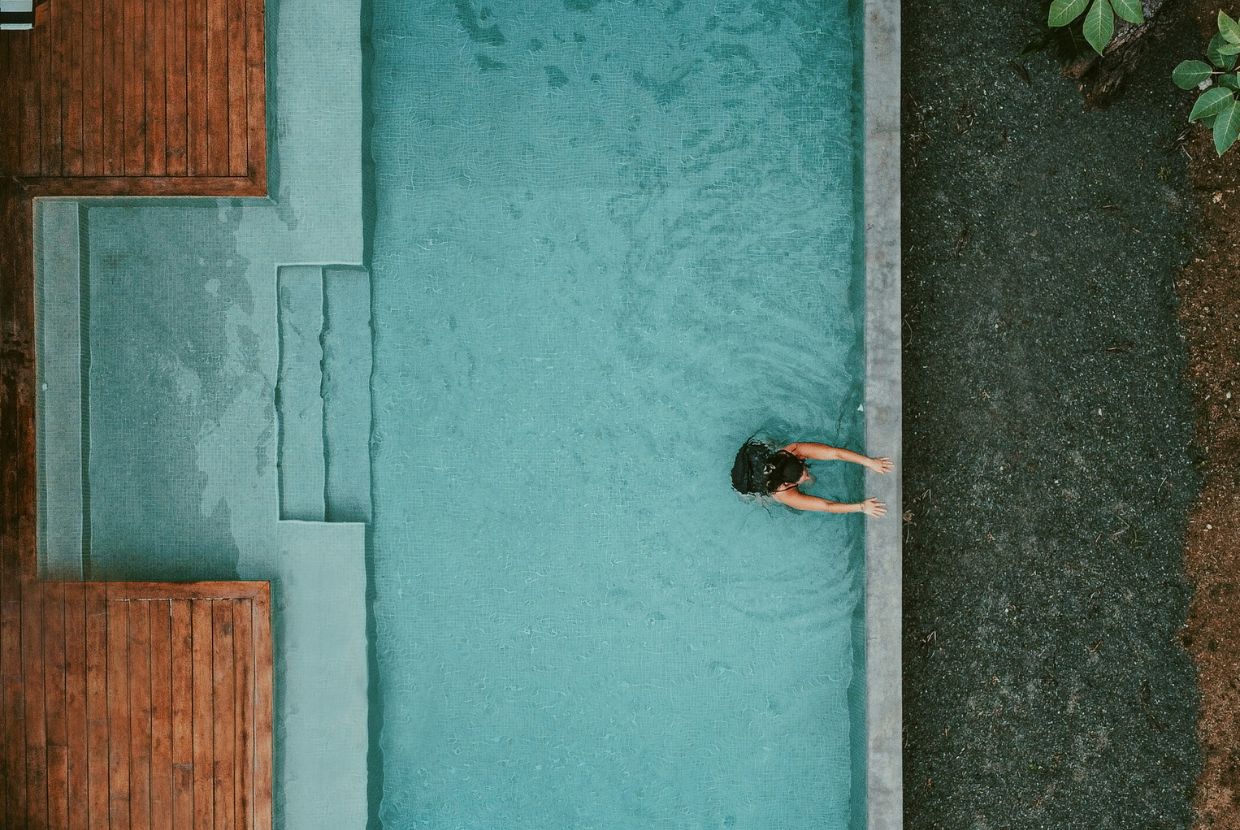
They usually have two areas. One is the bathing area—like any pool—and the other is called the regeneration zone, which is where biological purification takes place. There, the plants do their work: they clean, oxygenate, and filter. And, in the process, they beautify. The interesting thing is that the whole complex is designed so that it doesn't look like an add-on, but rather part of the landscape.
Why choose one?
Some people come to these pools looking for something healthier. Others, for aesthetic reasons. And some, simply because they no longer want chemicals in their homes. Whatever the reason, there are advantages worth knowing:
- They do not use chlorine:No harsh products. This makes them more environmentally friendly.
- Visually they work very well: They adapt to the terrain, without being out of place.
- Good for the skin: Especially if you have sensitivities or allergies.
- They require less maintenance than it seems: At first, you have to design them well, of course. But then the system almost regulates itself.
Design well from the start
This isn't just digging a hole and filling it with water. There's a whole process behind it, and it has a lot to do with observation, understanding the terrain, and letting nature do its part.
- Freer formsForget rectangular. Curves, soft edges, and uneven edges rule here.
- Real materials: Stone, gravel, sand, untreated wood… Whatever is already in the area or something that feels part of it.
- Plants that workIt's not just greenery for the sake of it. Species must purify, oxygenate, and adapt well to the climate.
- Good filtration system: It's key. The regeneration zone has to be well-sized.
- Don't fight with the terrainIf there's a slope, take advantage of it. If there's sun on one side, it's taken into account. Everything has an impact.
Terraces that blend in seamlessly
A terrace can be the perfect complement. Not only because it provides shade or a place to sit, but because it helps the whole thing make sense. And when designed thoughtfully, it becomes a natural extension of the garden.
What usually works? Materials like wood, local stone, native vegetation... and a great deal of respect for the environment.
- Levels that accompany the terrainInstead of flattening, slopes are followed.
- Green all aroundPlanters, green roofs, planted walls—everything helps to ensure the terrace doesn't disrupt the landscape.
- Furniture that doesn't attract attention: Neutral colours, soft shapes, natural materials.
- Soft light, not shop window light:Discreet solar lighting, embedded in the space, can completely change the atmosphere at night.
A different way of understanding the outside
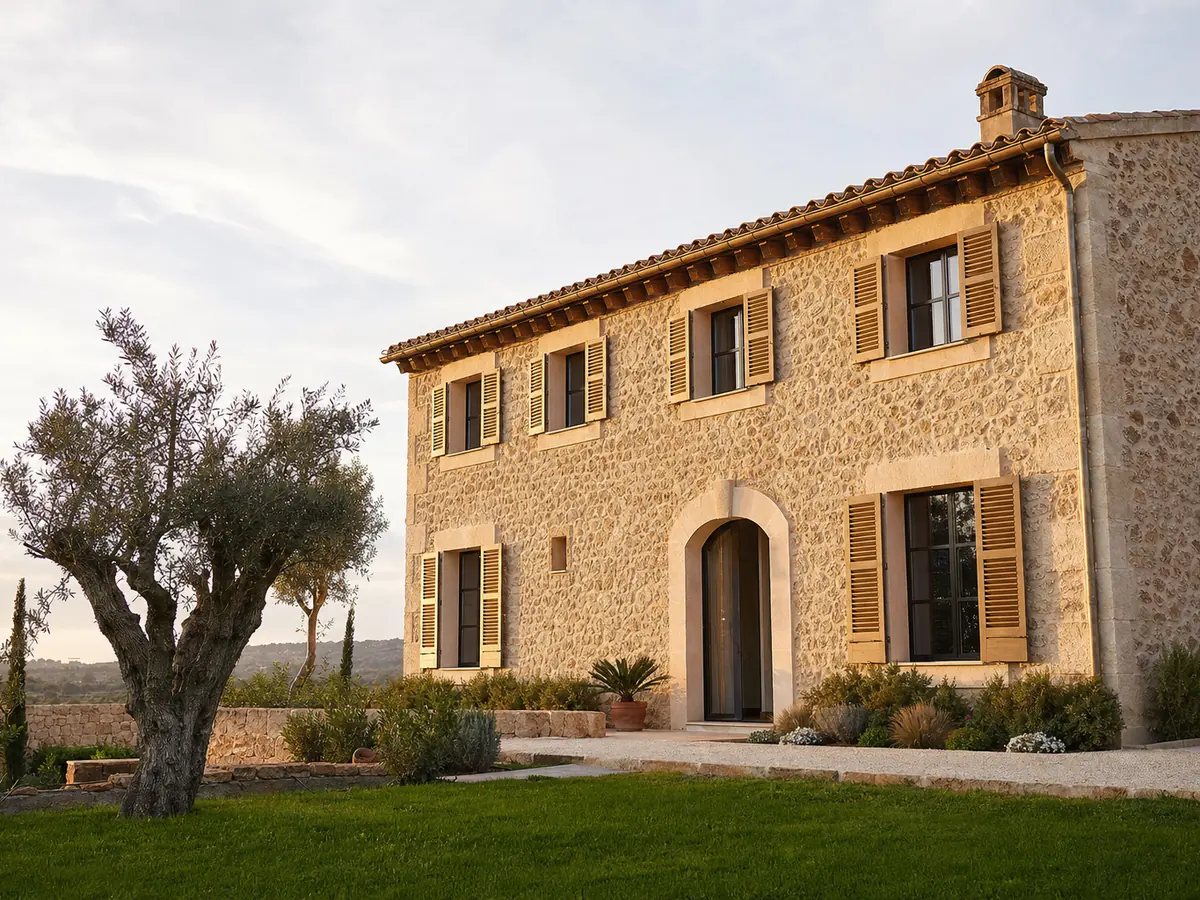
Having a natural pool isn't just a design decision. It's also a way of looking at the outdoors from a different perspective. Less intervention, more support. In areas like Mallorca, where the climate allows, they become small refuges that can be enjoyed for much of the year.
Whether in an inland estate or a modern home by the sea, these pools not only add value: they tell a story about the person who lives there. And that, today, is worth a lot.
Trends that are setting the course
There's no single way to do it right. But there are ideas that are repeated because they work and generate very complete experiences:
- Simple but lively pools: Basic lines, overflowing vegetation, details that do not seek to attract attention and still succeed.
- Designs that touch all the senses: Water that sounds, plants that smell good, textures that invite you to take off your shoes.
- Green roofs: They fit on terraces or pergolas and also provide insulation.
- Natural shade: With hurdles, fabric or light wood. Everything that gives freshness without cutting off the view.
Do you want one in your home? It's important to be clear about this.
- Study the terrain wellNot all soils respond equally. Nor do all slopes or orientations.
- Seek professional helpSomeone who's done this before. A technical eye makes a big difference.
- Choose plants that work well there: That they not only survive, but that they help.
- Automate the basics: Pumps, recirculation… there are ways to keep everything working without having to keep an eye on it every day.
- Think togetherA pool doesn't just go alone. It has to fit in with the house, the garden, and the views.
We are Construcciones Armalutx, your construction company in Mallorca.
At Construcciones Armalutx, your construction company in Mallorca A trusted partner, we've been working with natural pools for some time, especially in contexts where the landscape has a lot to offer. In Mallorca, that's immediately noticeable. It's not about imposing a structure, but rather supporting what already exists. If you're thinking about having a space like this—with clean water, calm, integration, and meaning—we're here to listen. We like to work on projects that have soul, and if yours is in that vein, even better.