Open-plan kitchens have become one of the most common renovations in recent years. The idea? Knock down walls to gain light, continuity, and a space that invites more sharing. But beware, it's not all idyllic: there are also challenges to consider, such as odors, noise, and visual order. If you're considering this option, here's a useful, straightforward guide designed to help you make the right decision from the start.
What are open-plan kitchens and why are they so popular?
We call open-plan kitchens those that unite the kitchen, dining room, and living room into a single space. They reflect a more connected and versatile way of living: the cook is no longer isolated. They can chat, watch the children, or finish tasks while moving between stoves. Furthermore, by eliminating unnecessary partitions, more natural light enters and the square footage seems to stretch, something invaluable in small homes.
It also responds to changing habits. We're increasingly eating more informally, spending more time at home, and valuing spaces that adapt to different functions. Open-plan kitchens address this with open layouts, islands that serve almost any purpose, and furniture that blends seamlessly without disrupting the living room's aesthetic.
Key advantages of open-plan kitchens
Light and visual amplitude. By removing partition walls, light is distributed better and the house feels more open. Even if you don't gain actual square footage, the perception of space improves significantly. In elongated apartments or those with a single facade, this is even more noticeable.
Real coexistence. The person cooking isn't isolated, and that changes the atmosphere: there's conversation, help, and sharing. Those with young children can keep an eye on the kitchen without giving up on preparing dinner. Kitchens open to the living room create a sense of an active, lived-in home.
Flexible space. An island can be a breakfast bar, a workstation, or an impromptu meeting center. With thoughtful furniture, the space can transform depending on the occasion.
Unified aesthetics. Integrated appliances, seamless finishes, and simple lines create a clean, modern feel. The kitchen is no longer hidden; it's part of the whole.
Added value. In many renovations or sales, a well-designed open space adds points. Most people today are looking for light, spaciousness, and a shared home.
Disadvantages and how to reduce their impact
Odors and grease. Cooking leaves its mark: steam, odors, and particles end up on living room textiles if there's no powerful extraction. The key? A good hood, preferably with a direct exhaust vent and a well-thought-out duct layout (as short and direct as possible). If that's not possible, opt for high-quality carbon filters and perform regular maintenance. Cooking with induction, using lids, and cross-shaped ventilation also help significantly.
Noises. Everything gets louder: the hood, the dishwasher, conversations. Choose quiet appliances, incorporate sound-absorbing elements (rugs, curtains, sound-absorbing pictures), and space things out: it's best not to have the cooking area right next to the sofa or the workspace corner.
Order in sight. What's happening in the kitchen can be seen from the living room. Therefore, it's vital to have good storage, clear countertops, and integrated appliances. A tall cabinet to hide a toaster, mixer, or food processor also makes a difference.
Air conditioning. When combining rooms, the volume of air to be heated or cooled increases. Consider appropriate systems (ducts, split systems, or radiant/cooling floor heating) and properly seal any gaps.
Privacy. If you frequently have guests or work from home, it may be helpful to separate spaces. Lightweight enclosures are an interesting solution: they divide without losing light.
Kitchens open to the living room with glass enclosures
A growing option: closing with glass and minimal profiles. This way, you can open or insulate as needed. Open-plan kitchens with glass combine visual continuity with odor control and improved acoustics. There are options for all tastes: hidden sliding doors, hinged doors, industrial-style folding doors... If you choose good materials, the result is long-lasting and clean.
Open kitchens with island or peninsula
The island is the meeting point. In open-plan kitchens, it serves as a link between the kitchen and the living area: it's perfect for cooking, having a drink, or simply chatting. Just leave between 100 and 120 cm of space around it so you can move around comfortably. If it has a hob, it needs a well-functioning surface-mounted or ceiling-mounted hood. If it's just for storage, you can save space with large drawers. The peninsula, when there's no room for a freestanding island, offers similar uses.
Design and layout: useful measurements and tips
It all starts with ergonomics. An efficient triangle between the sink, stove, and refrigerator saves steps. In parallel layouts, make sure the oven and dishwasher doors can be opened without blocking the passageway. Reserve at least 90 cm for circulation—ideally 100–120 cm if used intensively—and prevent traffic to other rooms from crossing the cooking area.
Place the countertop near the sink for easy cleaning. Add recessed or retractable outlets to the island, and if you work from there, make sure they have a USB port. For lighting, consider layers: general (downlights or track lights), spot (LED lamps or strips under cabinets), and ambient (indirect LEDs). Make sure the color temperature matches the living room and that you can adjust the intensity.
As for materials, it's best to choose easy-to-clean options: porcelain or engineered stone for countertops, durable fronts, and removable textiles in the living room. Continuous flooring creates a unified look, but you can define areas with rugs or subtle changes in format. Opening up the kitchen is part of a kitchen renovation in Mallorca well planned.
Basic regulations and permits in Spain
Before removing anything, check if the partition is load-bearing and what permits your city council requires. When joining spaces, also check ventilation, extraction, and fire regulations (CTE and RITE). If you're using gas, take extra precautions. If you're switching to induction, you'll simplify things considerably. Always consult a technician to validate and manage everything. In buildings, confirm that you can extend the duct to the façade or roof according to community regulations.
Costs and how to organize them
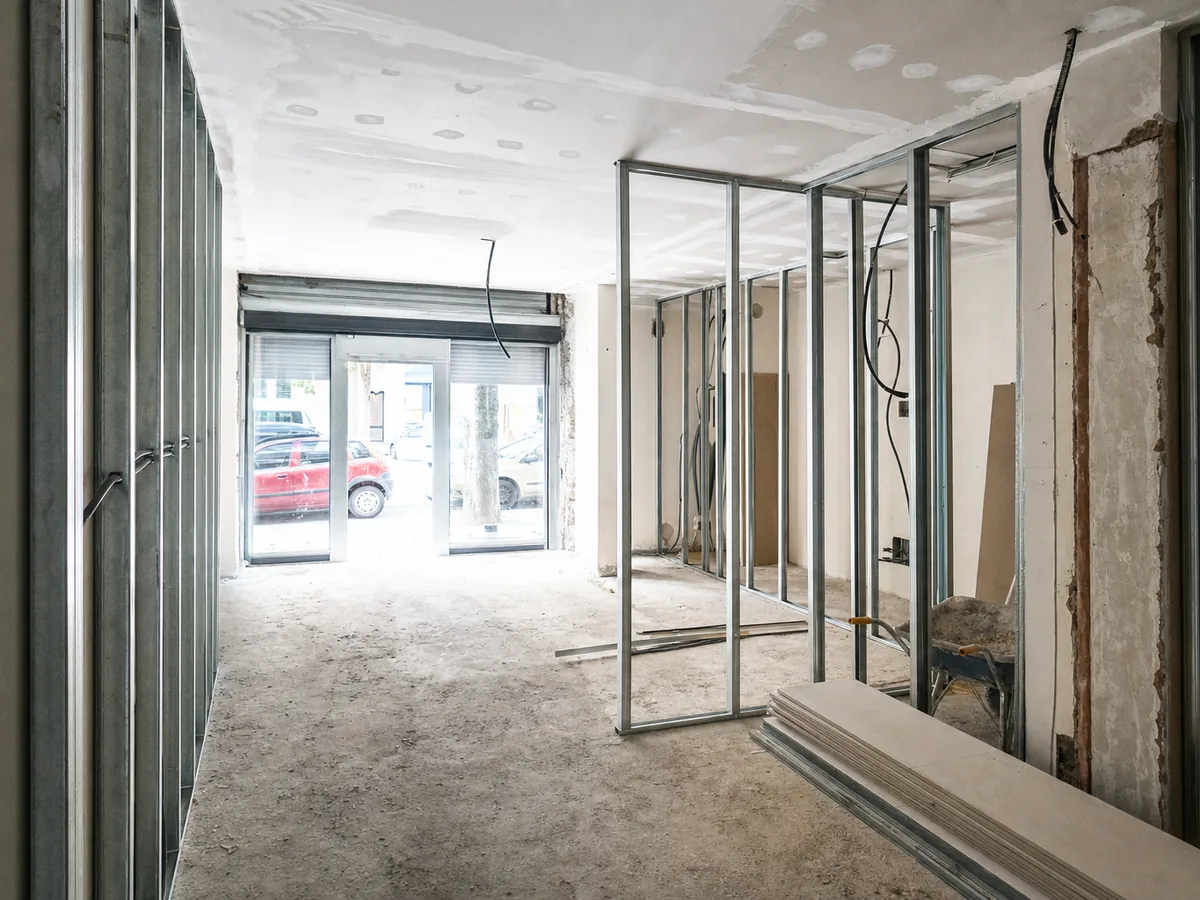
The cost depends on many factors: demolishing walls, installing new flooring, a new ceiling, furniture, countertops, appliances, lighting, plumbing, paint, etc. If there's a glass enclosure or structural reinforcement, it adds up. If the wall is load-bearing, a technical calculation, beam, and project management will be required. A tempered glass enclosure is also an investment, but it greatly improves the experience. Allow 10–15% for unforeseen expenses and compare detailed estimates.
Investing in what really matters improves your daily life: a powerful hood, cabinets with good fittings, sturdy runners, quiet appliances... A 42 dB dishwasher and a hood with an efficient motor can save you a lot of trouble. And don't forget lighting and acoustics: even if they're not visible, they're noticeable.
For whom yes and for whom maybe not?
Perfect for those who cook often without intense frying, families who spend time together, and homes with little natural light. Also perfect for those who enjoy entertaining. However, if the living room is also your quiet office or you cook dishes with very strong aromas, a semi-open or glass option may be more balanced.
Common mistakes (and how to avoid them)
- Don't prioritize extraction. Visual appeal is important, but not more so than an effective hood.
- The hallways are too narrow. Anything less than 90 cm can be uncomfortable.
- Low or uncontrolled light. Three layers of light and variable scenes make all the difference.
- Lack of power outlets. Make sure you have them where you need them, including on the island.
- Low-wear materials. Avoid untreated wood near the stovetop, highly absorbent textiles, or porous countertops.
- Forget vertical storage. A cleaning cabinet or small appliance cabinet frees up a lot of space.
- Noisy appliances. Every decibel counts in an open space.
Trends that do work
- Paneled furniture that blends into the living room.
- Islands with personality: cantilevered countertops, veined stone, striking aprons.
- Neutral colors with texture: soft woods, warm tones, matte finishes.
- Lightweight shelving with subtle lighting.
- Integrated and discreet technology: retractable sockets, ceiling hoods, USB-C sockets.
Quick decision checklist
- Can you vent to the outside easily?
- Do you have enough free space around the island or peninsula?
- Will there be room to maintain order?
- Are your appliances quiet? Will you have dimmable lighting?
- Need to close up occasionally? Consider a glass enclosure.
- Does your budget cover ductwork, licenses, and good finishes?
Frequently Asked Questions
Can I open without touching the structure?
If it's not a load-bearing wall or affecting key installations, it will be simpler, but always consult a technician.
Island with a plaque or just as a support?
If you cook a lot, the stovetop is best placed on the main countertop. The island can also be used as a back rest.
Which soil is best?
Porcelain, high-end vinyl, or treated wood. The same flooring helps unify the space, but a change of format can also work.
How to maintain order every day?
Clear countertops, clean filters, and a multipurpose cabinet to store breakfast items or the food processor.
At Construcciones Armalutx, we are your construction company in Mallorca.
If you are thinking of opening up your kitchen to the living room, at Construcciones Armalutx we will accompany you throughout the entire process: feasibility study, design, licences, construction and finishes. We want your open-plan kitchens to be comfortable, functional and beautiful. As a construction company in Mallorca, we are well versed in local regulations, procedures and particularities. We can visit you without obligation, study the ideal layout, propose an effective extraction solution and prepare a clear quote. If you are looking for a construction company in Mallorca that combines craftsmanship, attention to detail and commitment to deadlines, we are here for you. Shall we talk about it? Translated with DeepL.com (free version)