Building a detached house in Mallorca is more than just a technical matter. For most people, it's a life-changing decision: where you're going to live, how you're going to live, and how much control you want over your own space. That's why, beyond blueprints, permits, and budgets, this process involves a mix of excitement, nerves, numerous decisions, and quite a few doubts.
In this article we explain what the process of building a single-family home in Mallorca is really like, what steps are involved, when each thing happens and where problems usually arise if it is not planned well.
It's not an idealized vision. It's a practical vision.
1. The terrain: what can and cannot be done
Before thinking about the house, you have to understand the ground.
In Mallorca this is especially important because the regulations are strict and very uneven depending on the municipality, the urban classification and whether the land is urban, developable or rural.
"I like this plot of land" is not enough here.
You need to check:
- If it is buildable land and under what conditions.
- How many meters can actually be built?.
- What is the maximum occupancy allowed by the regulations?.
- If there are any impacts: roads, coasts, heritage sites, protected areas, etc.
A common mistake is to buy a "nice" plot of land and then discover that it does not meet the minimum requirements for building, or that it only allows very limited construction.
This is the first real filter of the project.
Everything else depends on this.
2. The project: turning an idea into something that can be built
When the land is suitable, the architect comes into play.
And here's something interesting: most clients arrive with a pretty clear idea of what they want their house to be like… but that idea almost never fits exactly with the regulations or the actual terrain.
The project serves to:
- Adjust your needs to what the plot allows.
- Adapt the house to the climate, orientation and winds.
- Comply with municipal ordinances and technical regulations.
- Define exactly what will be built (and what will not).
First, the basic project is done, which defines volumes, surfaces and legal fit.
Then comes the execution project, which goes into technical detail: materials, structures, installations.
This is where the project stops being a "pretty drawing" and becomes something that can be built.
3. Licenses and permits: the usual bottleneck
To build a single-family home in Mallorca you need a major works license.
And this is no minor matter.
Depending on the municipality, the timeframe can vary considerably. Some municipalities are more efficient, while others have a slow process, especially if sector-specific reports are involved.
What is usually required:
- Visa project.
- Geotechnical study.
- Proof of ownership of the plot of land.
- Payment of municipal fees and taxes.
This is where many projects get stuck for months if the documentation hasn't been properly prepared or if the project doesn't exactly fit with local regulations.
That's why this step isn't just "filling out paperwork." It's a critical phase of the process.
4. Choosing the construction company: probably the most important decision
Once everything is approved, the key question arises:
Who is going to build my house?
Not all construction companies work the same way or with the same level of control, detail, or involvement.
It's not just about price here.
This is about:
- Meeting deadlines.
- Real quality control.
- Ability to resolve unforeseen problems.
- Transparency in measurements and costs.
- Experience in new construction in Mallorca.
A company that understands the local context, suppliers, regulations, and the island's specific characteristics often avoids many problems that don't appear on paper... but do on the construction site. We've prepared the following article so you can delve deeper into this: How to choose a good construction company in Mallorca.
5. The play: when everything becomes real
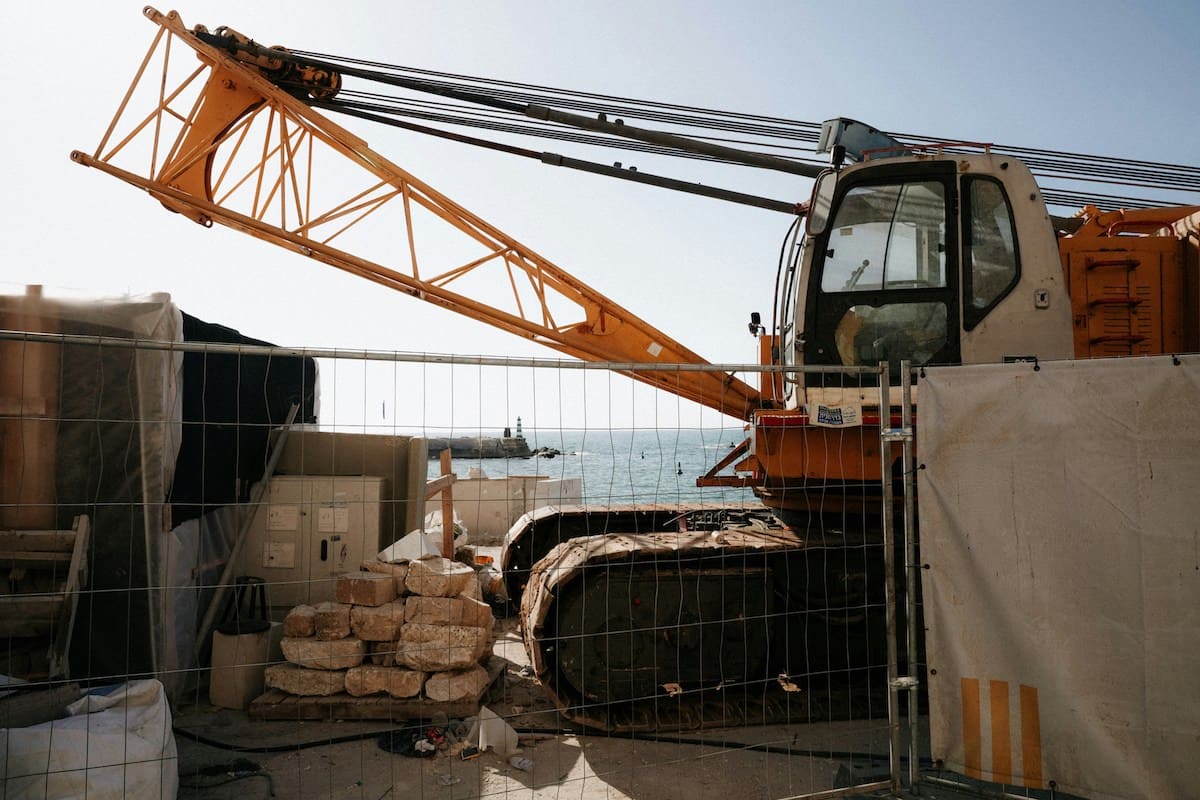
The execution of the work is not a homogeneous phase. It is a succession of very different stages:
- Site preparation and earthworks.
- Foundation and structure.
- Enclosures and roof.
- Facilities (water, electricity, air conditioning, sanitation).
- Interior and exterior finishes.
Each one has its own complexity and risks.
This is where you can see if the project was well defined and if the team works in a coordinated manner.
A well-managed project is not one without problems, but one that knows how to solve them without the client living in a permanent state of uncertainty.
6. Completion of construction, certificates and habitability
When the house is built, it is not yet "legally finished".
Missing:
- Final work certificate.
- First occupancy license.
- Certificate of occupancy.
Without this you cannot contract utilities or properly register the property.
And, above all, you don't have the legal peace of mind that everything is in order.
This administrative closure is as important as the construction itself.
7. Delivery, after-sales service and actual use
The handover of the keys is not the real end of the process.
There are always small adjustments to be made: a door that rubs, a blind that doesn't go down properly, a pending adjustment in the air conditioning.
Here you can really see the difference between a company that "finishes the job" and one that truly supports the client.
Conclusion
Building a detached house in Mallorca is not quick, it's not simple, and it's not just about technical aspects. It's a combination of regulations, design, management, construction, and experience.
When everything is properly aligned, the process is smooth and predictable.
When something goes wrong at the beginning, it usually drags on until the end.
That's why the real secret isn't in running, but in taking each step at the right time and with the right professionals.
Because in the end, you're not just building a house.
You are building your place.
And that deserves to be done right.
If you need a construction company in Mallorca with the best guarantees for your project, contact us. Over 50 years of experience back us up.