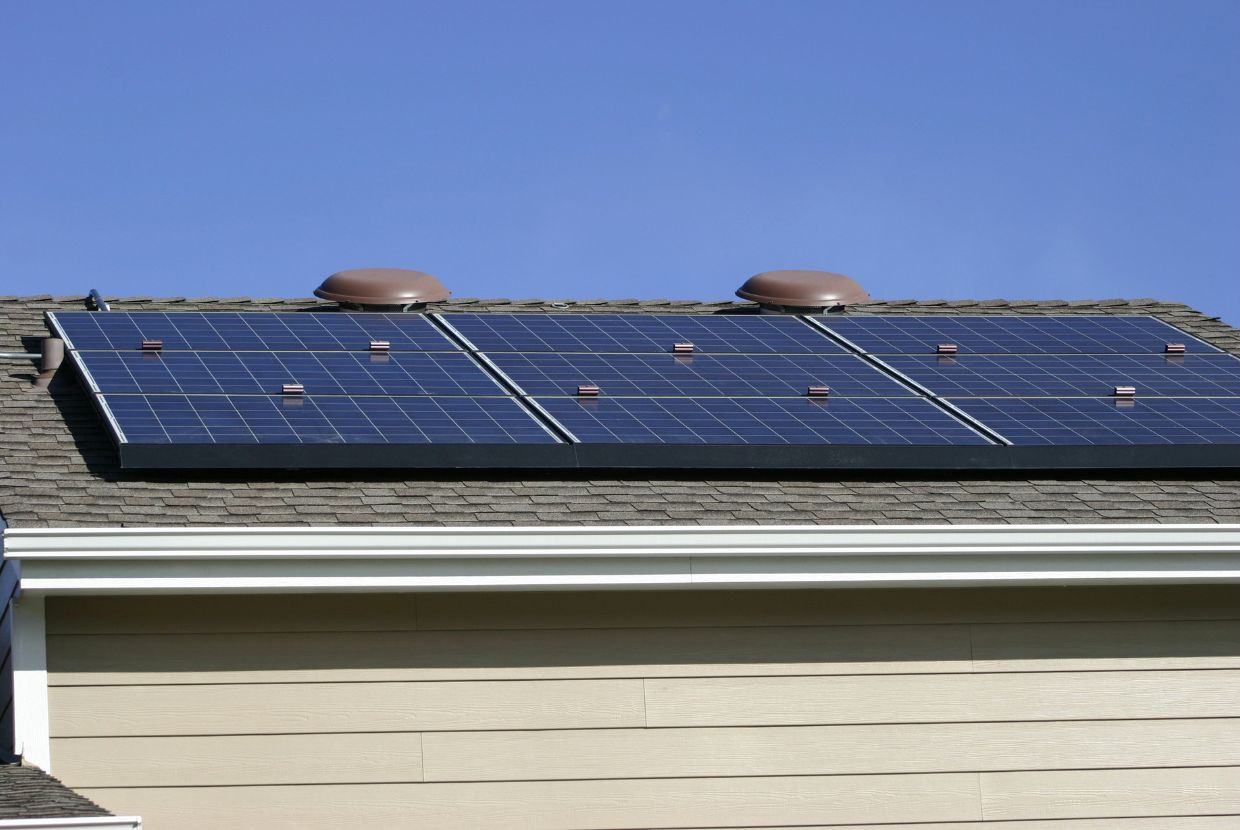
There's a question many people are asking lately: Is it profitable to install solar panels in a home? And no wonder. Electricity prices are skyrocketing, subsidies are available, and we're increasingly concerned about where the energy we use at home comes from. Therefore, it's no surprise that solar self-consumption is gaining ground among those looking to reduce their bills and live a little more sustainably.
You start saving from minute one
One of the big reasons to consider it is savings. Straight to the point. In Spain, a home solar installation can reduce your electricity bill by between 50% and 80%, although, of course, this depends on several factors: whether the roof is well oriented, whether the house consumes more energy during the day, the size of the installation, etc.
And not only that. If you generate more than you use, that energy isn't lost: it can be sent to the grid and you receive financial compensation. This is included in Royal Decree 244/2019 and allows you to get even more out of what you produce.
An investment that pays off sooner than it seems
The issue of return on investment is also a concern. How long does it take to pay off? Well, it depends, like almost everything, but in most of the country, we're talking between 5 and 7 years. There are areas where, thanks to more sunshine or local aid, the period is even shorter than 4.
Considering that the panels last around 25 years, there's plenty of room for savings. Some families have accumulated savings of more than €20,000 over that period.
Aid makes a difference
Today, there is a wide range of subsidies and deductions that make the initial investment more manageable. Some of the most notable are:
- Property tax rebates that can reach 50% for several years.
- Personal income tax deductions if you improve the energy efficiency of your home.
- Direct subsidies from European Next Generation funds.
These grants, depending on the case, can cover between 30% and 60% of the total cost. And that changes the picture considerably.
Your house is worth more with solar panels
Another advantage that not everyone takes into account at first: a home that produces its own energy has more market value. It's more attractive to sell or rent. And the improved energy certification also adds value, of course.
It's not just a question of efficiency; in the end, whoever is interested in your home knows they'll pay less for electricity. And that makes a difference.
More independence, less fear
If a battery is added to the system, things get even better. The energy generated during the day can be stored and used when you need it most, such as at night or during peak consumption periods.
This gives you autonomy from price increases or power outages. In these times, not depending so much on the electricity market is a great peace of mind.
What can make it more or less profitable?
Not all houses are the same, and there are certain aspects that greatly influence the results:
- The orientation of the roof: The further south and with a certain slope, the better.
- How much you consume during the day: if it coincides with the hours of sunshine, it is used more.
- The cost of installation: : varies depending on the type of equipment, whether batteries are added, and of course, who installs it.
- Where do you live: In areas with more hours of sunshine (such as the south and east of the peninsula, the Balearic Islands or the Canary Islands), the results are better.
- The electricity rate you have contracted: There are some designed to get more out of self-consumption.
A technology that is already within reach
A few years ago, this was almost exclusive. Not anymore. Prices have dropped dramatically, and technology has improved enough for many families to afford it.
There are homes that, with a well-thought-out installation and batteries included, can cover almost all of their annual consumption with solar energy. And without changing their routines.
Low maintenance, long life
Once installed, maintenance is minimal. An occasional checkup, cleaning the panels if they accumulate too much dirt, and little else.
Panels typically have a 25-year production warranty, while inverters have a 7- to 10-year warranty. So, with a few rare exceptions, the system continues to operate without any problems for decades.
At Construcciones Armalutx, we'll lend a hand.
From Armalutx Constructions, your construction company in MallorcaWe've been working with people who want to make their homes more efficient and environmentally responsible for a long time. If you're still wondering whether installing solar panels in your home is cost-effective, we can help you figure it out.
We'll provide a personalized, no-obligation study and manage the entire process, from the first step until the panels are up and running. If you have it in mind, we'll talk. And if not, we'll talk too.