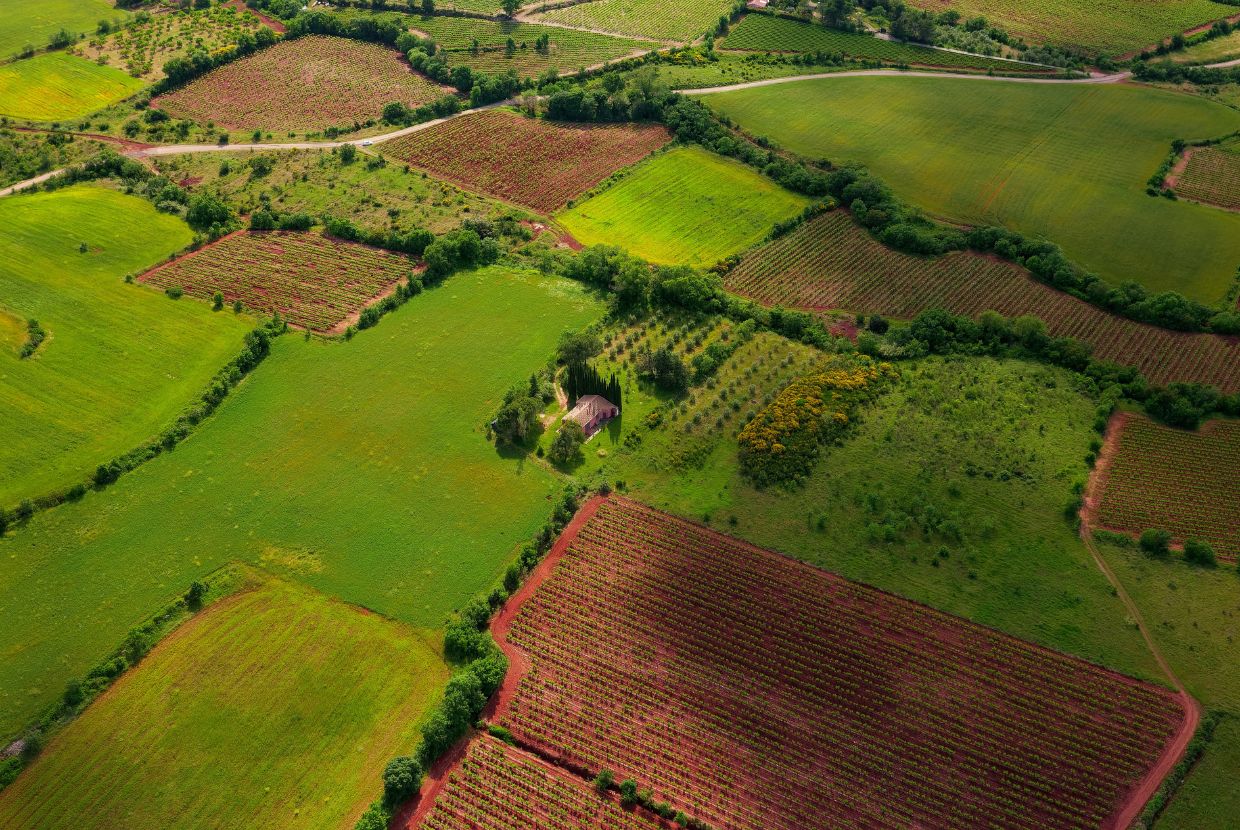
The legalization of rural land in the Balearic Islands has become a key issue for many owners, developers, and investors in the islands. In recent years, the legal framework has undergone several important changes with the aim of offering a viable solution to thousands of buildings built on rural land, many of them without legal support or in rather unclear situations. With the entry into force of Decree-Law 3/2024 and the subsequent Law 7/2024, an extraordinary avenue now opens up for the regularization of these buildings. While neither automatic nor simple, it represents a real opportunity.
What does it mean to legalize a construction on rural land?
When we talk about Legalizing rural land in the Balearic Islands doesn't just mean registering a property or paying a fine. The procedure goes further: it allows you to obtain a municipal license that legally recognizes a building constructed on undeveloped land. This can translate into rights as important as access to running water, electricity, or fiber optics, the ability to make renovations, and, above all, clear legal protection for the property.
An extraordinary process with an expiration date
Starting in May 2024, the Balearic Government activated an exceptional mechanism to regularize buildings whose urban planning violations have already expired. In other words, although these structures cannot be demolished because they have exceeded the legal deadlines, they also do not have a recognized legal status. This new regulation opens the door to such recognition.
But there's a time limit. The process will only be available for three years after each Island Council publishes its agreement:
- Majorca began on February 15, 2025
- Minorca, on March 25
- Ibiza, April 3
- At Formentera, the start of the term is still awaited
What requirements must be met?
To qualify for this procedure legalization of rural land in the Balearic Islands, the home or construction must meet certain conditions:
- Have been built before May 29, 2014 if it is on common rural land
- If located on protected land, it must be prior to March 10, 1991
- The infringement must be time-barred and not be subject to any ongoing disciplinary proceedings.
- It cannot be found in excluded areas such as public domains, easement zones, expropriable lands or protected areas.
- And something important: it cannot be legalized for tourism purposes. The property cannot be used for vacation rentals and will be registered as such.
How much does it cost to legalize?
Legalizing rural land in the Balearic Islands entails certain expenses that must be taken into account from the outset. In addition to the fees of the professionals involved—architect, quantity surveyor, urban planning lawyer, and surveyor—the owner must cover:
- Municipal fees corresponding to the license process
- An extraordinary financial compensation, the percentage of which varies depending on the year in which legalization is requested:
- 10 % of the execution cost if presented in the first year
- 12.5 % in the second
- 15 % in the third
- 10 % of the execution cost if presented in the first year
What if family income is low? In that case, bonuses of 25% % or 50% % can be applied, provided that income from the last four fiscal years is proven.
Advantages of having everything in order
Regularizing a home on rural land has many positive implications:
- It provides legal security for both the owner and future buyers.
- It allows you to register your home in the Cadastre and the Property Registry.
- Open the door to selling with guarantees
- Provides access to basic services and bank financing
- And avoid sanctions, restrictions or the dreaded risk of demolition
In short, it is a step towards peace of mind.
Is it all advantages? Not exactly.
Although this extraordinary approach has been greeted with relief by many, it has also drawn criticism:
- As already mentioned, no tourist use is permitted in regularized housing.
- Some environmental groups see this measure as a way to consolidate urban planning practices that should not be normalized.
- Certain municipalities, especially in areas such as the Serra de Tramuntana, may impose additional conditions.
- And it should be noted that the Constitutional Court has admitted an appeal against part of the content of the law.
July 2025: A new door open to reclassification
In the summer of 2025, the Balearic Islands Parliament passed a law allowing, in certain municipalities with more than 20,000 inhabitants, the conversion of rural land use to developable land. However, this will only be possible if the municipal plenary session approves it. Furthermore, construction will also be possible in transitional areas without having to previously exhaust the available developable land.
The stated goal is to facilitate access to affordable housing and revive the construction sector. However, there are voices warning of the potential environmental impact of this new expansion model.
And what about the technical requirements?
Legalization isn't just a matter of paperwork. The home must also meet a series of technical requirements:
- It must have a water treatment system that complies with current regulations.
- It must comply with energy efficiency standards
- It must be well integrated into the landscape
- And, of course, guarantee minimum safety and health conditions.
All of this must be reflected in a technical project signed by certified professionals and approved by the corresponding city council.
At Construcciones Armalutx we accompany you throughout the entire process.
If you're thinking about starting the process of legalizing rural land in the Balearic Islands, at Construcciones Armalutx we have an experienced technical and legal team at your disposal to help you from start to finish. We analyze your case, draft the necessary plans, and process the application with the relevant authorities.
We're based in Mallorca and know the lay of the land. Write to us anytime, and we'll help you get your property up to date with complete confidence and without any surprises.