What do we mean by brutalism and how did it come to Spain?
When talking about Brutalist architecture in Mallorca, it's not enough to simply look at what's happening on the island. First, it's necessary to look back and understand what lies behind this movement, which, although sometimes controversial, left a strong mark on 20th-century architecture.
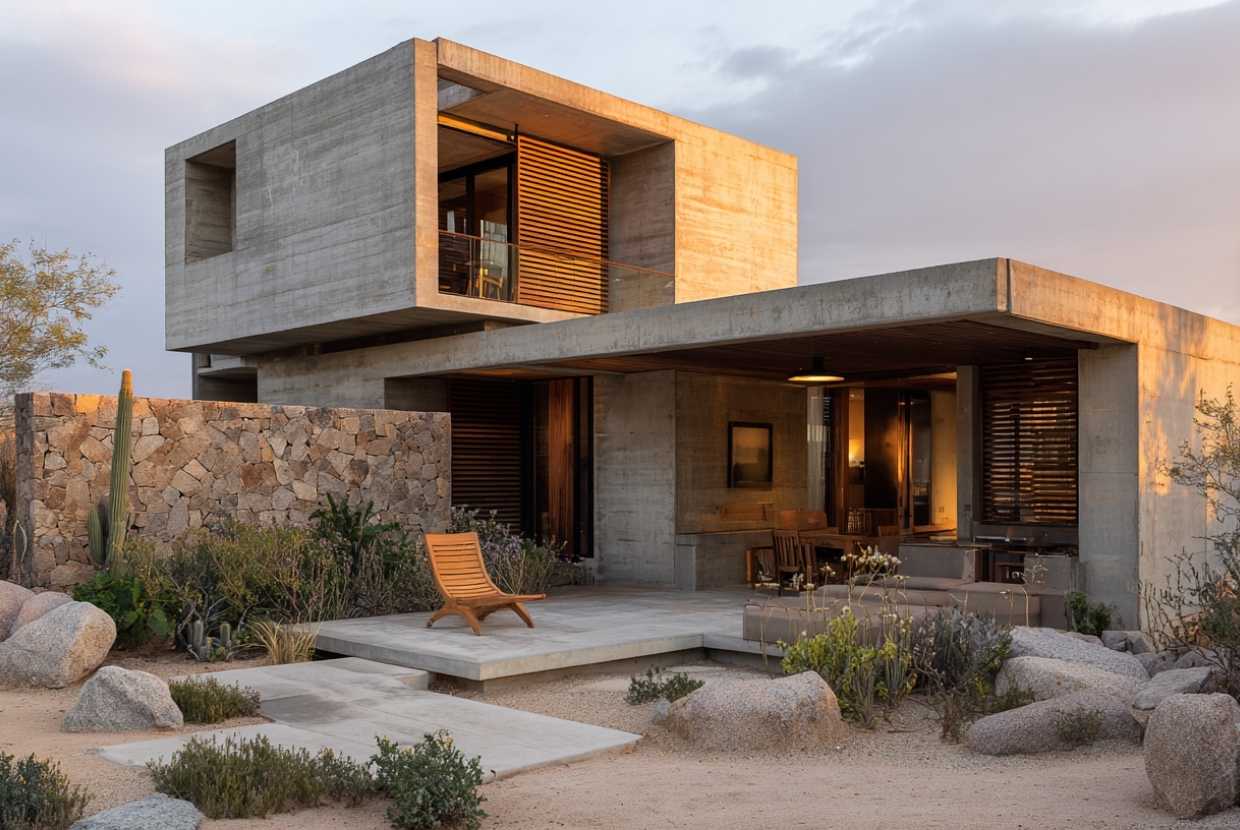
Brutalism emerged as a reaction to what was considered excessive: overly elaborate decorations, shapes that obscured the building's true structure. Here, exposed concrete, straightforward forms, and a constructive sincerity that doesn't seek to disguise anything reign supreme. The term comes from the French béton brut (raw concrete), a term used by Le Corbusier, one of the great names in modern architecture.
In Spain, this trend gained momentum in the 1960s and 1970s, when cities began to transform rapidly. Madrid and Barcelona were the most active centers, but it soon spread to other areas. In Mallorca, Brutalism found its place primarily in Palma, although scattered examples can also be found throughout the island. Some architects knew how to give it a twist: they adapted this style to the light and materials of the Mediterranean.
The parallels with Mexico: mass, concrete and monumentality
Leaving Mexico out when talking about brutalism is like telling a half-baked story. In the 1960s and 1970s, architects like Teodoro González de León and Pedro Ramírez Vázquez took brutalism to another level. In their hands, concrete ceased to be just a material: it became a symbol of power, of modernity, of the future. Museums, universities, public spaces… in Mexico City, brutalism was much more than a fad.
And Mallorca? Although the proportions here were different, the connection remains. On both shores, there's an attraction to the material, to the emphatic. Exposed concrete, solid volumes, the search for authenticity... all of this also existed on the island. Some Mallorcan works retain that Latin American echo, a kind of silent dialogue that seeps into the architecture.
Josep Ferragut: a key figure in Mallorcan brutalism
One cannot understand Brutalist architecture in Mallorca without mentioning Josep Ferragut. He was one of those epoch-making figures. His work ranges from religious temples to administrative buildings, and in all of them, a clear attitude emerges: breaking with convention, but without losing sight of the surroundings.
Three examples that help to understand his vision:
- The Church of La Porciúncula (1965–1968): in Palma. Its circular shape and concrete ribs are reminiscent of a large structural storefront. The stained-glass windows project colored light throughout the space. A powerful work, without unnecessary embellishments.
- The GESA building (1963–1975): headquarters of the former electricity company. Its volume is imposing. The modular façade, the emphatic presence… it's a building that has become part of the urban landscape. Today it's protected, although not without controversy.
- The parish of Sant Agustí (1963–1965): another project where concrete speaks without filters. Nothing is there by chance; everything responds to a clear structural logic.
Ferragut knew how to blend modernity with what makes Mallorca unique: the light, the materials, the scale. Without copying, without falling into the simplistic.
The role of Joan Miró and the Sert Workshop
Although not strictly Brutalism, the Sert Workshop—which Josep Lluís Sert built for Joan Miró between 1954 and 1956—connects with that same spirit. Here, too, there's concrete, local stone, and solutions designed for the climate... all with a material honesty that fits with what would come later.
The building isn't fake. It's designed for work, for breathing in the landscape, for experiencing the light. In a way, it anticipates the search for authenticity that would define Brutalist architecture in Mallorca in the following decades.
Deià and the Serra de Tramuntana: the contrast with the dry stone
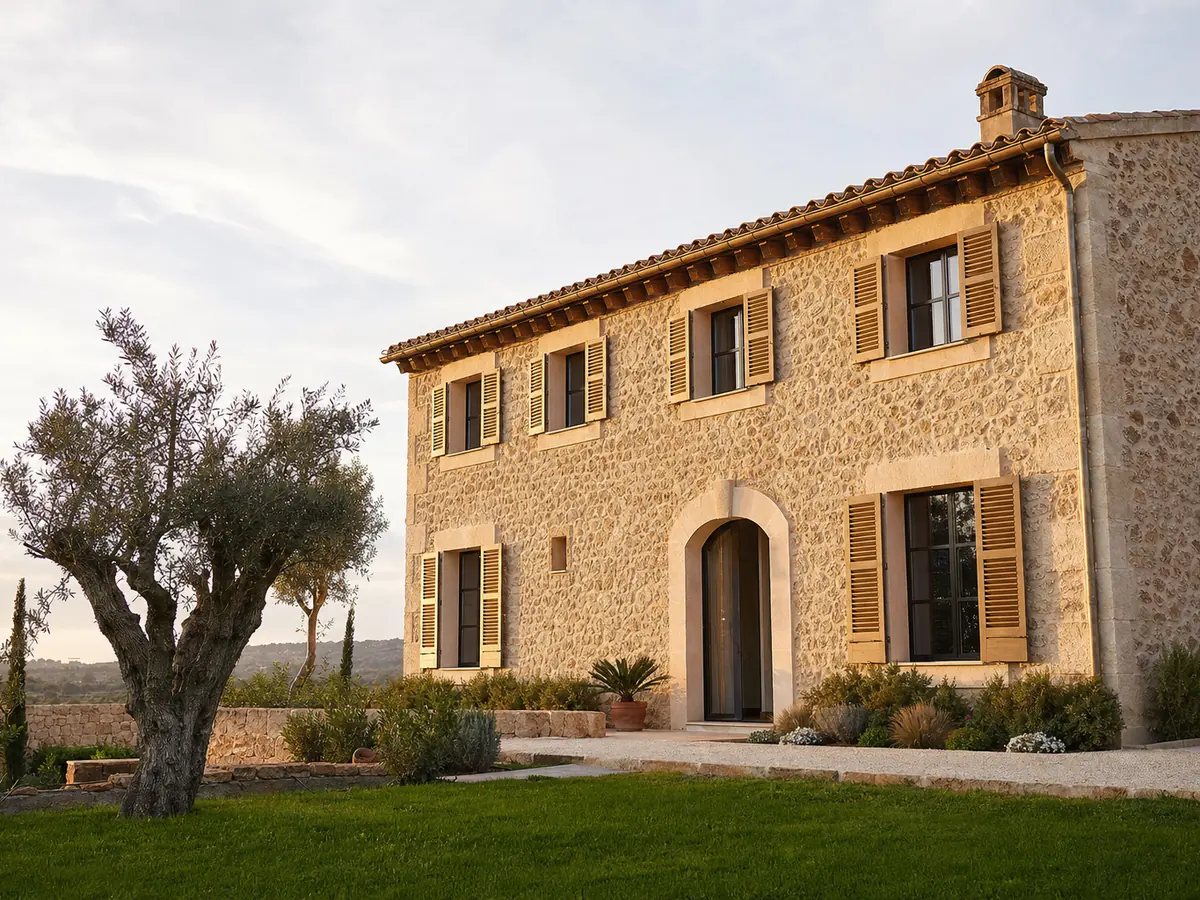
Why does Deià appear in the title if Brutalism didn't fully take hold there? Exactly for that reason. Because it represents the perfect counterpoint. This small town, in the heart of the Tramuntana Mountains—recognized as a World Heritage Site in 2011—is the complete opposite: terraces, dry stone, traditional architecture that blends with the terrain.
Conservation regulations and a commitment to the local environment have slowed the arrival of modern styles in the area. And it makes sense: brutalist concrete doesn't quite fit in here. The contrast between sandstone walls and concrete volumes reminds us that not everything can coexist in the same space. Sometimes, the dialogue is more symbolic than real.
Current examples: neo-brutalism in Palma
Although classic Brutalism belongs to another era, there are architects who continue to draw inspiration from its principles. It's not about repeating old formulas, but rather about reviving that attitude: undisguised materials, straightforward structures, spaces with character.
- Gomila Project (2018–2023): a joint initiative between MVRDV and GRAS Reynés Arquitectos. Seven buildings that add identity to a neighborhood undergoing transformation. In some interiors, the raw concrete and straightforward textures are clearly reminiscent of Brutalism.
- Brutus (2023): a restaurant also located in Gomila Square, designed by Sandra Tarruella Interioristas. Here, brutalism permeates the details: untreated ceilings, bare walls, surfaces that reveal themselves. Even the name says it all.
This "new brutalism" doesn't seek to make a splash, but rather to make a difference. It respects the legacy and adapts it to current ways of living.
Legacy and future of brutalism on the island
Brutalist architecture in Mallorca was never mainstream, that's clear. But it has left its mark. Some visible, others more subtle: a style that championed the honest, the essential. Today, many of these works generate debate: should we preserve them? Should we update them? Should we let them fall into disrepair?
In a world where many buildings look too similar to each other, this commitment to material honesty sounds refreshing. Perhaps there's a clue to building differently. More connected to the place. More real.
Construcciones Armalutx: Your Construction Company in Mallorca
In this context, surrounded by questions about the past and future of architecture on the island, having a team that knows how to read the landscape and understand the times becomes key.
At Construcciones Armalutx, we work with a vision that balances tradition and the present. We appreciate things that have a history, but also those that look to the future. Whether renovating a house with heritage value or constructing a building with a contemporary character, we do it with care, respect, and skill.
If you are looking for a construction company in Mallorca who listens, who makes suggestions, and who takes your project personally. We'd love to work with you. Let's talk.